NaNoWriMo Day One

I’m pretty sure this is sixth time I’ve attempted NaNoWriMo. I know that because I wrote down the names of all the previous ‘novels’ I’ve written this afternoon – when I was meant to be getting my first day’s word count down.

And so it begins. A month of furious head-down-pedal-to-the-metal determination to succeed in the face of extreme adversity and near-total lack of self-belief. Fuelled by coffee and cake, we NaNo veterans hurl ourselves once more unto the breach, the sails of our stories flapping precariously in the force of our wayward imaginations.

Today I did at least manage to hit the daily word count. This bodes well, or at least would bode well were it not for the fact my first 1,500 words have already exposed a major plot flaw that I’m struggling to find a solution to before tomorrow’s session. But hey, this kind of thing is common in NaNo Land. We set sail in one direction only to find over the course of thirty days we have gone quite off course and are now heading in another altogether. Such is the life of the speedy novelist (and poor sailor). Worse things, after all, have happened at sea….

image

Breaking the Silence

It’s been a month since my last post. Life is such a whirlwind at the moment that I’m struggling to catch my breath. I mean, life’s always busy – despite my best intentions I don’t seem capable of living any other way – but having a new job that is ten times as busy as the last, in parallel with the often stressful process of planning a wedding (there’s nothing quite so thrilling – excuse the heavy sarcasm – as the feeling you get when your venue cancels on you three months after you sent the invites) is leaving precious little room for anything or anyone else (except of course my constant companion Guilt, who naturally manages to elbow his way into almost every situation).

But, tempting though it is to retreat into my head and bob up and down on the familiar sea of anxiety and worry (Guilt bobbing up and down beside me in his rubber ring), before drowning out the internal noise with crap TV and pointless social media staring (which, I won’t lie, I did a fair bit of in plucking up the courage to write this), I know in my heart that my best means of finding some clarity and peace of mind is through writing. Which is why, after several aborted attempts at updating this blog, I’ve finally sat down to do it. And also why I’ve taken the big decision to reassess my writing priorities, to take time out of screenplay writing and go back to what I love most: novel writing.

And what better way to get back into that than by attempting NaNoWriMo again in November? I’ve lost count of how many times I’ve done it before, how many first drafts of novels are languishing in the metaphorical drawer, dusty and undeveloped. And I’ve no reason to think this time will be any different. Given how crazy life is at the moment I’ve no reason to think I will even manage to complete it. I just know I want to do it, or try to do it, to get the creative juices flowing again – and drown out those hateful voices telling me that I’ll never be good enough.

download

Thought this was particularly appropriate given the circumstances. Come on NaNoWriMo, let’s get that crappy first draft underway..

Blocking Time

Do you ever feel there isn’t enough time to do the things you want to do outside of your day job? Are you often just so tired at the end of the working day that all you want to do is lie on the sofa and watch crap TV just to relax your mind? But then the guilt sets in, because such activity feels like it actively diminishes your intelligence rather than bolstering it, and if you don’t use your time wisely how will you ever finish that novel/Open University course/improving tome etc.?

If you do feel that way, you’re not alone. I for one experience this cycle of worry and guilt on a daily basis. Even though I know that being a published writer is my goal, somehow it seems that writing at the end of a full day’s work (and, when I can be bothered, a post-work gym session) is always the last thing I want to do.

But then, yesterday, I struck on the most blindingly obvious and simple concept: Instead of telling myself that I had to spend the whole evening writing, with no time to do anything else (the usual mantra due to guilt at not having written enough in the preceding days/weeks), I told myself to spend just one hour working on my screenplay, at the end of which I could spend an hour watching any TV programme I liked. And at the end of that, I would go to bed and spend an hour reading my book (because, in my experience – and somewhat ironically given the benefits – when you’re feeling overtired and too busy the first thing to go is the luxury of reading before bed).

And you know what? It worked. I didn’t do a huge amount of my screenplay, but I did more than I had done in the past few days. And, more than anything, it felt like I had removed a big obstacle that had been standing in my way. I no longer felt scared of the enormity of the task I was facing, because I had broken it down into a manageable task. Moreover, I didn’t feel (as I so often do) that writing meant having to sacrifice all other enjoyment, or that I had to choose between writing and reading (a horrendous choice for a writer because without reading how can you improve your writing? Catch 22).

So often we tell ourselves that we are useless, that it’s impossible to realise our dreams. But what if we’re just framing things incorrectly? What if the problem is not our lack of talent, or even commitment, but rather the very simple and easily corrected issue of time management?

We all know that if we want to do something we must make time for it. But what makes so many people stumble at the first hurdle is the misguided view they must devote every spare moment to the pursuit of that goal. Wrong. Start small, with ten, twenty, thirty minutes a day – whatever feels achievable to you. And make sure that you stick to doing it – simple. It takes time to form a habit, and it isn’t always easy. But if you don’t start, the only person you’ll have to blame for not achieving your potential is yourself.


????????????????????????????????????????????????????????????????????????????????????????????

On Writing Autobiographically

During last night’s crime writing class at the City Lit we discussed characterisation. I told the group I was intent on making the protagonist of my latest story as unlike me as possible. Why? Because I’ve realised that, all too often, I write characters as if they were, in fact, me, and whilst Polly Courtney said at last week’s Writers’ & Artists’ conference that most people write their first novel autobiographically (“because they have something to get off their chest”), in my case I fear it might be more to do with laziness than self-expression. I worry that in writing characters who are based, no matter how loosely, on me, I’m closing myself off to a host of far more interesting and complex characters. Not only that, I’m failing to examine their personalities thoroughly enough to be able to fully inhabit them, as I’m assuming they would have the same thoughts and feelings as I would, when this isn’t necessarily (and indeed shouldn’t) be the case.

After a written exercise, wherein we were encouraged to introduce our characters by name (“My name is X…”) and elaborate on how they felt about that name, whether it had any connotations/associations etc., we had a group discussion. One of my fellow students said she didn’t like the character she had written about in the exercise – in fact, more than that, she actively disliked her. The teacher was concerned about this, and said that if a writer is unable to empathise with their protagonist they must at least be able to foster a sense of curiosity about them. For example, what experiences have shaped them into the person they are today (or at the time your novel is set)? Why do they hold certain viewpoints and like or dislike certain things?  

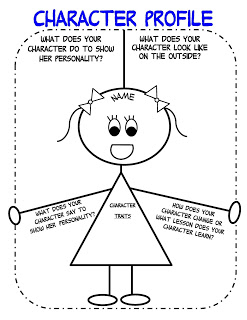
A useful exercise in characterisation, we learned, is to take your main character and write about them both ‘from the inside out’ and ‘from the outside in.’ In other words, write one paragraph ‘as’ them (a letter to a loved one, for example) and then answer a series of questions ‘about’ them (e.g. what is their favourite colour/food, what do they like/dislike etc.). One particularly pertinent and often revealing question is ‘What does he/she dislike most about him/herself,’ as it often gives rise to useful insights into their inner psyche.

The lesson, I suppose, is that if you don’t completely identify with your main character that’s fine, so long as you like them sufficiently to be curious about who they are and what makes them tick. What is certain is that during the creative process you’ll be spending a huge amount of time with this person, so it has to be someone you’re happy to hang out with – or you’ll likely have a pretty miserable time writing it!

character_profile_girl