Too Little, Too Late? (how our indifference could have sealed our fate)

I’m feeling deeply troubled by the current situation in West Africa. Up to now I’ve done my best to avoid the conjecture and hysteria surrounding the outbreak of Ebola, but as the crisis deepens each day it is becoming harder for the eyes of the western world to ignore. The politicians in charge of the international aid purse strings have been accused of cutting aid budgets to Liberia at exactly the time they needed to be ramped up. Whether or not this is true, it does seem undeniable that the international response to the Ebola epidemic has been too slow off the mark. Experts have warned that for every 10 people currently infected a further 17 will contract the virus. And it’s only now in the face of indisputable evidence that the situation is worsening daily that a summit on how to tackle the spread of the virus was held in London today.

But it’s not just the UK who have been too slow to respond. Today it’s also been revealed an American citizen who returned from Liberia and who had come into direct contact with an infected pregnant woman – carrying her in his arms to a treatment centre where she ultimately died, no less – was turned away from hospital on his home soil when he initially presented symptoms. As a result the authorities are frantically trying to contact 100 people with whom he subsequently came into contact with, and his closest family members are in quarantine lest they too develop symptoms.

This is a humanitarian crisis, and one that could affect us all. Experts believe there is a 90 day window to halt the spread of Ebola, after which the number of infected people could rise from the current rough (and probably vastly underreported) 6,500 to 1.5 million by January. And if the authorities and aid agencies can’t cope now, what hope will they have then?

I can’t pretend I don’t have selfish concerns about the spread of Ebola across the world, but what upsets me even more than the thought of contracting the virus myself (and, God forbid, my loved ones also contracting it), is that up to now the western world has turned the other cheek. It’s disgusting that the lives of our fellow human beings across the world are held in such little regard until the moment that the scales of fortune upturn and the threat looks to be ours as well as theirs. Will Pooley, the British doctor who survived Ebola, has described the cases of a four year old boy and his two year old sister, who died from the virus within 24 hours of each other in ‘squalid’ conditions, lying naked in pools of their own blood and diarrhea. In Liberia, Guinea and Sierra Leone, at this very moment, cases such as these are commonplace. Whole families, entire communities are being wiped out in agonising pain and it is simply not acceptable that the western world has for so long been looking on and twiddling its thumbs.

If the doomsayers are right and this virus does spiral out of control, the saddest thing is this: It will be the very politicians who got us into this situation that will have spaces in the quarantine bunkers whilst the rest of us are wiped out. And you can bet they’ll put one hell of a spin on the ‘truth’ they tell their future generations after they emerge, blinking, into the post-apocalyptic light.

th (2)

Past Post: Laos

I wrote this last year when I returned from my travels and submitted it to a newspaper writing competition. Sadly I wasn’t shortlisted, but I do think it’s good enough to share here, so here it is.

When the minivan driver hit his second chicken and narrowly missed a child toddling by the roadside, I felt moved to intervene. “You’re driving too fast, it’s not safe!” He responded with a maniacal laugh and slammed his foot down harder on the accelerator. I sighed. This was going to be a long journey.

I have heard many travellers claim that the people of Laos are amongst the least friendly in South East Asia and, based on this experience, I might have said the same. But to understand Laos and its people one must first understand its history. When you consider the ‘Secret War’ waged against it by the US from 1964-1973 – during which over 260 million cluster bombs were dropped on a country with less than three million inhabitants to dent the spread of communism from Vietnam – it’s easy to see why distrust and contempt against foreigners may exist.

It is estimated that up to thirty per cent of cluster bomb units did not explode on impact, and to this day there are still thousands of unexploded bombs located throughout Laos, many of them nestled unobtrusively in paddy fields where ordinary farmers are trying to eke out a living for their families, and where they and their children risk life and limb every day as a result.

We passed through many such fields on our kamikaze minivan adventure from Phonsavanh to Vientiane. In my more lucid moments, I relaxed my grip on the seat and pondered what it would be like to meet some farmers and ask them in person what it was like to live under the constant threat of such unimaginable horror. Perhaps then I would get under the skin of the country I had previously – and shamefully – only heard of in the context of its popular tubing tourist attraction in Vang Vieng.

Tubing is fun, and arriving in the country on a slow boat down the Mekong River is an experience not to be missed, but both are essentially just part of the tourist trail. Even the Plain of Jars and nearby ‘bomb village’ lack genuine character, the touts having sucked it out with their sterile production-line tours. It doesn’t help that a lack of infrastructure makes getting around a strain for even the most hardy of travellers, particularly in the wet season when roads can be impassable due to flooding.

My lasting memory of the country won’t be floating down the river in an inflatable tube, nor wandering around a field of ancient, unexplained relics. It won’t even be the suicidal minivan driver or the touts and their soulless tours. It will be the ordinary but heart-warming sights I witnessed as we drove for hours along death-defying roads; bright eyed children playing and whole families working the bomb-littered fields. Whilst such glimpses by their brief nature fail to yield any real insight into the Laos Peoples’ character, I will always feel respect for them, going about their business despite all that has been inflicted upon them.

Image

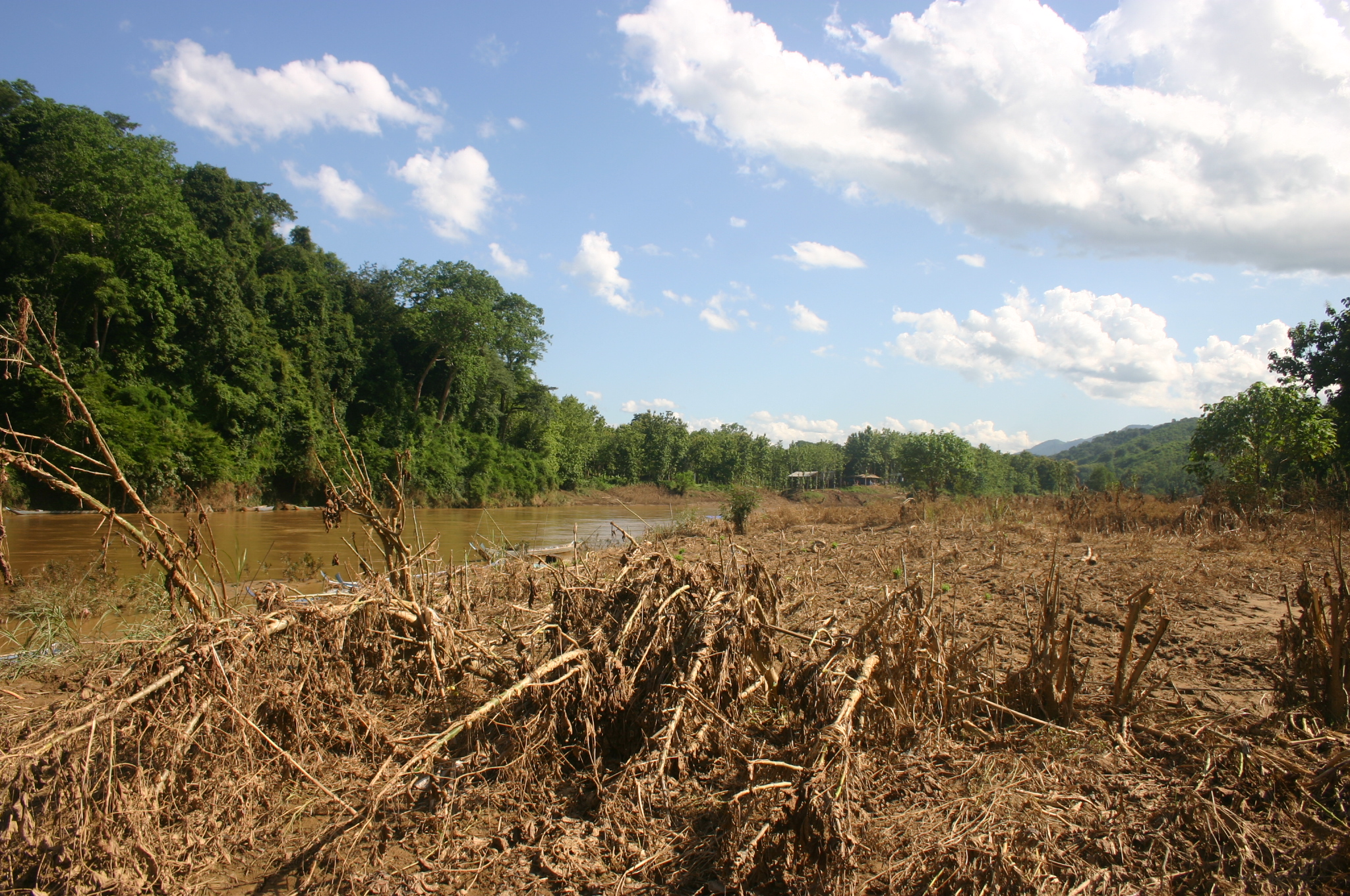
I took this on a day trip from Luang Prabang to a stunning waterfall, and was struck by the contrast of crisp, brown landscape and bright blue sky.