
I wrote this last year when I returned from my travels and submitted it to a newspaper writing competition. Sadly I wasn’t shortlisted, but I do think it’s good enough to share here, so here it is.
When the minivan driver hit his second chicken and narrowly missed a child toddling by the roadside, I felt moved to intervene. “You’re driving too fast, it’s not safe!” He responded with a maniacal laugh and slammed his foot down harder on the accelerator. I sighed. This was going to be a long journey.
I have heard many travellers claim that the people of Laos are amongst the least friendly in South East Asia and, based on this experience, I might have said the same. But to understand Laos and its people one must first understand its history. When you consider the ‘Secret War’ waged against it by the US from 1964-1973 – during which over 260 million cluster bombs were dropped on a country with less than three million inhabitants to dent the spread of communism from Vietnam – it’s easy to see why distrust and contempt against foreigners may exist.
It is estimated that up to thirty per cent of cluster bomb units did not explode on impact, and to this day there are still thousands of unexploded bombs located throughout Laos, many of them nestled unobtrusively in paddy fields where ordinary farmers are trying to eke out a living for their families, and where they and their children risk life and limb every day as a result.
We passed through many such fields on our kamikaze minivan adventure from Phonsavanh to Vientiane. In my more lucid moments, I relaxed my grip on the seat and pondered what it would be like to meet some farmers and ask them in person what it was like to live under the constant threat of such unimaginable horror. Perhaps then I would get under the skin of the country I had previously – and shamefully – only heard of in the context of its popular tubing tourist attraction in Vang Vieng.
Tubing is fun, and arriving in the country on a slow boat down the Mekong River is an experience not to be missed, but both are essentially just part of the tourist trail. Even the Plain of Jars and nearby ‘bomb village’ lack genuine character, the touts having sucked it out with their sterile production-line tours. It doesn’t help that a lack of infrastructure makes getting around a strain for even the most hardy of travellers, particularly in the wet season when roads can be impassable due to flooding.
My lasting memory of the country won’t be floating down the river in an inflatable tube, nor wandering around a field of ancient, unexplained relics. It won’t even be the suicidal minivan driver or the touts and their soulless tours. It will be the ordinary but heart-warming sights I witnessed as we drove for hours along death-defying roads; bright eyed children playing and whole families working the bomb-littered fields. Whilst such glimpses by their brief nature fail to yield any real insight into the Laos Peoples’ character, I will always feel respect for them, going about their business despite all that has been inflicted upon them.
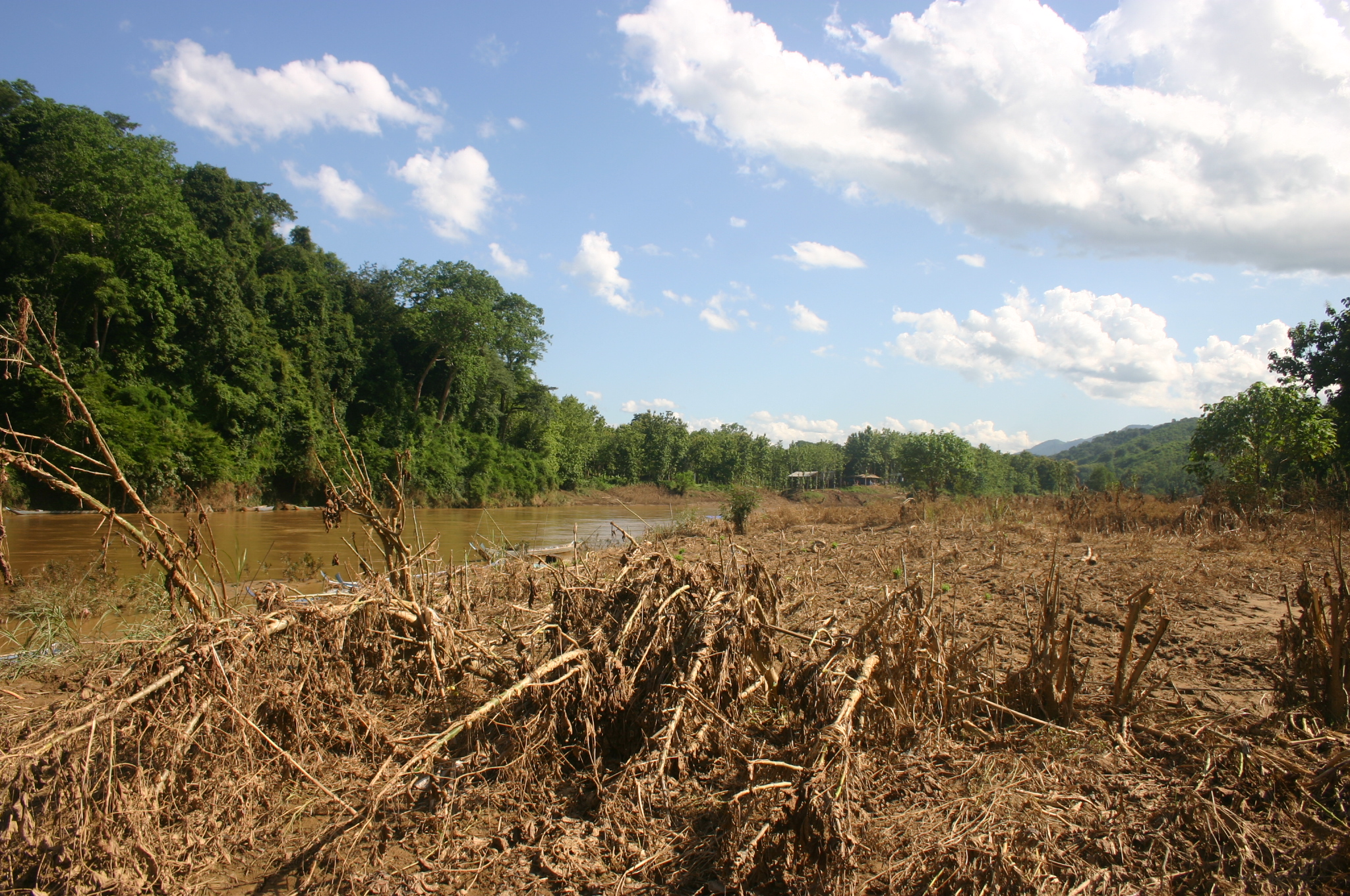
I took this on a day trip from Luang Prabang to a stunning waterfall, and was struck by the contrast of crisp, brown landscape and bright blue sky.

 Belle 365