Bar Review: Barrio East

Last night I had my work leaving drinks at Barrio East on Shoreditch High Street. Having never been there before I wasn’t sure what to expect of my reserved area, ‘The Caravan,’ but it was everything I’d dreamed of and more.

What strikes you as you walk in the door of this South American-inspired bar is the brightly coloured lego-esque furniture in the front room. And from there onwards things keep getting quirkier, with splashes of colour just about everywhere you look. The friendly bartenders serve up an array of delicious cocktails (Top tip: Get there between 4pm and 8pm for bargain price cocktails and £5 discount on wine) as the music gets you in a dancing mood.

There are three different rooms or areas at Barrio East, each with its own distinctive style. But the one I liked best (and had, by happy coincidence, reserved for my gathering) was The Caravan. Located directly beside the dance floor, it is exactly what it says on the tin: A caravan. In a bar. Amazing. Seating up to 15 people (allegedly – though I’d say 13 tops if you want to be comfortable rather than elbowing each other in the face) it’s comfortable, wonderfully kitsch and also has the added bonus of feeling like an elevated throne from where you can look down at the drunken antics on the dance floor below with a self-satisfied smile.

An hour or so after we arrived, when we were happily ensconced in our self-styled ‘caravan of love,’ with bottles of wine and plate of nachos a plenty, the band arrived. It’s always a bit nerve wracking when a band turns up on a night out; it has the potential to either make or break the evening. But fortunately in our case it made the evening. Freddie and the Freeloaders (great name!) were just the ticket, and soon had us dancing away to their soulful tunes.

Weird as it sounds even the toilets deserve a mention in this place; when you walk in you could be forgiven for thinking you’ve been transported to Brighton seafront at the height of summer, with rows of painted beach huts (the toilet cubicles).

In short, this place is great – a little gem that’s a big break from the norm. If you like your bars to be crazy, quirky and kitsch then this is the place for you. Once you’ve tried it no local boozer will ever seem the same again. You have been warned…
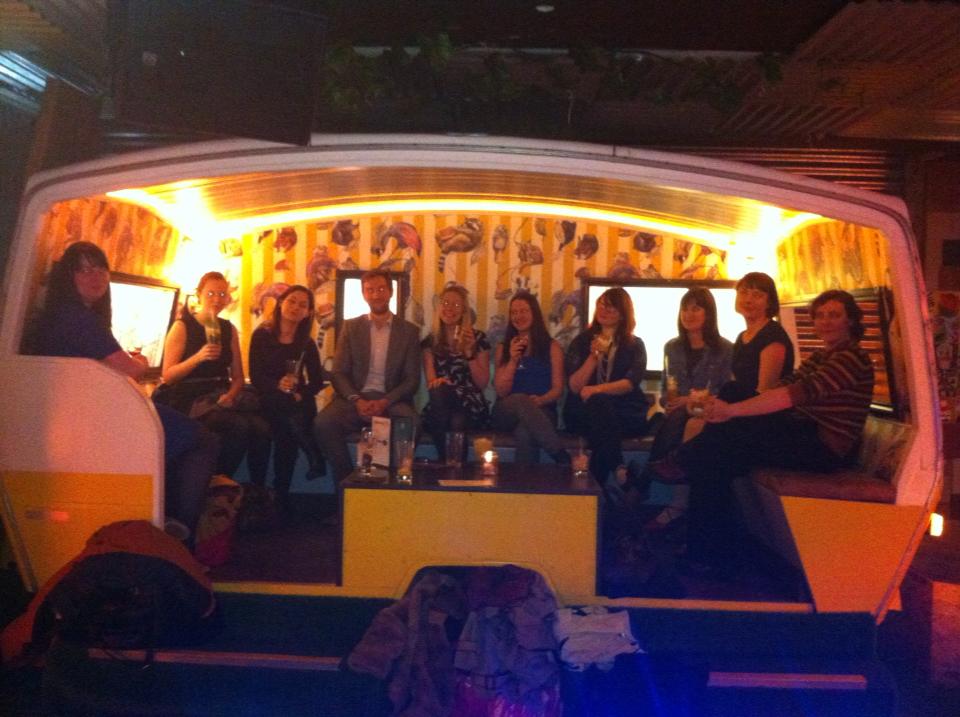
A caravan. In a bar. AMAZING.

On Loss

Today is the funeral of a girl I know who tragically passed away in a car accident three weeks ago. She was just 32. Although I haven’t seen her for several years, I remember her as being beautiful, funny, kind and talented – she was an actress and, I recently learned, an aspiring playwright. I can’t imagine the pain her husband of two years is going through as he struggles to come to terms with the bottomless chasm of his grief – they were together since before I knew them, so he must feel he’s lost a part of himself. I just hope that one day he (and her family and friends) will be able to look back at the many happy memories they shared with fondness rather than pain, though I imagine that will take a very long time.

Being slightly removed from the situation by virtue of the time that’s passed since I last saw them, it feels somehow self-indulgent for me to wallow in grief. But I haven’t been able to stop thinking about her since I found out. It just seems so unfair that someone with such a zest for life, who showed so much promise in her career and was such an incredibly lovely person, should be so cruelly snatched away and cut down in her prime. I know the same could be said about everyone who dies young, I suppose this is just the first time it’s been someone who I really knew, and it’s come as a terrible shock because this is normally the sort of thing that happens to other people.

When I first found out I wrote a post about trying to take what little positives there are from such a tragedy, so I’m reminding myself now to make every day count, to tell everyone how much I love them and to be the best person I can be. But somehow all those promises feel like little more than hollow reassurances today, as I think about the fact a bright star isn’t with us anymore, and the sky will be a darker place without her in it.

I’m going to close with the poem I read at my grandma’s funeral years ago, by Mary Elizabeth Frye. It makes me cry every time but I think it’s beautiful:

Do not stand at my grave and weep,
I am not there, I do not sleep,
I am a thousand winds that blow
I am the diamond glints on snow
I am the sunlight on ripened grain
I am the gentle Autumn rain

When you awaken in the morning’s hush
I am the swift uplifting rush
Of quite birds in circled flight
I am the soft stars that shine at night
Do not stand at my grave and cry
I am not there, I did not die

Rest in peace, Katy. You may be gone, but you will never be forgotten x

I chose this picture for today because it was taken in one of the most peaceful places I’ve been, Taliwas in Borneo.

Productivity and pressure

Today’s mot du jour (said in a sophisticated French accent, naturellement) is “productive.” It’s 11.07am as I type this and already I’ve run five kilometres on the treadmill, sifted through the reams of crap accumulated in my desk drawers during my sixteen months here (binning most of it and saving a few nuggets that may be of use later on), applied for my New York visa, ordered both my travel money and insurance and made an exhaustively comprehensive to do list covering virtually every remaining minute of my working day (and indeed beyond, as this evening I’ll be helping my boyfriend move into his new place by lugging a massive suitcase from one end of London to the other in the name of love – or lunacy, I’m not sure which).

In short, I’m in the midst of a necessary manic phase, which has got me thinking about the nature of pressure. I don’t know about you but I have a love hate relationship with pressure. When I’m under huge amounts of it I panic; my hands sweat, my head pounds, my breathing is shallow. Sometimes (too often) I turn into a whimpering, gibbering mess in the corner, claiming between sobs that it’s all too much, I just can’t do it. But then a funny thing happens; I remind myself to breathe, drag myself out of the corner, put the kettle on and sit back down at my desk. And then I simply carry on. And you know what? If it wasn’t for the pressure bearing down on me I often wouldn’t complete the task I’d set out to achieve in the first place. In other words, much as it stresses me out, pressure is an essential part of my productivity. I work better with it than without it – and that’s a fact.

At school and university I could often be found at 2am the night before an important exam, cramming every bit of information I possibly could into my brain. It wasn’t that I hadn’t bothered to revise (well, it wasn’t always that), I just couldn’t focus properly until I was under sufficient pressure to be able to block everything else out. I’ll never forget the week before my dissertation was due when it dawned on me I really had left it too late, and I had to pull out every last stop to deliver on time. My body’s reaction to that particular period of pressure was somewhat extreme – I blacked out whilst hyperventilating over the choice of finishing my dissertation and attending a party. Needless to say I eventually (and sensibly, as wasn’t always customary in those days) opted to stay in and finish the dissertation, and thankfully went on to clinch an upper second degree as a result.

In today’s society pressure is, whether we like it or not, all around us. We feel pressure to succeed in every aspect of our lives, from our jobs to our relationships and even in our hobbies. Even those who seem, on the face of it, to be at the top of their game – the company CEO, for example – are under constant pressure to deliver better, smarter, cheaper. But the reason such people get to the top of their game is because they’ve managed to get a handle on the pressure and make it work to their advantage. They’ve understood that often pressure is a good thing which provides a necessary catalyst for change (if you don’t think change is a good thing, see yesterday’s post which, I hope, will change your mind – geddit?).

Now I’m afraid I really must be off, I’ve got a million and one things to do before the day is out and my hands are getting clammy….

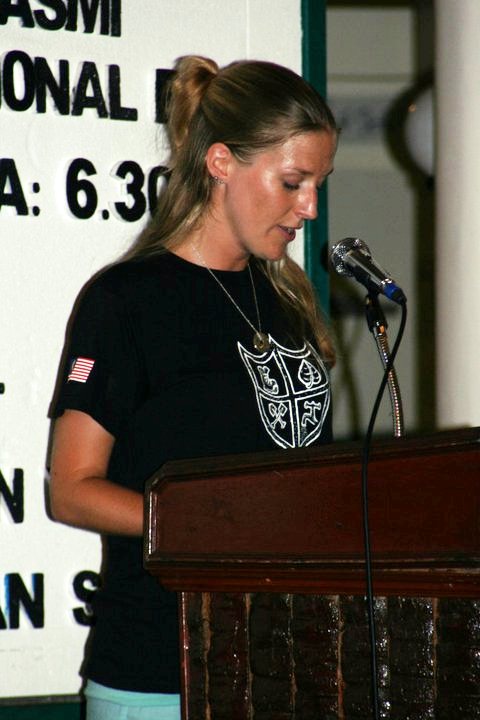
This photo shows me at a time when I was under considerable pressure – to host and deliver a successful end of expedition ceremony in Borneo in 2011. You can tell from the sweat on my brow I was nervous (and also brown – so brown, sigh…), but fortunately my effort was passable and the event was a success. See? Pressure in action. I rest my case.

Time flies

I can hardly believe my final week at work is already upon me. It’s a cliché, I know, but time really does fly – not so sure about the ‘when you’re having fun’ bit, but hopefully that’s still to come. This time next week, quite possibly, as I recover from this weekend’s 16 mile Wholefoods run in style with a trip to the Big Apple to visit the girl I affectionately call my ‘spiritual twin’ (so named after the two weeks we spent helping each other  cling to our sanity in an ashram in southern India in 2011).

After the events of the past few weeks a holiday is just what the doctor ordered, and I’m very much looking forward to taking some time out to reflect on the imminent changes in my life (not to mention start tackling the enormous writing-related tomes I’ve purchased in preparation for going freelance). The plan, thus far, is to sip coffee, nibble (oh alright, scoff) cake, down wine and eat inordinately large amounts of CHEESE – with a bit of sightseeing and a LOT of nattering thrown into the mix to boot. In short, we’re going to set the world to rights one mouthful at a time and I cannot WAIT.

Because of all the recent changes in my own life it’s no surprise that I’ve been ruminating on the nature and importance of change as a life driver. Should we, I wonder, embrace it regularly as a way to rejuvenate ourselves, or should we rather seek out a more preferable state of equilibrium, in which we can be happy to see out the rest of our days?

At the moment I’m inclined to think the former, not least because of this article I remembered having read a few years back about how the brain perceives time. The article discusses the central concepts of a book, Making Time, written by Steve Taylor. In it, he claims that as we get older it seems as though time is speeding up, but that’s only because we fall into hum drum existences and get caught up in the same old cycle, day in, day out. If we seek out new experiences – for example by filling our weekends with trips to art galleries, coffee in kitsch new coffee houses and lunches and dinners in new locations with friends and family – then our perception of time actually changes and we view it as having passed more slowly than it actually did.

It could be argued that this is counter-intuitive, since the sensation of being bored often feel s as if it spans a lifetime, but if you stop to consider how fast the last five years have gone since you joined your current company you might begin to give credence to the idea.

As I’m no expert in how to live life, I’ll close with a quote from Steve Taylor’s book:

“Make sure your life is as full of new experiences as possible. If you live a life that’s full of routine, then time will always speed up but if you make an effort to travel to new environments and expose yourself to new situations, new challenges, even something simple like a new route to work, new interests, new hobbies, then this degree of newness slows down time.”

It seems a pretty compelling argument to me. Now where DID I put that passport….?

533237_10152577828025057_891854652_n

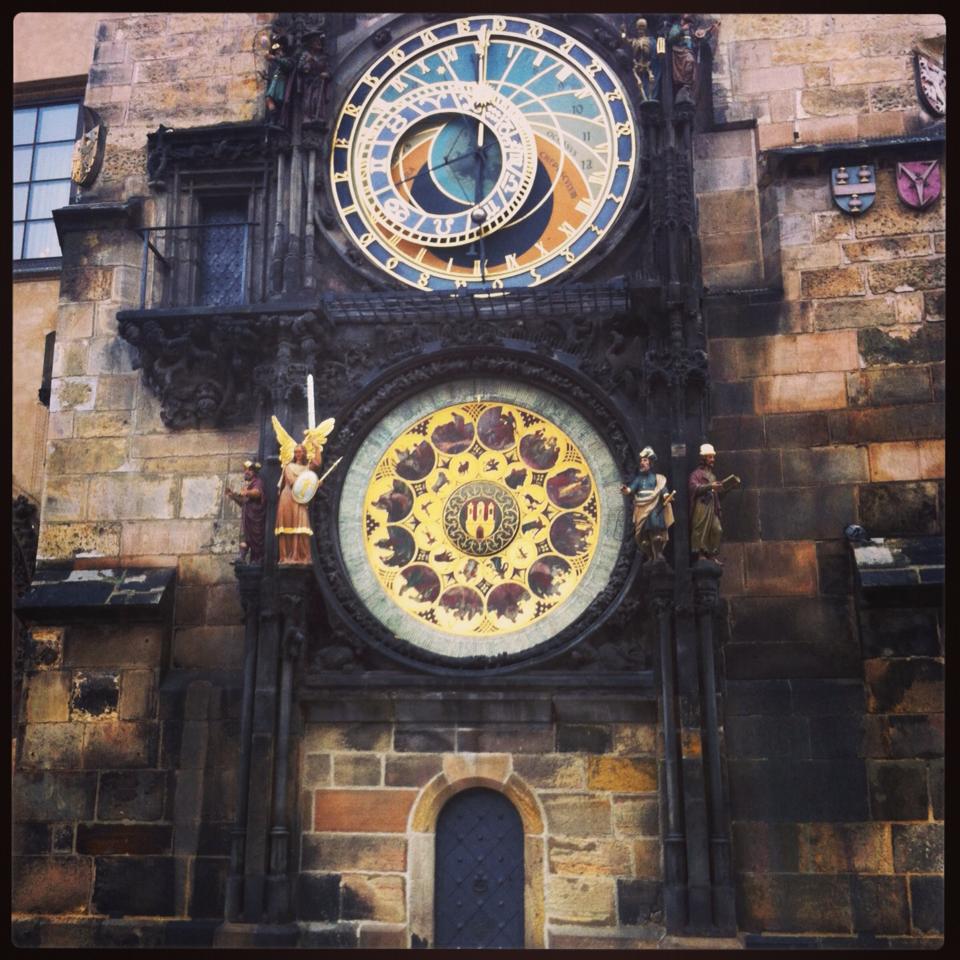
I fell in love with this clock in the main square of Prague’s old town. It looks like a time machine!

Hot tub dreamin’

Since Hot Tub Cinema the other week hot tubs have (unsurprisingly, I suppose) been on my mind. And not just my mind, it would seem, as a friend of mine has now decided he wants to hire a garden full of inflatable ones for his upcoming birthday (how brilliant is that?!)

Looking back beyond hot tub cinema I think the seed of my obsession may actually have been planted last summer when, two days before I was due to attend the Secret Garden Party festival in Cambridge, a friend who’d had to drop out offered me her ticket for ‘Bathing in the Sky.’ For the princely sum of twenty-something pounds I had procured a ticket to what I couldn’t have known then would prove to be a lifeline on the third day of a particularly muddy festival.

Inside this veritable Garden of Eden were not only the most delightful wooden hot tubs, set amongst a leafy green Hobbit-esque enclave away from the grubby horrors of the camp site and stages, but also shower facilities that would leave even the filthiest of revellers gloriously clean. In short, the two hours I spent there with my boyfriend and my best friend were amongst the best of my life, and I emerged feeling like a new woman.

Given my soon-to-be-part-time employment status I’ve no idea why I started browsing the internet and torturing myself with all of the amazing hot tub options on the market (although I couldn’t help but notice Arctic Spas do an ‘extreme bargain’ option on reconditioned, used hot tubs – surely I could save up for one of those?!), but what I am increasingly beginning to feel is that, until I have a hot tub to call my own, I simply will not have ‘arrived’ in life.

Picture this: After a hard day’s work you come home, walk through the door, hang your coat up and go upstairs to change into your fluffy white bath robe and slippers. Moments later you walk through the kitchen, pour yourself a glass of chilled Prosecco and open up the doors to the patio, upon which sits a glorious hot tub. Steam swirls invitingly up from its surface as you remove your robe and sink beneath the water. Within moments your troubles are all but forgotten and you are transported somewhere else entirely; your muscles relax, you close your eyes and you are home. Doesn’t everyone dream of this?

Okay, maybe not everyone, but few could deny a hot tub is a welcome addition to any ski holiday. Thus far in my skiing career (and I use the word ‘career’ loosely) I can’t say I’ve been able to afford a chalet with its own private hot tub, but just as in my previous example I imagine it would be a thing of great beauty and a most enjoyable experience to dip a post-ski frozen toe into the warmth of the water within.

It’s the decadence, really, that I covet. Nobody needs a hot tub to survive, granted, but what a lovely treat to come home to. There must surely be some research somewhere on the positive benefits of owning one; I’d hazard a guess they reduce stress in much the same way as owning a cat (though don’t quote me on that).

But until my freelance career sky rockets I’m sad to say my dream of owning a hot tub – reconditioned or otherwise – looks to be just that: A dream. So in the meantime I suppose I’ll have to make do with stroking the cat (and, come to think of it, I should probably start saving for a house to put the hot tub in…)

Image

what’s mine is yours?

At the end of last night’s Satsang class at the Sivananda ashram (which I mentioned in yesterday’s post) the yogi leading the class discussed the importance of not getting too attached to material possessions. In the Bhagavad Gita, the Hindu scripture that underpins the philosophy of yoga which the ashram teaches, Swami Sivananda refers to humans as the ‘caretakers’ of everything they come into contact with in life, rather than the owners. We are all, he says, ‘passing pilgrims’ in this world, which is why the whole concept of ownership is one that he discourages.

The yogi gave the example of someone saving up to buy their first house, who feels that in the exchange of deeds they are laying claim to that property and making it their own. Yet the reality is that such an arrangement is only ever temporary because, ultimately, the end of life will sever all such ties. It follows, then, that everything else we humans like to stamp our ownership on is also merely temporary – including our relationships.

I really like the idea of being a ‘caretaker’ rather than an ‘owner.’ To give an example of why, when a person borrows an item of clothing they generally take care of it more than if it were their own, because they know at the end of the day (or week, or month) they’re going to have to give it back (after all, it would be pretty embarrassing giving something back in a much worse state than the one in which it was loaned).

I think that as a society we would do well to stop and think sometimes about the way in which we regard the things – and indeed people – closest to us. If everyone had in mind that they were ‘passing pilgrims’ the world might, I believe, be a better place to pass through.

Time out

I probably shouldn’t admit to being short of inspiration today, but there you have it: My confession. It’s been a taxing start to the year, to say the least, and I’ve exhausted all of my energy stores – both mental and physical. Training for next weekend’s 16 mile run isn’t helping on the physical front, but it has at least given me a focus for which I’ve been grateful in my lower moments; hard as it is to get out and running when the axe of redundancy (or any other challenging life event) is hovering over your neck, it really is true what they say about exercise making you feel better. Though I’m still not convinced I’m going to enjoy tomorrow morning’s scheduled 12 mile run in the rain….

But this is not to be a negative post, far from it. I’ve found a new job that I’m itching to start, have already got some freelance irons in the fire and genuinely feel this period of change will be the making of me – I’m just looking forward to the change phase being over and the new phase being underway, because it’s the change phase itself that’s so very tiring.

Rather than go home and slump on the sofa this evening (as is my body’s inclination) I’ve decided to be proactive in beating the tiredness, and am planning a return to the Sivananda Yoga Centre in Putney for its evening Satsang class. The Centre is a branch of the ashram in Kerala (southern India) where I did a two week residential yoga course in 2011. Satsang is a free class which comprises a twenty to thirty minute group meditation session, followed by 45 minutes of mantra chanting and a talk on the philosophy of yoga. It sounds a bit crack pot, I’ll admit, but I actually find the whole thing very relaxing, and a great way to ‘switch off’ the mind after a long day or period of stress. To any disbelievers reading this post I will say only this: Don’t knock it until you’ve tried it!

253850_10150652395545057_7385012_n

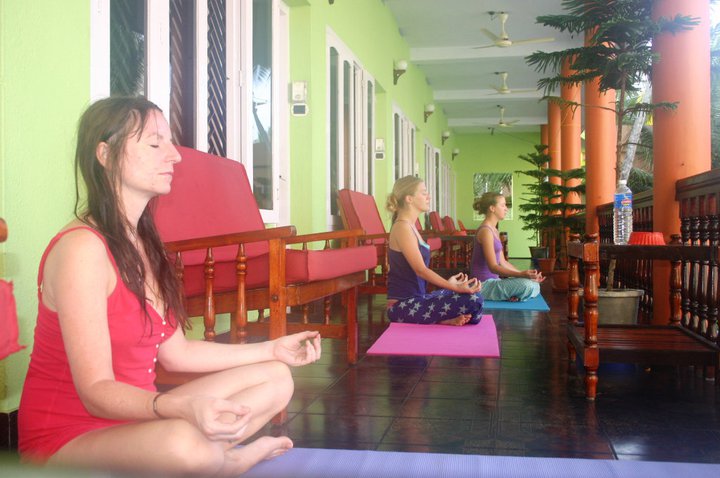
Writing this post reminded me of the few days post-ashram when I and two of my fellow ashramees [sic] spent a few days on the coast, in Kovalam. This pic was when we were still full of the enthusiasm of regular yoga practice – how times have changed (for me at least, I can’t speak for the others!)

Past Post: Montessori nursery article

I recently stumbled across some articles I wrote as part of my Freelance and Feature Writing course with the London School of Journalism a few years back, and thought I’d share this one about Montessori teaching today:

The truth about Montessori teaching

Maria Montessori’s work with special needs children in the last century led to the development of a new and unique approach to teaching, with the learning environment being carefully planned from a practical standpoint to better equip children for adult life. In recent years it has come under criticism for impressing discipline at too young an age, but few people have a true understanding of what Montessori teaching actually involves.

Nicola Greer is the co-owner of the One World Montessori Nursery in Brook Green, West London. She explains: “Two fundamental aspects of Montessori teaching are cleanliness and order, with order being particularly important. Montessori is all about teaching the child to be self-sufficient – an important part of which is learning to take care of their environment. But it is also a child-centred philosophy that allows the child to progress at his or her own rate. They are given choices and are not pushed beyond their readiness. If you push a child it is counter-productive, but it is equally important not to hold a child back.  They should progress at the rate they need.”

Montessori nurseries differ from mainstream nurseries in that children are able to choose what they want to do.  Practical life tasks involve such activities as learning to dress and clean using scaled down versions of adult materials.  Sensorial tasks involve the use of geometric blocks, fabrics and smelling bottles to name but a few.  Cultural tasks utilise globes and science materials, and mathematical tasks incorporate number rods and counting beads.

But surely, if given a choice of activity, most children will persistently gravitate towards their favourite activities, ignoring all of the others? “Without guidance they might,” admits Nicola, “but children don’t have a long attention span and are therefore unlikely to spend too long on any one activity.  If they do, the teacher will introduce something else.  Practical life activities are generally very popular.”

So what would Nicola say to the critics of Montessori, who feel that children are encouraged to learn discipline unnecessarily early?  “It does work,” she says, after a moment’s hesitation, “that’s what I’d say.  Generally speaking, children at Montessori nurseries tend to do well.” But why is it so important for children to learn practical tasks like cleaning at such a young age?  “It teaches them the accomplishment of performing a task with a beginning, middle and end,” she says, “and children love to imitate adults, for example by pretending to cook with a toy kitchen.”  Wasn’t Maria Montessori very grounded in reality though? “Toy kitchens aren’t entirely in keeping with the Montessori philosophy, in the sense that Maria Montessori was opposed to anything fantasy based,” Nicola concedes. “But I feel that as the nursery is open from 8am to 4pm it is too long a day for a child not to have any fantasy at all.”

Nicola agrees that not all Montessori schools follow the original teachings exactly.  “The majority do,” she says, “although you can’t be too rigid because Maria Montessori lived a hundred years ago and we must move with the times and adapt accordingly, as well as complying with Ofsted regulations.  We are not a ‘pure’ Montessori nursery as such, because we have had to adapt to the requirements of the Foundation Stage where there is a greater emphasis on creative play. Montessori would say that children learn through doing.  The generally accepted modern philosophy is that children learn through play, and I think it is essential to encourage role-play to some extent.”

So to what extent does the One World Montessori Nursery follow traditional Montessori teachings?  “Well,” smiles Nicola, “essentially we are a pure Montessori nursery, but we also have a role-play corner which is definitely based in fantasy.”  The wizard costume just visible through the door of the tiny wardrobe beside us bears testament to this.  But as I leave the nursery, I can’t help feeling that Nicola has interpreted the original philosophy very well, and despite my own initial misgivings about Montessori methods I find myself wishing her all the best.

Remember these? I used to love mine more than anything (and yes, I did try to put the plastic tray in the REAL oven like the girl in the advert)

Third sector issues: On managing risk and reputation of a brand

This morning I attended one of the many excellent brand breakfast sessions organised by Charity Comms. Today’s session, on managing risk and reputation, was led by Jill McCall, senior brand manager at Cadbury’s, and Adrian Thomas, head of external relations at the British Red Cross (who hosted the event and provided some delicious bacon rolls to boot).

Jill discussed how important it is for organisations to stay close to their product, citing the recent horse meat scandal as an example of a company that took its eye off the ball and is now suffering the repercussions. She also talked about the halo versus horns effect, the phenomenon whereby consumers (and indeed the media) are more likely to forgive indiscretions of liked and/or trusted brands and more likely to vilify those they deem unlikeable or untrustworthy.

The key take-outs of Jill’s session for charities were to:

  1. Keep product at the heart of all marketing activities
  2. Make sure you have clear brand values that are lived throughout the company
  3. Build an open and diverse culture where colleagues feel comfortable highlighting risks, rather than pressured to keep quiet

Something else Jill touched on was the importance of being open, honest and responsive, particularly in the event of a crisis situation. Richard Branson was used an example of a CEO with notable credentials for crisis management, his success lying in the fact he shows great empathy for those affected.

Adrian’s session focused on charities’ relationships with the media and the public respectively. “Brand,” he said, “is what people say about you when you’re not in the room” – a true and insightful statement, especially in the digital age where “stories travel globally in seconds.”

Adrian’s top tips on reputation management were:

  1. Rapid rebuttal of unfounded/untrue reports
  2. Demonstrate accountability – take a ‘nothing to hide’ approach
  3. Don’t get drawn into squabbles you can’t win (particularly relevant for organisations that have trouble with trolls on social media)
  4. Condemn genuinely inappropriate behaviour – take swift action

He also highlighted the importance of being responsive rather than defensive, being transparent at all times and apologising if necessary – because, as Jill mentioned, it’s the human touch that people appreciate and that are more likely to improve brand reputation.

Having worked for one of the most well-known charities in the UK for the past sixteen months I was struck (not for the first time) by the similarities of the challenges faced by large corporate organisations and large charities. In these times of austerity it seems consumers and supporters alike are, understandably, less prepared to blindly pledge their allegiance and more demanding when it comes to knowing what their favourite brands and charities really stand for.

In some ways large charities have a better time of it during tough financial periods simply by virtue of the fact they are better known, but the challenge of that is the high expectations of their supporters, not to mention the ‘corporate effect’ that Jill touched on in her presentation where they risk becoming so big that they’re no longer able to stay true to their core values – though of course size alone is not an indicator of integrity, it’s governance that ultimately determines whether an organisation adheres to its values or not.

The challenges are greater still for smaller charities like the one I’m soon to join; not only do they have to fight tooth and nail to wrestle their rightful share of the ever decreasing fundraising pot from their larger counterparts, they also have to strive (on comparatively miniscule budgets) to build their brand and keep their heads above the third sector parapet, or risk disappearing forever beneath the swirling waters within.

Challenges, then, all round, which makes the lessons learned in today’s brand breakfast all the more pertinent.

Confession

I’ve been a busy bee setting things in motion for my impending part-time freelance career, and already the fear is being outweighed three to one by excitement. Today I had my first freelance proposal accepted – admittedly it’s only for a book review that will earn me the paltry sum of thirteen Great British pounds, but nonetheless it’s a step in the right direction. I’ve also set up a meeting with a PR agency contact on my first ‘official’ day as a freelance in April. So it’s full steam ahead with all writing-related plans and I couldn’t be feeling more positive.

Now, as it’s been a while since I posted any fiction I thought today was the day to redress the balance. This post was inspired by the current situation in Rome…

Confession

It was raining hard when Ellie arrived at the church, yet she was barely aware of being soaked to the skin. She pushed open the ancient metal-studded wooden door and, after a moment’s hesitation, pushed aside the heavy damask drapes and stepped into the darkness within.

Ever since she was a little girl she’d found being inside churches comforting. They had, she thought, a womb-like quality, providing an invisible yet protective barrier between those inside and the real world outside. Whenever she’d had problems in her life she had come here, to this very church; to pray, to repent, to seek forgiveness. Not that she’d ever been given a choice.

Today the church was silent but for the distant flapping of avian wings in the eaves. Motes of dust floated in the musty air. Ellie tread softly across the faded flagstone flooring, worn down from thousands of worshippers’ feet that had trodden this path before her own. She kept her eyes down as she passed row upon row of mahogany pews, each cradling hymn books and orders of service for that evening’s mass.

She approached the altar, too ashamed to look heavenward and meet the non-judgemental eyes of Jesus. Her knees sank into the crocheted cushion, her elbows settled on the hard wood railing. She bowed her head still further, clasped her hands together and closed her eyes, offering her thoughts to a higher being.

No priest was privy to her confession; it was witnessed only by the God she had served for all of her eighteen years. Once finished she allowed herself the briefest of glances towards her Saviour, who was but a silhouette against the wall of multi-coloured light that now streamed through the window behind.

As she rose from her knees she briefly wondered what the Pope would say about her predicament, what advice he would give from his seat in the Vatican. Would he offer her forgiveness? Would anyone?

Feeling suddenly claustrophobic, she turned and walked back down the aisle, her pace quickening with each step. She passed the parapet, pausing for a moment to remember sermons of days and years past. At the font she hesitated again before dipping her finger in the cold water and hurriedly making the sign of the cross. Then, with a final nod to Jesus, she walked to the door, pulled the damask drapes aside and stepped out into the light.

The heavy door shuddered to a close behind her with a bang that made her jump. She turned and traced the warping of the wood lightly with her finger, then laid her palm flat against its surface. A single tear escaped her eye and trailed across her cheek.

Today, she knew, there would be no forgiveness.

This would be her last confession.

581797_10152574917000057_818741150_n

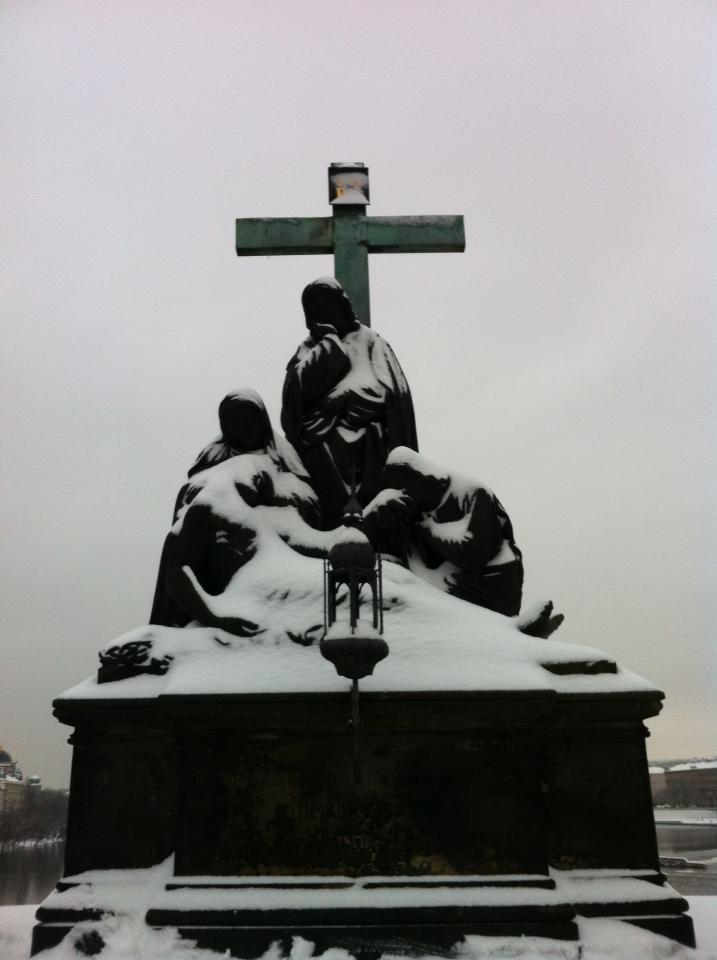
I took this photo on Charles Bridge in snowy Prague a few weeks ago.