Past Post: A Hard Life

Lucy was asleep on the sofa when Barbara returned from her shopping excursion.

“Hellooo!!” Barbara trilled, “Luceeeee!!”

She sighed and rolled over, making sure she kept her eyes tightly closed so as not to attract attention. If Barbara thought she was asleep she would hopefully leave her in peace. No such luck. For today, it transpired through Barbara’s muffled shouts from the hallway, was the ladies’ bridge afternoon, which meant that Lucy would be fully expected to join in the festivities.

Unable to ignore Barbara’s incessant crashing and banging any longer, she slowly stretched out and peeled herself off the sofa with a heavy heart. Walking into the kitchen, she saw Barbara unpacking several hefty shopping bags. The purpose of this particular shopping trip, like so many others before, had been to purchase ‘nibbles’ for the occasion – a concept that seemed to have been well and truly lost on this particular group of ladies, given the amount of food they systematically shovelled into their cavernous mouths at any one sitting. Lucy often thought it quite a feat that they managed to get the food anywhere near their mouths, such was the amount of blubber surrounding their big pink faces.

Sitting down by the table, she surveyed the pots of brightly coloured additive-laden dips, multi-pack bags of crisps and hugely calorific boxes of cream cakes. Her heart sank even heavier in her chest and she let out an almost imperceptible sigh.

“Oh! Lucy!” Barbara detected her presence and spun around to face her. “You look such a mess!” she gasped, “and the bridge girls will be here in half an hour – what on earth are we going to do with you?”

Barbara, oblivious as always to anyone’s feelings other than her own, continued to berate Lucy without pausing for breath. “You haven’t time for a bath now so we’ll just have to fix your hair and hope for the best. What a shame! I so wanted you to look pretty for our guests!”

Pretty. Lucy couldn’t care less if she looked pretty or not. She just wanted to be treated with some respect. Why was she expected to perform like a circus animal every time those big pink ladies came over? She was sick of being paraded around like a toy.

“I’m six years old!” she thought to herself, “Not a baby!” Crossly, she turned on her heels and stormed out of the kitchen, pausing briefly to cast a mournful look at the cream cakes. How could Barbara gorge herself on such delectable foods when all she fed Lucy was tinned food and leftovers? Whenever Lucy expressed an interest Barbara would say, “You can’t eat this, it’s bad for your digestion.” It really was despicable.

Three hours later the bridge ‘girls’ had gone, leaving a trail of crumbs behind them, trampled into the carpet. Barbara, slightly merry after two glasses of Babysham, was finishing the washing up and singing to herself. Lucy was standing behind her, glowering. Having been forced to watch them devour every morsel on offer, she had almost reached the end of her tether. And if only she could talk she would say so. There was really only one thing that could save the situation and prevent her from walking out for good.

And, at that moment, a miracle happened. Casting aside her rubber gloves on the draining board, Barbara spun around and smiled broadly. “WALKIES!” she warbled. And in that very instant, all was forgiven.

The hunter

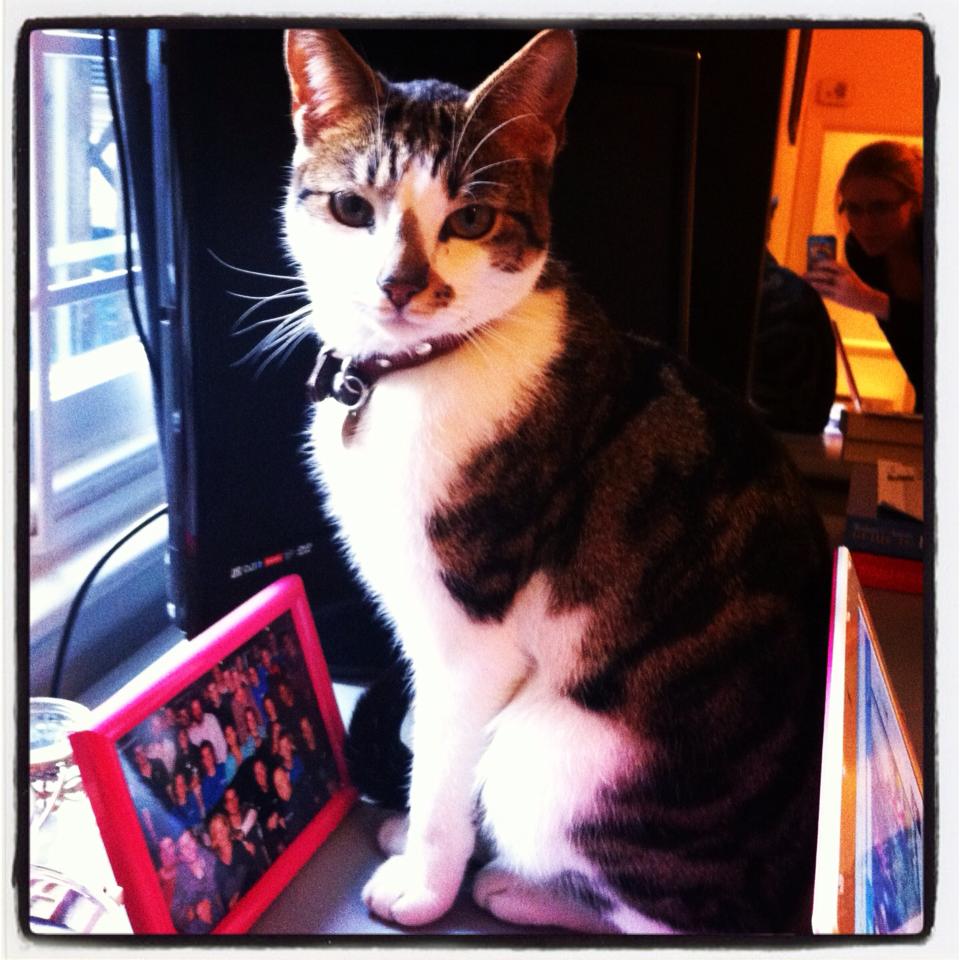
The bird was small, but it was nimble, its spindly little legs proving vastly more useful than they looked. Ralph watched as it hopped from one branch to another, spending scarcely a second on each before moving on. It looked, he thought, not unlike a man dancing across hot coals, though he’d only ever seen one of those on the television.

The bird’s plumage was bright blue with black and yellow inflections, and its voice was high and sharp. Ralph had no idea what kind of bird it was – how could he? What he was all too well aware of was the fact it would make a very tasty dinner (or second dinner if the truth be told, since old Mrs Jessop from next door had put out leftover cottage pie for him not two hours ago. But then he was, as she frequently told him in her funny wobbly, gobbly voice, a growing boy).

Ralph curled his tongue lazily around his lips and sniffed the air with precision. He wasn’t hungry, as such. But he was feeling predatory and fully intended to employ his stalking skills. Slowly and silently he rose to his feet. He crouched low, narrowing his eyes so the little bird came into sharp focus. It was preening now, oblivious to him inching closer. Its vanity, it seemed, would be its downfall. Not that Ralph cared.

Sitting back on his haunches Ralph prepared to launch. The pads of his paws rested lightly on the ground; though lazy, he was nonetheless a skilled hunter. As he sprang up onto his hind legs he sensed a movement behind him and, all of a sudden, was spinning through the air in the firm hands of Thomas, his owner’s five year old son. “Whoosh, kitty, whoosh,” Thomas shouted as he tore through the garden, holding the cat awkwardly in his grubby little hands.

Behind them, oblivious, the little bird sat on his branch and continued to preen.

The runner

She closed the door behind her and began to run, her feet pounding the pavement with reassuring clarity. As every second passed she felt the muscles in her chest relax. She breathed air deep into her lungs and expelled it forcefully. In, out, in, out, as if she was on autopilot. He couldn’t hurt her here, the streets were her domain. They whispered all their secrets in her ears. They knew she was like them; sleepless, never alone and yet lonely beyond words.

Nobody knew what she was going through, she was too ashamed to admit it – sometimes even to herself. She’d known from that first time it would be silenced, swallowed somewhere deep within her like Jonah in the whale; too far down for her screams to ever find release. He’d apologised, of course, begged for forgiveness and wormed his way back into her affections. Like a maggot in the core of an apple he’d corroded her from the inside out. She still looked the same on the outside, but inside she was empty, a gaping, hollow chasm of pain and despair.

Still she ran, as the sky began to darken and fat rain drops plopped onto her cheeks and mingled with her tears. How could she leave him? Where would she go? He’d severed all her ties, there was nobody left to save her. Her bruised skin slid like water over the weary mountains of her bones. Each step sent shooting spears of pain up through her veins like bolts of lightning. But she didn’t care. She would run on, she knew that now. Until her body was as tired as her mind and she began to stumble on the cold, hard ground beneath her. Until the night turned into day and the birds began to sing their morning song. She would run on.

Writer’s block

The blank page sits and waits. It does not judge as the writer hesitates, procrastinates and makes another cup of coffee. It is bemused, however, by the writer’s seeming inability to do the one thing they proclaim to love. What, it wonders, is so hard about putting pen to paper or fingers to keyboard? The ideas are there, after all. The font of inspiration never runs dry, not really. The very notion is a construct of the human mind, so small in its thinking, so closed. In reality inspiration is a boundless well, but writers in particular are so shackled in their own self-doubt they fail to see the truth: That it is quite within the realms of possibility for them to lower the bucket whenever they choose.

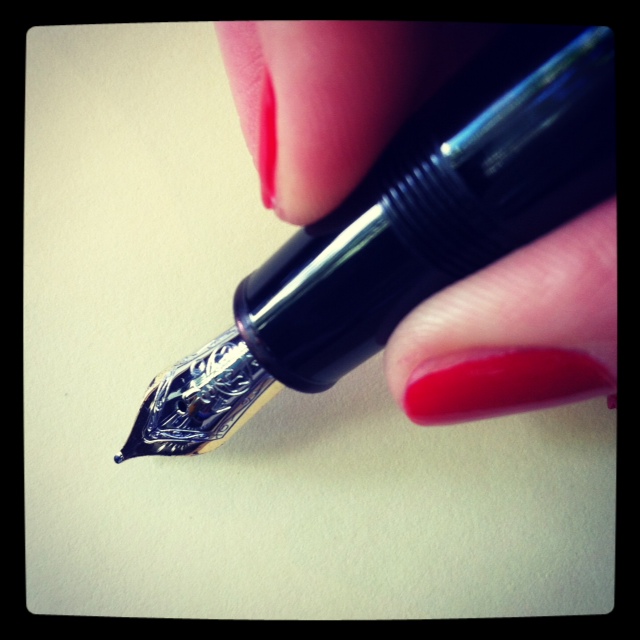
Perhaps, the blank page muses, the writer is like a fountain pen, the ink being inspiration and the nib the point at which the creativity unfolds. When the fountain pen is first used it must be shaken to activate the ink. Only then can the ink trickle down to the nib where the two can connect and create words. Yes, thinks the blank page with a degree of smugness. That must be it. The writer is like a fountain pen that needs shaking. If only I could be the one to shake them. But alas, I am but a blank page, a canvas for the elusive words the writer struggles so much to produce.

The writer paces, sipping coffee and muttering indecipherable words. From time to time they stop and stand, quite still, in the middle of the room, like a cat that has been startled by an aggressor. They stare intently at a spot far in the distance, their eyes backlit by a fire of recognition that is stirring deep within the chasm of their mind. Then quite as suddenly their gaze softens, they lose focus, and they continue pacing, back and forth, this way and that.

The blank page sighs to itself. Watching the writer tie themselves up in knots is frustrating. It listens to the clock ticking and the twittering of birds outside the window. Still it waits, and still the writer does not write. More coffee, a telephone call, a conversation with the next door neighbour about shrubs; the blank page starts to think it will always be like this, an empty canvas, a possibility of greatness but no more. It feels sad.

But just as the blank page is about to give up hope, the writer strides purposefully back into the room and sits down at the desk. They roll up their sleeves, pick up their fountain pen, and begin to write. Or at least they attempt to write, but find that in this latest absence from writing the fountain pen has dried up. They shake the fountain pen and eventually the ink begins to flow. And as the words begin to wrap themselves around the blank page it thinks to itself, you see? The well of inspiration has been here all along. Now lower your bucket and drink.

Beauty Queen

Blankly she stares through mascaraed eyes, a soulless being with a painted face. For hours a tumultuous swarm of activity has ebbed and flowed around her. It is only now, with moments to spare, that the hurricane winds gather pace. Faceless fingers tug her hair into a style that defies both gravity and reason. Yet more tend to her nails, pinch her cheeks, tweeze her brows. Quietly she sits in the eye of the storm; watching, waiting.

From behind the chair upon which she is borne aloft a camera clicks. She smells the cloying odour of stale alcohol before she sees the photographer’s face in the mirror. Sweat oozes from his forehead like ectoplasm, sticky and wet. His lips purse, he blows a kiss at her then laughs, spittle forming at the corners of his mouth. She does not respond, merely looks away.

Her rosebud lips are painted pink, a final wash of blusher applied to the apples of her cheeks. She steps down from the chair. Her vantage point lost, she feels her diminutive stature acutely. The layers of cream and pink tulle on her princess cut dress are adjusted. Her feet are prised into crystal slippers; replicas of Cinderella’s, or so they told her. A cloud of perfume and hairspray shrouds her, stinging her eyes and throat like nettles. Now she is unrecognisable even to herself, she is ready.

The curtains pull back and she steps onto the runway, drawing collective gasps. “Isn’t she beautiful?” “What a darling little thing.” “Only five years old, you say? Well I never.” “Adorable.”

In the glare of the studio lights nobody notices the single tear that slides unbidden down her painted face, dropping from her chin into obscurity.

This gorgeous little girl was at a centre for disabled children that I visited in southern India. She’s quite the opposite of the girl in my story – naturally beautiful and enjoying her childhood, just as she should be.