Back to Basics

I have somehow managed to put my back out. Again. The frustration is almost too much to bear, though I know I need to put it into perspective. It is not (yet) as bad as the last two times, which means that if I’m careful there is a chance it could recover without going into full blown paralysis mode. And although in the current (acute) phase, it is somewhat debilitating, it is far from a life threatening condition. I must, I know, stay positive, although when you’re not yet 35 and it takes a full three seconds to straighten up each time you stand, plus you have shooting pains down both your legs when you walk, it’s kind of hard to keep that top of mind. Still, I must try, because nobody likes a whinger – least of all me.

I’m realising now more than ever the correlation between physical and mental well-being. When I’m feeling stressed with work or life it doesn’t take long to manifest itself in my body. This time has been textbook. Two boozy weekends, a patch of work stress and a ridiculous ongoing drama with our cleaner (of all things) have taken their toll on me mentally, and bang! There goes the back. I have also, I admit, become complacent with my core strengthening exercises of late, doing increasingly watered down versions each morning to afford myself additional, precious moments in my bed. This, combined with increasingly prolonged periods of desk sitting, has once again proved to be a recipe for disaster.

I know this is my body’s way of telling me to sit up and take notice, to find a way to redress the imbalance that has been created. My recently ended counselling has helped me to clarify the things that are important to me. Now I need to start taking active steps towards achieving them. Because if I don’t, I fear back pain will be but the tip of a very big iceberg.

So it’s time to make some changes – physical and mental. Firstly, I must get the stand-up desk my boss sanctioned weeks ago that I haven’t got around to sorting yet. Secondly, I will sign up for the eight week mindfulness course I have found, to try and get my mind back into alignment with my body. Hopefully with a bit more commitment and a bit less complacency I can get back to full health more quickly this time around.

images (1)

Therapy Talk

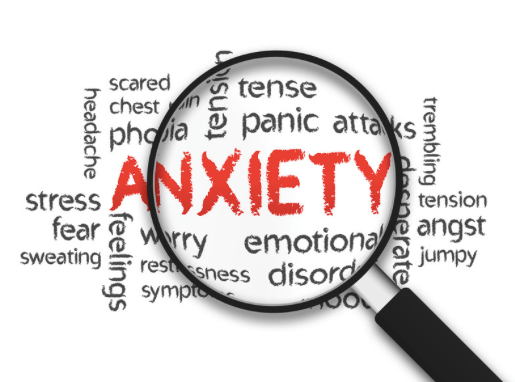
At the beginning of 2015 I had a strange and unsettling episode that harked back to my days as a stressed out third year in university. It was a panic attack, full blown and frightening. Brought on, I think (it’s always hard to pinpoint), by a lack of direction in my life at the time. I had moved to Brussels with my boyfriend and was loving life in Belgium, but my nine month maternity cover job contract was coming to an end and I didn’t have anything else lined up. I was also conscious that my status as a girlfriend rather than a wife in this international setup was somewhat lacking in security. And so, after weeks of internalising my emotions, they built up and burst out of me in a tidal wave of fear. I hyperventilated myself silly, cried and panicked for the best part of an hour. Fortunately my then-boyfriend (now-husband – as it turned out I didn’t have to worry about that part) was on hand to offer words of support and encouragement. I calmed down. But I knew something inside me had awakened, and that I would need to find the courage to face it.

And so I did something I never thought I would actually do: I found a counsellor. And I went to my first session feeling embarrassed and stupid, like I was wasting her time and my own. And thinking surely counsellors are for people with real problems, not women whose biggest issues are which job to choose next and whether their boyfriends will decide to pop the question. But as I sat and talked, in the first session and the next, I realised this was about so much more.

We humans are like onions. When you start to peel away the layers you find layers you never knew existed. Each represents experience, and emotion. And until you have uncovered them all it’s hard to appreciate why you are the way you are, why you interact the way you do with others, with the world. And, most crucially of all, how you can adapt your behaviour to bring about positive and lasting change.

Almost eighteen months later I had my final session. It was tonight.

My counsellor asked me what three things I had learned from our sessions. I said, firstly, I’ve learned how to get some perspective. When I feel myself getting anxious, I now have the tools to dissociate myself from the stressor – even if just for a moment. I can then ask myself how big the problem is, really. If it will matter in three weeks, three months or three years. If it’s worth fighting or losing sleep over. And the answer, of course, is usually no. Secondly, I said I’ve learned some valuable coping mechanisms in response to specific situations. The best one was the victim-perpetrator-rescuer scenario, which I have used successfully to navigate occasional tricky patches in relationships. Finally, I’ve learned to be more empathetic towards others, to appreciate they have layers of their own (layers sometimes even they don’t know about). I have a propensity to be oversensitive, but now I have the capacity to realise that people don’t do things with the aim of upsetting me. It’s just the way they are, the way they have been conditioned. Just as my response to their behaviour is the way I have been conditioned.

It’s been a great experience.

I’ve learned a lot: About the person I was, the person I am and the person I want to be.

Now it’s time to take back the reins.

Anxiety-Looking-Glass

Why Life Can’t Always Be Fun

Discipline is not my friend. She never was. When the class was lining up against the wall at the end of break time (clap, clap, clap went the teacher’s hands), I was knee down in the dirt digging up sticks to light my imaginary witch’s cauldron (I’m not a witch, to clarify, that was just a phase – one of many).

Imagination was my friend. She painted rainbows in my mind every day. She was both distraction and muse. Sometimes she shone so bright a light upon me that it radiated out of my pores, rendering me translucent. Other times she disappeared like in a game of hide and seek that only she was playing.

Years passed. Despite our differences, Discipline held onto my coat tails as Imagination danced around me. Both persevered, in their own inimitable way. But there was a new player in the game.

Fun was shiny and bouncy and new. She knew exactly what she wanted, and would stop at nothing to get it. She laughed in the face of Discipline, who was always far too serious. She toyed with Imagination, in the way a cat will play with a fly – until it deems it time to eat it.

At some point Discipline gave up. Imagination, too, became tired of playing games that didn’t go anywhere. Fun took the wheel and drove. And for a while, things were just fine.

Now Fun is getting bored of driving, and Discipline and Imagination are nowhere to be found. I’m going to look them up on Friends Reunited. It’s time to make amends.

nofun

Sink, Swim or Self-accept

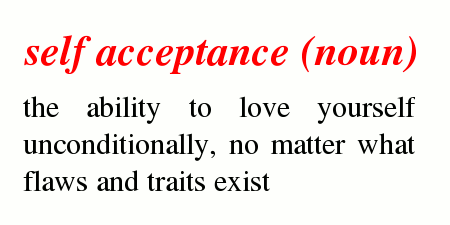
Self acceptance is a wily old beast. I’ve been chasing it around for years with no success, lying in wait to ensnare it. But it’s always a step ahead, just out of reach. Tonight, though, I had a breakthrough. Because, just as it came barreling past me (as it is wont to do, teasingly), I reached out and grabbed its tail. Just for a second. I let go, obviously, but that doesn’t matter. What matters is I managed to touch it, to make it tangible and real.

Last week I wrote a list of all the things that make me feel guilty. It was long, with the obvious (obligatory) entries about health and diet and exercise. It also mentioned my penchant for a bit of crap TV from time to time, my lack of discipline to write and my lack of ambition.

This week work is ramping up. I’ve been given more responsibility, a new client and the chance to earn a promotion. I didn’t think I was ambitious, yet all of a sudden I feel hungry for it. In two days I’ve racked up several hours of overtime, but instead of feeling downbeat, put upon and weary, I feel calm, confident, happy. Why? Because I realised earlier that it is possible to just let things go; to not worry about coming home late, eating cake, not having time for the gym, not writing, occasionally watching something crap on TV (once in a while, I’m not advocating an unhealthy lifestyle, everything in moderation).

Almost none of the things I guilt over incessantly really matter. In fact, in those rare moments when my vision clears I realise that beneath the layers of guilt I am actually profoundly serene. The things on my to do list can wait until the weekend. I don’t have the mental capacity to worry about all of that as well as working this hard. I can’t do both. Or maybe I can, but I don’t want to. I choose not to. Because ultimately everything in life is a choice. And choosing to accept yourself, with all the foibles that make you who you are, is the best decision you can make.

image

The Baby Monkey Metaphor

This is an honest post about an emotion that clings to my back like an orphaned baby monkey every day of my life. That emotion is guilt.

To give examples, here are some of the myriad things I feel guilty about on a daily basis: Not working hard enough; Not being ambitious enough; Not being a good enough fiancé; Not being a good enough daughter; Not being a good enough friend; Not writing; Not pursuing my life goals; Watching too much crap instead of writing/pursuing life goals; Caring too much what people think about me; Being so privileged when so many are not; Not appreciating being so privileged when so many are not; Never being satisfied/always wanting more; Eating badly; Not going to the gym; Not being mindful; Worrying about everything/sweating the small stuff; Being too apologetic; Wasting too much time on social media. I could go on. In fact, I daresay I could fill ten pages with all the things that I feel guilty about from one moment to the next. But I won’t (because I’d only feel guilty about the time I wasted writing it). It’s a depressing (if somewhat exaggerated, for the purpose of this post) truth that the only time I don’t feel guilty is when I’m sleeping, although if I remembered more of my dreams I wouldn’t be surprised if I felt guilt in most of those as well.

It never fails to amaze me how humans can be so intelligent and yet so utterly stupid at the same time. Unless felt in a justified context, for example when we have genuinely done something to upset another person, guilt – like worry and anxiety (which I could also fill a small tome about, let’s not go down that road here) – is a useless emotion. After thirty four years of living with it I can vouch for the fact it does not increase productivity – far from it, it is productivity’s antithesis. It also doesn’t improve personal relationships, or indeed help other people in the slightest. I wouldn’t go so far as to label it a selfish emotion, because it is usually underpinned by a sense of duty towards others or towards our true (non-egotistical) selves, but it sure is good at making a person introspective to the point of being boring.

So in the spirit of the age old ‘new year, new me’ mentality, it’s time to face the truth: the baby monkey on my back, whilst cute, has never led me anywhere positive; in fact, it has only led me into procrastination, anxiety and paralysing self-doubt. In short, cute or not, it’s time to ditch the monkey. Life is too short to be paralysed by useless emotions. It’s time to start fostering the useful ones.

monkey-03

NLP Techniques to Achieve Positive Lasting Behavioural Change

Recently I attended a workshop in Brussels on how to incorporate New Code Neuro-Linguistic Programming techniques into daily life as a means of achieving positive and lasting behavioural change. It’s difficult to condense the content of that inspiring three hour session (hosted by fabulous trainers Lidija and Thomas from Momentum Strategies Coaching, who offer courses in London as well as Brussels and other locations worldwide) for the purpose of this blog post, but I’m going to have a go.

During the session, Lidija and Thomas explained that behaviour change is instigated by our unconscious mind rather than our conscious mind. When we want to change a behaviour we must therefore tap into our unconscious mind. This cannot be done, however, unless we are in the right state of mind to engage. For example, if we are feeling stressed, angry or sad, we are less likely to be able to communicate our wants and desires to our unconscious in a meaningful way.

The word ‘wants’ is key here, because the unconscious mind doesn’t recognise or process negatives e.g. I don’t want to keep behaving like this. Rather, it recognises positive affirmations e.g. I want to change this behaviour.

During the workshop we did a number of exercises to promote relaxation and to help us connect with our unconscious mind. One such exercise involved asking our unconscious to support us in making the positive behaviour change we most wanted. According to NLP theory, in making this connection between conscious and unconscious mind, the unconscious mind will begin to adapt our behaviour in ways that promote the desired behavioural change, without the conscious mind even being aware of it.

One example given to demonstrate this was that of a writer who wanted to finish a novel (bit close to home, this one). If the writer were to ask their subconscious every night to support them in achieving this goal, they might find that one day, on waking, they reach for their smartphone (as is their habit) and it drops onto the floor and underneath the bed. Whilst not necessarily the case, this could be an indication of the unconscious mind forcing a change in behaviour to break the negative behavioural cycle (i.e. checking smartphone before doing anything else, and getting sucked into social media etc.), and the writer might take this as a sign, leave the phone under the bed and get their laptop out instead, and begin to write.

I admit I was initially a little sceptical about this example, but then I tried it myself, and a couple of days later as I walked to work along the normal route I suddenly veered off and took a different route, with no input whatsoever from my conscious mind. And then, also unbidden by my conscious mind, my new novel idea popped into my head, and I spent the rest of the walk to work thinking about it. Granted, this could be coincidence, but I’m interested enough to find out more about this fascinating technique and learn how to use it to make positive lasting change in my life.

As a starting point of NLP it is important to clearly state our Intentions i.e. the things our conscious minds most desire. The following is my list:

  1. I WANT TO FINISH MY SCREENPLAY
  2. I WANT TO WRITE A NOVEL
  3. I WANT TO IMPROVE MY FRENCH
  4. I WANT TO BE A MOTHER
  5. I WANT TO BE A GOOD WIFE AND MOTHER
  6. I WANT TO BETTER UNDERSTAND OTHERS / THE HUMAN CONDITION
  7. I WANT TO HELP PEOPLE

What’s yours?

nlp