The next chapter

Moving day is nearly upon me, and whilst I’m almost beyond exhaustion I also couldn’t be more excited. There’s something quite thrilling about moving house. Perhaps it’s because it offers a clean slate, a chance to reset and start again. In other words, a new beginning; a bit like January 1st when the new year lies before you like a pristine and untouched canvas, ready for you to stamp your mark on it as you see fit.

And whilst I’m no Kelly Hoppen I’m very much looking forward to having a bash at making the new flat into a home that reflects both of our personal tastes. I also want to create a corner for my writing, where I can sit and feel inspired each Monday (and in the evenings and weekends too-for it’s finally beginning to dawn on me one day a week is not sufficient time to become truly proficient in the craft of writing; better late than never).

For me, this particular move holds the further dual significance of a) moving in with my boyfriend and b) having more space to myself, since the aforementioned boyfriend is likely to be travelling fairly frequently with work. Whilst I’ve always enjoyed living with other people, as the inexorable passage of time has worn on I have come to crave solitary time more often. Whereas a few years ago I loved the hustle and bustle of a four person tenancy arrangement, now me and one other is as much as I can cope with – and it’s becoming increasingly more vital that the “other” is someone with whom I get along like a house on fire rather than merely live and split bills with.

So there you have it. It is the eve of my next move, almost all of my belongings are packed into bags and boxes and my furniture is bubble wrapped. The only thing left to do is post this blog and pour myself a generous glass of red wine. It’s time for the next chapter. And I really cannot wait.

Inspiration underload

There are days when words flow like wine, ideas are like buses and the air is pregnant with inspiration. In contrast, there are days when the very process of sentence construction feels like the literary equivalent of wading through quicksand, and brain activity is so non-existent a doctor might well switch off the monitor were it not for the fact of the walking and talking aspects of the person still being intact. On those latter days of which I speak, the air is no so much pregnant with inspiration as thick with the cloying unease of guilt, one of the less conducive emotions to successful writing endeavours.

Today, you may already have guessed, is one of those days, in part because I’ve once again lacked the discipline to work to office hours – having spent the morning running and procrastinating before a friend popped over for lunch and we both spent a considerable portion of the afternoon nattering and sunbathing. Though, in my defence, she is a very old friend whom I have not seen in a very long time – and in part because I’ve just not been feeling the inspiration in the way I did last week. You could argue that I’ve hardly given myself the chance to find inspiration in the first place, having spent less than two hours actually sitting at my desk today, and your argument would indeed be valid. But I would nonetheless pig-headedly argue that sometimes days like this are required in order to find inspiration again. And also that spending time with friends and in the sunshine is beneficial to one’s health, if not one’s bank account or future as a celebrated author.

I’m going to blame the heat, though as I type these words I am mentally flagellating myself for making so many excuses for something that, as my inner critic is telling me at this very moment, is really very simple: If you want to be a writer, the voice says, pull up a chair, switch on your laptop, switch off your phone, switch off the internet, sit down, and write. Write until your fingers go numb, until it has got dark outside and you hadn’t even noticed. Write until every last seed of an idea has tumbled from your brain onto the page and taken root. Write as if your life depended on it. Just write. Because isn’t that what you profess to want to do? I have to admit the voice has got a point. Perhaps I’ll be more productive once the heat wave has abated…

Thinking about it, maybe best that I don't live in a hot country after all...

Winning

Thus far today’s been one of those rare and gorgeous days where everything runs exactly to plan. I was up at 8am, at my desk by 9am and by 10.30am had submitted two magazine pitches and was donning my running shoes for a quick jaunt to Argos in Victoria, where I collected a camping stool for my forthcoming trip to Glastonbury Festival. By the time I arrived back home (by tube, since the camping stool didn’t lend itself all that well to being a running aid) I’d even had a reply from one of the editors (the good news is they want the article, the bad news is they’ve no budget – but never mind, it all adds to the online portfolio).

It’s now 2.30pm and I’ve just finished writing this month’s guest post for Bea Magazine (which will be online on the 30th) and drafted ideas for my blog posts over the next week (WordPress assures me I will not fail in my task of posting something every day of 2013, thanks to its clever functionality to schedule blog posts – shhh). Before I start writing them, however, I need to pop out to do a spot of pre-festival shopping – it’s time to stock up on cereal bars, meal replacement shakes and enough wet wipes to keep the dirtiest of festival-goers clean from head to toe…Quite a tall order…Happy Monday everyone!

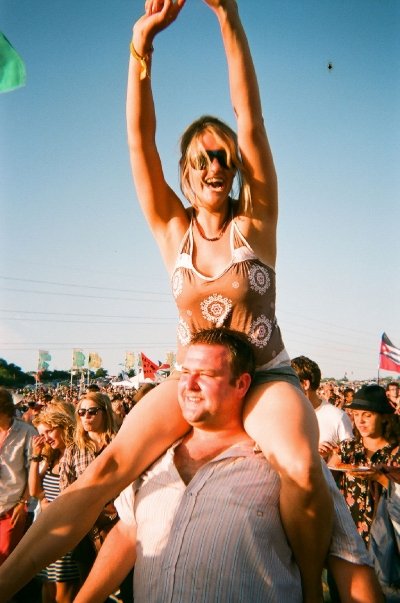
My friends will kill me for posting this but I love it – this pic pretty much sums up how much I love Glastonbury and how excited I am to be going there in three days!

The perennial debate of “they’re”, “there” and “their”

As a precocious child at primary school I had labelled myself as ‘one to watch’ in the literary world by the approximate age of seven. During weekly writing classes I refused point blank to write anything other than my ‘never ending story’ – a down-the-rabbit-hole (well, mole-hole, actually, but I digress) type tale not that dissimilar to Alice in Wonderland, though I would have driven a stake through my own heart before admitting plagiarism.

In the years since then I’ve had a love affair with the many nuances of the English language and have greatly enjoyed grappling with grammar, spelling and punctuation. Which is why I sit firmly in the ‘anti-dumbing down’ camp when it comes to modern day language usage.

So you can imagine how horrified I was to read what Simon Horobin (a professor of English at Magdalen College, for goodness’ sake!) said at this week’s Hay Festival. According to Adi Bloom, who wrote this article for the Times Education Supplement Magazine, Horobin – author of a book entitled ‘Does Spelling Matter?’ (YES!!) –  suggested that the spellings of “they’re”, “there” and “their” could be standardised. “Is the apostrophe so crucial to the preservation of our society?” he asked, before concluding that “spelling is not a reliable indication of intelligence.”

On that last point I must agree with Mister Horobin – poor spelling is not necessarily a sign of low intelligence, but (and let’s exclude dyslexics from this argument for obvious reasons) it is a sign of sloppiness. In the majority of cases people have been taught how to correctly use grammar but don’t view it as important enough to master. Now I’m not archaic enough to hold the view that in this brave new digital age all language must be set in stone. But, in my humble opinion being able to demonstrate a basic grasp of when it’s appropriate to use ‘your’ versus ‘you’re’ is hardly an insurmountable challenge.

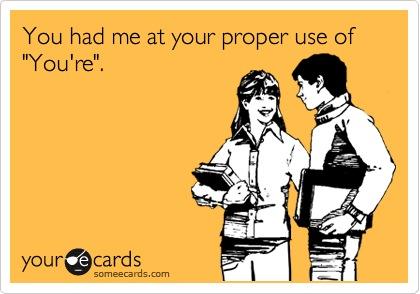
That’s why I for one am glad that the education secretary – for all his faults – has developed a new English curriculum that sets strict rules for learning correct grammar in primary school. Because if they don’t know they’re arses from there elbows then their just not going to get very far in life – and if Simon Horobin doesn’t realise that, he must be even closer to Alice in Wonderland than my never ending story.

Writer’s block

The blank page sits and waits. It does not judge as the writer hesitates, procrastinates and makes another cup of coffee. It is bemused, however, by the writer’s seeming inability to do the one thing they proclaim to love. What, it wonders, is so hard about putting pen to paper or fingers to keyboard? The ideas are there, after all. The font of inspiration never runs dry, not really. The very notion is a construct of the human mind, so small in its thinking, so closed. In reality inspiration is a boundless well, but writers in particular are so shackled in their own self-doubt they fail to see the truth: That it is quite within the realms of possibility for them to lower the bucket whenever they choose.

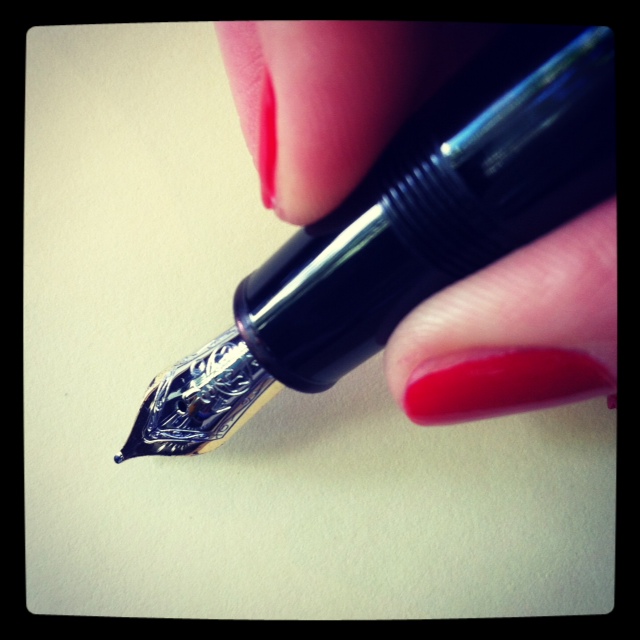
Perhaps, the blank page muses, the writer is like a fountain pen, the ink being inspiration and the nib the point at which the creativity unfolds. When the fountain pen is first used it must be shaken to activate the ink. Only then can the ink trickle down to the nib where the two can connect and create words. Yes, thinks the blank page with a degree of smugness. That must be it. The writer is like a fountain pen that needs shaking. If only I could be the one to shake them. But alas, I am but a blank page, a canvas for the elusive words the writer struggles so much to produce.

The writer paces, sipping coffee and muttering indecipherable words. From time to time they stop and stand, quite still, in the middle of the room, like a cat that has been startled by an aggressor. They stare intently at a spot far in the distance, their eyes backlit by a fire of recognition that is stirring deep within the chasm of their mind. Then quite as suddenly their gaze softens, they lose focus, and they continue pacing, back and forth, this way and that.

The blank page sighs to itself. Watching the writer tie themselves up in knots is frustrating. It listens to the clock ticking and the twittering of birds outside the window. Still it waits, and still the writer does not write. More coffee, a telephone call, a conversation with the next door neighbour about shrubs; the blank page starts to think it will always be like this, an empty canvas, a possibility of greatness but no more. It feels sad.

But just as the blank page is about to give up hope, the writer strides purposefully back into the room and sits down at the desk. They roll up their sleeves, pick up their fountain pen, and begin to write. Or at least they attempt to write, but find that in this latest absence from writing the fountain pen has dried up. They shake the fountain pen and eventually the ink begins to flow. And as the words begin to wrap themselves around the blank page it thinks to itself, you see? The well of inspiration has been here all along. Now lower your bucket and drink.

One last excuse

I’ll admit (and yes, I know I’m using the word ‘I’ – argh) that things have gone rather awry this past few days where posting on this blog’s been concerned. In large part this has been due to poor advance planning of the bank holiday weekend, two consecutive afternoon rooftop parties (get me with my busy social life) on Saturday and Sunday having left virtually no time for writing. However, it’s fair to say I also experienced some not insignificant technical issues (wifi being down, computers crashing etc) that meant having to upload to the blog via smartphone – which apparently didn’t work very well.

So anyway, we are where we are, no point crying over spilt milk etc. The main fact is I did still find a way to post, even if the posts themselves were substandard in quality and not always accompanied by pictures. As recompense I’d planned to wow you with a stunning comeback blog today, but time has run away with me yet again, and as I’m now about to run out of the door to tonight’s Bookslam (featuring the great Caitlin Moran and Hadley Freeman, no less) this somewhat cobbled together piss-poor excuse for a blog post will once again have to do.

I’m better than this. And I’m sorry.

Normal service will resume tomorrow.

No more excuses.

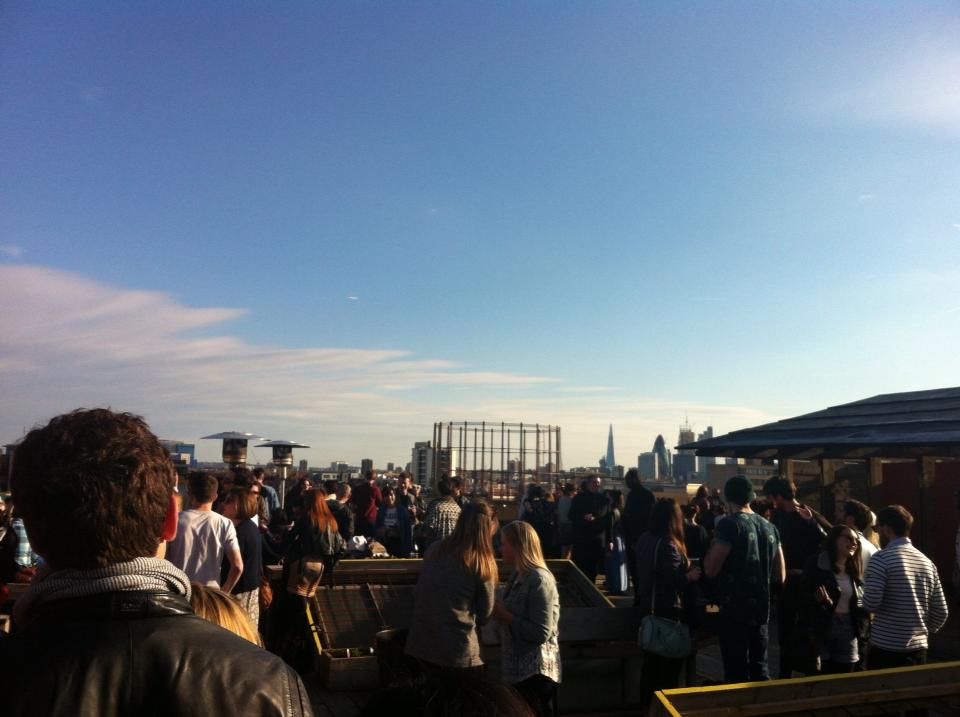
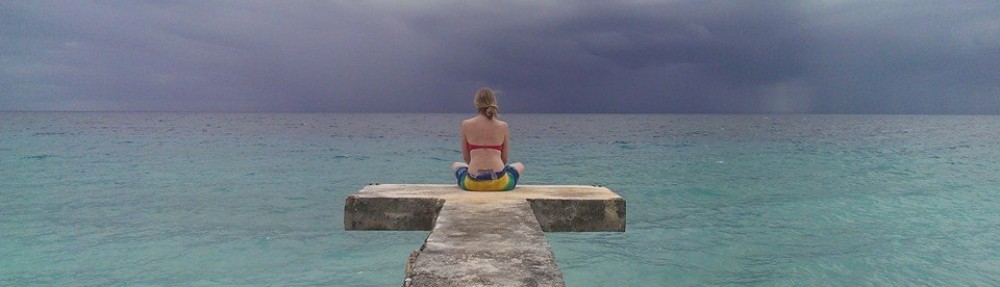
This was where I was on Saturday afternoon when I should have been writing. You’ve got to admit it’s appealing…

Past Post: Story Time (re-posted from yesterday due to technical issues!)

It’s almost seven when I pull the front door closed behind me and hear its reassuring click. If it could speak it would be telling me I’m safe, nothing can harm me now. Let’s pretend, it would continue, that the outside world never even existed. Just for tonight, let’s pretend.

My brown Italian leather bag slides off my shoulder and lands in a crumpled but delicate heap on the floor. I kick off my shoes and walk down the hall into the kitchen, sniffing the lemon-scented air. The sheets are hung, the draining rack emptied. The cleaner has been.

I cook on autopilot, chopping peppers and chilis, throwing them into a frying pan and watching as the yellow flame laps hungrily at its base. I leave it unattended as I go to run a bath, catch sight of my reflection in the bathroom mirror and wince. The day is etched on my face with alarming clarity.

This is my fourth consecutive stir fry, I realise as I swallow the last overcooked morsel of Quorn, flick off the banal television programme I was barely even watching and take my bowl into the kitchen to wash up. I run the water for too long, watch as the soapy suds spill over the bowl and into the pan beneath. I refill the draining rack, dry my hands. As I walk past the fridge I stop, consider a glass of wine, then think again.

My mind is racing as I sink beneath the surface of the water. I lie there motionless, like a hippo in a watering hole, watching as the steam rises up and curls around and back in on itself.

I know it’s time, and yet I hardly dare entertain the thought of doing what I’m about to do.

I drain the bath, pat my hair dry with a towel and slip into my fluffy robe and slippers, padding softly down the hall into my bedroom. For a fleeting moment I entertain the thought of putting on mascara, lipstick, perhaps even a touch of blusher, but then dismiss the idea as ridiculous. What would be the point?

The bedroom door scratches across carpet, then clicks into place like the last piece of a jigsaw. I turn the key softly in the lock, dim the light. I pick up the box of matches on the bedside table, strike one and light the candles. The room is filled with dancing shadows and the cloying scent of vanilla. It tickles my throat and makes me nauseous. Or is it the fear that makes me nauseous?

I bury the fear in the pit of my stomach and kneel down, reaching underneath the bed for the box and stroking its walnut veneer as I pull it out. Questions rise up within me like a volcanic eruption. I suppress all but one. What if?

My hand is shaking as I turn the ancient key in the lock. It opens with a serpent’s hiss and I swallow hard. I know what’s coming. It’s judgement day.

I lift the lid and suddenly the air is flooded with a heady combination of dust and profanity.

“What the bloody hell do you think you’re playing at?”

“We could have died in there!”

“Cooped up like that all this time – it’s worse than prison!”

A bubble of relief rises up inside me and I laugh.

“Well that’s just brilliant! Now look at her – she’s laughing at us!”

 I look down at dishy doctor Dan, standing proud in his starched white coat, arms folded across his chest as he glowers at me with all the square jawed impudence he can muster. From behind him Tess steps into view, her blonde hair tumbling down over her shoulders like a waterfall. She echoes her husband’s defiant pose.

“Look,” I begin with a shrug, searching their tiny faces for some glimmer of forgiveness but finding none, “I’m sorry, okay?”

“Well maybe sorry isn’t enough this time,” comes a shrill voice from the far side of the box. I search out its owner, unsure after all this time of to whom it belongs. My eyes, adjusted to the candle light, alight upon a slender figure clad in a silk kimono cocktail dress.

“Jacqueline, my favourite villain,” I say, my smile filled with genuine warmth.

“Don’t favourite villain me,” she sniffs, keeping her steely gaze on mine. “Where were you?”

I lower my hand into the box. She regards it with the cool conviction of the criminal mastermind that I know her to be, then steps up onto it. I lift her up until she is level with my eyes.

“I am sorry,” I say again, conscious that my words are scant consolation after what I have put her through – what I have put them all through. “Really, I am. It’s just that, well, life got in the way.”

I scan the sea of tiny faces, feeling the warm familiar glow of recognition as each one comes into focus. Lithe-limbed Amelia, purple-haired Clarice, kind-hearted Albert. How could I have left them for so long? What was I thinking?

“Well come along then,” Jacqueline snaps suddenly, wrenching me from my reverie. I look at her, my eyes unfocused, and blink uncomprehendingly. “Put me down,” she hisses. I do as she says.

“Right,” says Albert, stepping forward from the assembly line, his walking stick tapping on the bottom of the box as a wide grin spreads over his weathered old face. “I think it’s about time you picked up where you left off, don’t you?”

I smile back, and a cheer erupts from the tiny crowd beneath me. My crowd. My characters. It’s story time.

The Disney Princesses were my first literary loves, so they had to feature in this post..
Want to be a columnist? Then read this.

It’s difficult to sit in a room with Guardian columnist and features writer Hadley Freeman, author of the soon to be published ‘Be Awesome,’ without feeling somewhat inferior. Hadley is, after all, what so many women – and men – of her generation aspire to be; a celebrated writer. But one thing Hadley is not is intimidating; in fact she’s both naturally funny and utterly charming, which makes it impossible to dislike her. Is there anything this American in London can’t do?

The event Hadley is speaking at is the Guardian Masterclass on column writing. She begins by telling the audience how she got into writing for a newspaper. Her “pushy Jewish mother” entered her in a competition whilst she was at university which, unbeknownst to her, she went on to win. Her mother duly collected her award and she was none the wiser, until an editor spotted her writing and approached her – and the rest, as they say, is history.

What would Hadley’s top tips be to succeed in column writing? Firstly, she says, write as widely as possible. Be funny if you can, and write for yourself rather than your audience. Don’t feel locked in by your voice; change it as appropriate, for example when writing about something outside of your comfort zone. Don’t feel pressure to always write news-reactive copy. Be careful how much of yourself you reveal to the reader. And, above all else, only write what you feel strongly about – if you don’t care then why should the reader?

After imparting her words of wisdom Hadley dashes off home (to write a feature, she tells us, somewhat appropriately). Replacing her at the front of the room is Michael Hodges, who writes for Time Out magazine. His advice to aspiring columnists is to be forceful and willing not only to be knocked back but also to write about things you don’t necessarily want to write about. He stresses the importance of being concise (“cut, cut, cut,” he says, “like sharpening a sword. It’s always better afterwards.”)

Michael’s style of journalism differs from Hadley’s, he says, because he waits for things to happen rather than seeking them out. He believes that “the weird is in the every day,” and that “there’s nothing more rewarding than observing your fellow human beings.” Ultimately, he says, it comes down to discipline. If you practice anything let it be producing clean copy that is well paced and holds the reader’s attention.

After the break Guardian columnist Marina Hyde takes to the stage. Marina has such presence that she wins over the audience immediately. Her chatty style, relaxed demeanour and her ability to laugh at herself make her approachable and real. She begins by warning the audience against using the word “I” – “know the rules before you break them,” she says, giving the example of Caitlin Moran as someone who has earned the right to use the word.

Comments, Marina says, should be largely ignored. And she agrees with Michael that being concise is vital: “If you can’t say what you want to say in 750 words you’re going wrong.” The best things she has written were completed in under an hour; the worst took three or more. “Sometimes I put the brakes on the word count and accept it’s a piece that has to go stillborn into the world,” she says, to laughs from the crowd.

Always be honest when you make a mistake, says Marina. And don’t assume that even if you put links in your stories people will know what you are referring to, because, she says, “It’s courtesy to explain.” Keep anger out of your writing because “it makes people switch off.” Be careful of your tone, and always try to get a joke in early to win over your audience. It’s also important to be able to write about a broad range of subjects, she says – and if anyone’s got that down to a fine art it’s Marina herself, writing three columns each week on completely different themes.

Marina closes with one final piece of advice: “Be someone people want to have a pint with.” Looking around the room it’s clear she’s easily achieved that goal.

The art of procrastination

If there’s one thing I’m brilliant at, it’s procrastinating. I can spend hours mooching around doing precious little (whilst convincing myself that the precious little I am doing is of the utmost importance) as the things I really should be doing languish at the bottom of my to do list, gathering metaphorical dust.

But now that I’ve decided Monday is, for the short term at least, to be my day of creative writing rather than commissioned freelance work, it’s more vital than ever that I rein in the part of me that is so very proficient in the art of procrastination and make every minute count. Because a day can pass incredibly quickly when you’re drifting through it, only half aware of what you’re doing.

Today I feel I have been conscious of all that I’ve been doing, though it’s only now as I sit down in my local café at half past midday I’m able to focus on my writing. I decided to start the day with a run around Clapham Common, to try and kick the sore throat that’s been plaguing me on and off for the past week into touch. On the way home I did my weekly shop and by 10.30am I was at my desk having showered and breakfasted, ready to tie up the loose ends on my last commissioned freelance job.

Now that’s done all that stands between now and 5pm is an afternoon of story and character plotting, and I can’t wait to get started on deciphering all the notes I’ve made in recent days as ideas have begun to take shape. So without further ado I must bid you adieu, for there’ll be no procrastination this afternoon, thank you! (It’s a good job I’m writing fiction and not poetry).

When I think of procrastination, I think of Koh Tao, for it was here I spent two weeks in blissful procrastination wondering whether to stay longer or continue further on my travels. Anyone who’s been there will know why I found it so hard to leave. Happy memories indeed.

Clarity

Today was my second ‘Freelance Monday,’ a description I’m already considering revising in favour of ‘Writing Monday’ as I’m rapidly coming to realise that freelancing comes at a cost; the cost being, well, writing (or at least writing what I actually want to write). For obvious reasons this is far from ideal.

To explain a little more eloquently, the purpose of my taking one day a week to write was twofold; one, to hone my writing skills, and two, to try and make money from my passion (try being the operative word, as I’m all too aware how hard it is to get regular paid writing work).

Thus far I’ve achieved neither, because whilst the freelance work I’m currently doing does involve writing and is paid, it’s not the kind of writing that I want to be doing and is paying far less than it should be given how much of my time it’s taking up.

I suppose I should try to look at the positive side of my current situation. In two short weeks I’ve already come to realise that writing anything for money just won’t do – I have to be emotionally invested in it, otherwise I may as well still be working five days a week for someone else.

Furthermore, I now know that when quoting for freelance work I need to be sure I can achieve the work in the time specified (and therefore within the agreed budget) – because otherwise I’m not only working for someone else, I’m also working for free. And that’s ridiculous in anyone’s book.

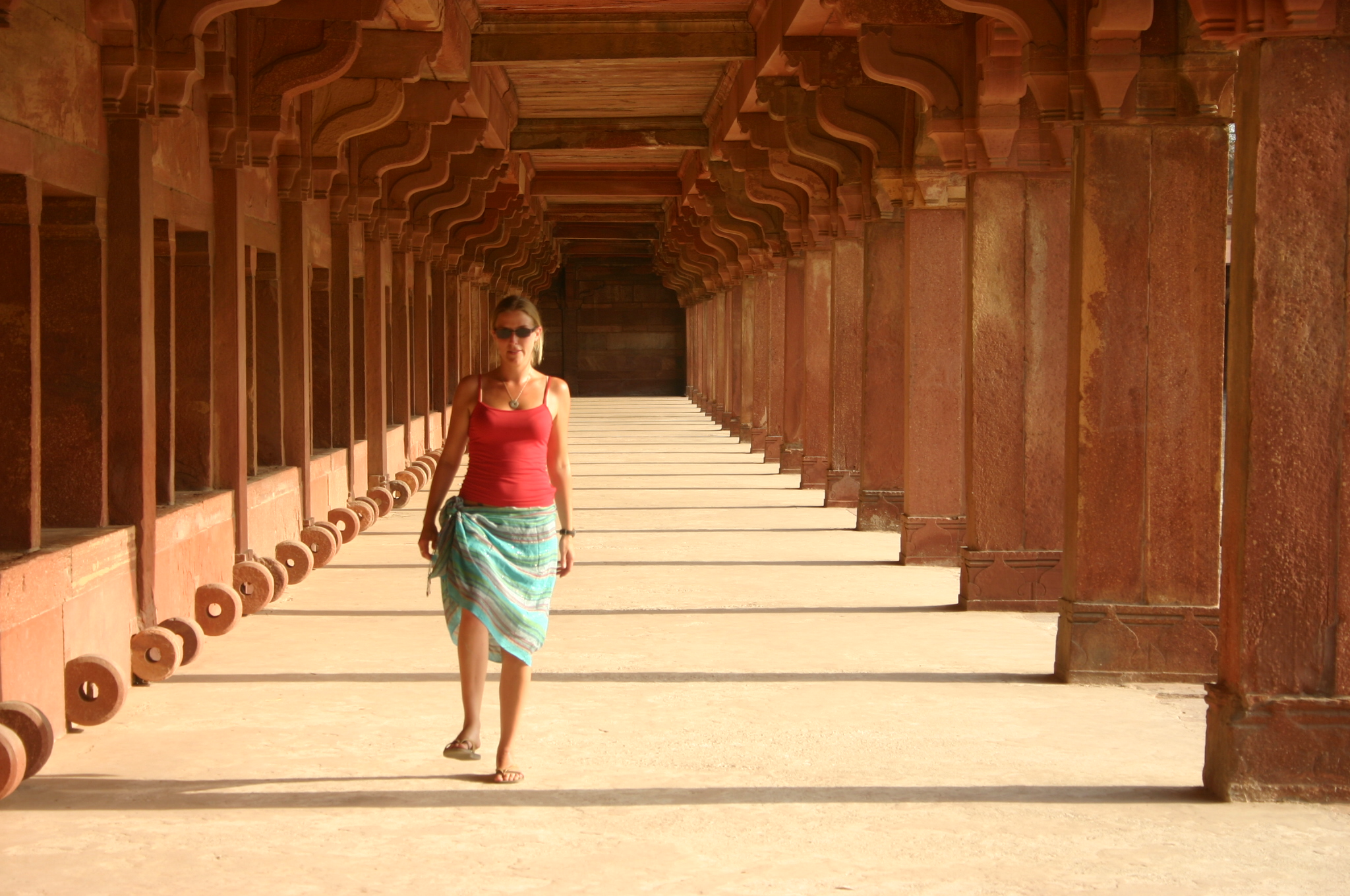
I love this picture that my friend took when we were in Agra in India. We were trying to make the shadows look like steps, and if the very slight shadow that I’m casting wasn’t there we would almost have achieved it. It makes me think of the importance of being creative and not letting that creativity be stifled – by anything or anyone.