Man’s best friend

Image

When the alarm clock beeped Maurice groaned his customary groan and stretched out like a tiger waking from a snooze. He rubbed the sleep from his eyes and blinked several times. Then, with a whoosh of excitement that coursed from the top of his head to the tip of his toes he remembered: Today was his eighth birthday.

He leapt out of bed and ran out of the room and all the way down the stairs into the kitchen. There he found his mother, his father and his baby brother Teddy sitting at the breakfast table waiting for him.
“Happy Birthday Maurice,” his parents said in unison. Teddy just grinned and waved his rattle. “Here,” said his mother, “sit down and I’ll make you a special breakfast before school. Eggs and bacon okay?”
Maurice beamed and nodded as he took his seat at the head of the table where, he couldn’t help but notice, there sat a large box with a ribbon on it. His father smiled and nodded so he ripped off the paper and shouted “yes!” and punched the air when he saw it was the remote controlled rally car he’d been wanting for ages. “Can I take it to school?” he asked,but his father shook his head. “I think it’s best kept safe at home for the moment,” he said.
Maurice kicked his chair under the table in silent protest, but was soon distracted by the plate of fried breakfast his mother had put in front of him. She sat down beside him, pulled her purse out of her bag and fished a shiny pound coin out of its depths. “Here you go,” she said, handing the coin to Maurice, “I know we normally say no sweets at school but as it’s your birthday why don’t you pick up a little treat from the shop at break time.”

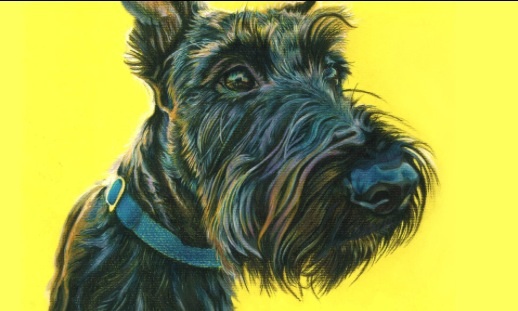
As his mother had suggested, Maurice went to the shop around the corner from school during his lunch hour. When he arrived there was a little dog tethered outside. Maurice didn’t know much about dogs but he thought this was what his father would call a Scottie dog-a Scottish Terrier with charcoal grey fur, a long body, short little legs and ears that looked too big for its head.
As Maurice bent down to pat the dog the shop door opened and an old lady came out. She was wearing a thick wool coat even though it was warm outside and she had a scarf wrapped around her head like a turban. The skin on her face was baggy, like it was too big for the bones and sinew underneath, and she had drawn thick black lines around her eyes.
Maurice stood up and the old lady smiled. “Oh don’t mind me dear,” she said, “Colin loves the attention.” Maurice knew it was rude to stare but he couldn’t take his eyes off the old lady. “Colin?” he repeated? “Yes,” the lady said, “it’s a silly name for a dog I know but it was my husband’s name, you see.”
The old lady stopped to cough, and Maurice noted with alarm that when she pulled her tissue away from her face there were spots of what looked like blood on it. “Are you alright?” he asked. The old lady straightened herself up as best she could and forced her withered lips into a thin smile. “Yes,” she said, “I’m fine, thank you,” though Maurice was far from convinced. “What brings you here, anyway?” She asked. “Shouldn’t you be in school?”
Maurice grinned and pulled the coin from his pocket. “It’s my birthday,” he said proudly. “I’m eight years old today and so my mum gave me this to buy sweets.” The old lady coughed again and winced in pain. “That’s nice,” she said. Her breath was shallower now and Maurice was scared. What should he do? Call the shop owner? Call an ambulance?
As he was thinking trough his options the old lady pulled a small black coin purse from her pocket and began to root around in it. “Drat,” she said, coughing again. “I’m a pound short.” “For what?” Maurice asked. “For a taxi to…it doesn’t matter.” Maurice looked at the pound coin in his hand, hesitated, then held it out on his palm.
The old woman smiled through her obvious pain and took the coin. “That’s very kind of you little boy,” she said, “what’s your name?” Maurice, who had been told never to tell strangers his name, replied without hesitation, “Maurice Brown.” “And you go to the school next door?” He nodded. “Well Maurice,” the old lady said, “I promise to repay you for your kindness today. Though it may be in a different way to that which you might expect.”
Before Maurice could ask what she meant she had flagged down an approaching taxi and climbed unsteadily into it, coughing and wheezing all the while. Colin jumped in after her and she shut the door and drove off. Maurice returned to school empty handed.
That evening, after his birthday dinner there was a knock on the front door. When Maurice’s father came back into the room he was carrying a large box. “Another present?” Maurice asked. “From who?”
His father put the box down onto the table with great care and handed Maurice an envelope with MAURICE BROWN written on the front in thick marker pen. Inside there was a piece of paper, upon which was written:
Dear Maurice, if you’re reading this it means I’ve gone to a better place, so please don’t be sad for me. When we met today I could tell you were a special little boy. In return for your kindness I would like to offer you first refusal on this gift. I hope you will love and care for it as I have, and that it will bring you great happiness. God bless you, Annie (the old lady outside the shop).
Maurice put the note down and stared at the box, and as he did a scratching noise from inside made him jump. Suddenly he knew what was inside, and began tearing at the wrapping. He opened the box and, sure enough, inside it sat Colin the Scottie dog. When he saw Maurice he jumped up and licked his face, making everyone laugh.
“Can we keep him Dad?” Maurice asked. His dad looked at his mum, and his mum looked back to him. “How could we say no?” she said with a smile. “We’re so proud of what you did today Maurice.” Maurice beamed back at her. “This is the best birthday ever,” he said, and Colin barked his agreement.

Drifting apart

When we were eight everyone said we were “thick as thieves,” though we didn’t really know what that meant. Even though you were a tomboy for my ninth birthday you bought me a Forever Friends locket with your pocket money and kept half of it to wear around your own neck. Everyone was jealous of our friendship, it was such a precious thing – like gold.

But when we started secondary school things began to change. You stopped wearing the necklace, saying it was embarrassing and childish. I told you I’d stopped wearing mine too but I hadn’t-I just hid it beneath my shirt because I couldn’t bear to take it off.

You started hanging around with what my mum called “a bad crowd.” You got your tongue pierced, cut your shoulder length brown hair short and dyed it blue. You were unrecognisable to me as Sarah, let alone as my best friend. When I called you said you were busy, eventually you just stopped picking up the phone.

Because I wasn’t sporty or pretty or funny I found it hard to make friends. I wasn’t like you, with the “gift of the gab” as Auntie Lou used to call it. I ate my lunches alone. Sometimes I would catch you looking over at me with an expression that looked something like regret or sadness – perhaps guilt? – on your face, but no sooner had it appeared than it was gone again, hidden behind the tough girl mask which emotion could not crack.

I wasn’t bullied, at least. Why would the bullies be interested in me if nobody else was? I just existed in a perpetual state of nothing. And that hasn’t ever changed, perhaps unsurprisingly. When your life is a blank canvas what is there to excite you? I did the ‘normal’ things, of course, went to university, got a degree, moved to London, got a job. I even had some boyfriends though I wasn’t really interested in boys.

I often wonder this: If you’d known the path my life would take after you turned your back on me, would you still have done it? If you hadn’t taken off that locket, if you’d only loved me back in the way that I loved you, we could have been happy, you and I. But you did turn your back on me, and now I’m finally finding the strength to turn my back on you.

I will not send this letter, but rather burn it right before I cast my half of the locket off the bridge. And when I climb over the rail and follow it into the murky abyss, Sarah, I will take my leave of this world, of you. And I will be free.

Down by the river

Down by the river all was quiet, save for the occasional beating of runners’ feet against the stony ground some feet away, or the call of dog walkers whose pets had strayed out of sight. One such pet – a cocker spaniel with a pronounced limp – was here now. His wet nose pressed into the leaves he inhaled deeply in an attempt to track a scent that was too faint for his old nose to detect. With a snort the old dog gave up and limped off.

But it would not be long before another, younger canine would be successful in its quest to track the scent. It would sniff at the damp soil beneath its feet, dislodge it with a paw, slowly at first but with increasing fervour once the scent became stronger. The surface soil brushed aside, it would inspect the object protruding from the earth with something close to reverence, if dogs were capable of such an emotion. And once the finger was licked clean the dog would bark, it’s owner would come, and her screams would shatter the early evening peace into a million irretrievable pieces.

But for now, at least, down by the river all was quiet.

Office politics

An emergency meeting has been called in No Man’s Land headquarters.

“Well?” says Derek, the CEO, tapping his watch pointedly.

“I’ll go first, if that’s okay?” Hazel, the Office Manager, speaks up. Derek nods his consent and she continues. “Well, it’s just that we’ve run out of stationery.” Derek raises an eyebrow. “And, well,” Hazel continues tremulously, “we need some more.”

Derek regards her with incredulity. “Then get some.”

“It’s not that simple, you see,” Hazel says, averting his gaze and fingering the buttons on her cardigan (previously part of a twin set but whose twin had long ago succumbed to a nerve-induced coffee stain).

“And that would be because…?”

“Because John holds the budget and he says we can’t afford it,” Hazel finishes on a note of triumph, passing the baton of blame to No Man’s Land’s Finance Manager at the far end of the table, who glowers at her through his unflattering thick rimmed spectacles.

“Now don’t go blaming me,” John says crossly, “Sadie’s the one who’s been telling you it’s not possible.”

A tut of discontent alerts them all to Sadie’s presence. “I said no such thing,” she remarks. “What I said was you would have to run it past Danielle because she’s the communications person and she’s updating the brand guidelines, so she might well want to wait until they’re done before ordering more stationery. Anyway, I’m just a lowly secretary, what would I know?” She rolls her eyes and returns to the serious business of filing her nails.

“And Danielle would be where exactly?” Derek asks, barely managing to hide the exasperation in his voice.

“She’s in the office,” Hazel offers, “working on the communications strategy.”

Derek sighs, tweaks his tie and scans his Blackberry for new messages, all the while emitting a slow hiss through his teeth. “And I suppose it didn’t occur to you when you convened this meeting regarding communications activities that it might be wise to invite the sole communications person within the organisation?”

Hazel blinks and shakes her head.

“May I recommend that someone phones Danielle and asks her to join us for a moment or two?”

John obliges this request, and seconds later a flustered looking Danielle appears in the doorway. “Yes?” she says accusingly.

“Hazel here tells me we’ve run out of stationery,” begins Derek. “And John here tells me that Sadie’s been saying it’s not possible to order more because you’re doing the re-branding.”

“Correct.”

“Might I therefore ask when this re-branding will be over so we might be in a position to order more stationery, since it’s evidently a matter of most pressing urgency that seems to be grinding my commercial business to a halt and involving the efforts of every member of my staff team to resolve?”

Danielle’s lower lip begins to quiver. “I’m doing it as fast as I can,” she whimpers, “but what with the constant barrage of requests from everyone all the time and these incessant bloody meetings I just can’t focus.” She starts to cry.

“There, there, dear,” says Hazel, putting a sympathetic arm around Danielle’s shoulder.

“Barrage of requests – what a joke,” John pipes up, “all you do all day is sit on Facebook.”

“That’s not true!” Danielle protests. “And anyway, it’s not like you can talk! You’re always playing games on your computer. It’s a wonder any of the accounting gets done at all.”

“That’s true,” Sadie says without looking up from her nails. “You do play a lot of games on your computer John. Pot and kettle come to mind.”

John’s broken capillaries flare up like beacons on the hillocks of his cheeks. “I don’t have to sit here and take these accusations!” He stands up and slams a hand down on the table, leaving a sweaty hand print on the glass. Without another word he storms out of the office.

“And nor do I!” Danielle retorts. “I’ve got a bloody communications strategy to write!” She turns and flounces out of the office after John.

“Oh dear,” says Hazel, “I only wanted some new stationery…”

“Sadie,” Derek says, rising from his chair, “kindly tell all staff to desist from scheduling pointless meetings for the indefinite future. And,” he adds over his shoulder, “make a note to check the filters on the computer system.”

The Boss

I’ve decided to enter a short story competition, and this is my first attempt at the beginning of the story. What do you think? Honest opinions welcomed…

The Boss

The first time Matt slammed Annie’s head into the wall he said it was an accident. He was going to punch the wall, he said, but her head had got in the way. It was her fault, naturally. It always was. The second time was harder for him to deny. They’d been having breakfast in the conservatory on what she remembered to be a hot and sticky summer’s day. He’d asked about her male colleague, Sam, who he’d met at a work function the previous evening. Had they ever been alone together, he’d wanted to know.

She should have said no but she told him the truth; that of course they had on the odd occasion, travelling to meetings and so forth. It was the wrong answer. She spent that night in A&E with a split lip, black eye and bruised collarbone. He’d been treated for scratches where his hand had made contact with the glass of the conservatory. They knew, the hospital staff, it was obvious. But though they pleaded with their eyes for her to tell the truth she knew the consequences of doing so were far more dangerous than even they realised. And so she stayed silent.

It hadn’t always been like this, of course. When they met at Matt’s university’s graduation ball five years ago he’d bewitched her. Six foot two with gladiatorial stature and eyes the colour of swimming pools he’d not only been her type, he’d been her Adonis. Annie hadn’t thought it possible such a man could exist; as it turned out, he didn’t. When she looked at him now she saw not infinite possibility in his azure eyes, but infinite cruelty – how had she not seen it before?

He was an excellent liar – that much became apparent early on in their relationship, when she started to find the receipts in his jacket pockets, the clichéd lipstick on his collar. She should have left him then, of course, but she was pregnant with Jack. How could she have left? Her parents were dead, she had no savings to her name – he’d made sure everything was in his name. So instead she stayed, played the role of the oblivious wife perfectly. He never suspected a thing.

If there was any solace it was that he didn’t lay a finger on their son. The beatings lessened in severity during the pregnancy, and he was careful not to punch her near her stomach. He may have been a soulless man, but even he knew harming his unborn child was going too far. Instead he slapped her face, burned her legs with cigarettes, just enough to keep her in line, to show her who was boss – oblivious to the fact she would soon show him that it was her.

Change

The following fictional post was inspired by the certificate ceremony I attended today with work at a youth centre in Islington, where teenagers from four of the schools my charity works with were commended for their participation in the Teens and Toddlers programme:

Change

I never thought I’d amount to much. Why would I? My parents told me every day that I was useless. Then even my teachers started giving up on me. It’s like a downward spiral, see. You start acting up to get attention, but all too late you realise it’s not the right kind of attention you’re getting. You wanted to be popular, not the class clown – the one the other kids laugh at and the teachers label as a troublemaker.

Things at home weren’t great. Dad’s drinking was getting worse and Mum, well, she was so doped up on depression pills she hardly knew what day it was. I pretty much did everything; cooking, cleaning, looking after my baby brother. If I hadn’t been there I don’t know what would have happened to him. He’d probably have been taken into care. Sometimes I wondered if that would’ve been best for the both of us.

When my teachers told me about this mentoring programme that paired teenagers with toddlers in a nursery I wasn’t interested at all; I had enough experience of looking after children with my baby brother, why would I want more? I only agreed to do it ’cause it got me out of school one afternoon a week, and gave me something to do apart from hanging around the recreation ground and causing trouble with my mates because I was bored.

But when I started the programme things started to change. My toddler was a challenge, mainly because he was like me; hyperactive and angry. We even looked alike, with wild hair, dark skin and brown eyes. He didn’t trust me at first, but after a few weeks he started coming up to me when I walked in and holding my hand. It made me feel special, and in those moments the big ball of anger I carried around inside me would get a bit smaller.

I’ve learned a lot about myself through the programme. I realise now the consequences of my actions on others, and I’m not so hell bent on trying to hurt people, mentally and physically. I feel more responsible, more in control. I want to achieve in life. I want to be a success. But above all else I want people to look at me and, instead of seeing the clown, the troublemaker or the joker, I want them to see the responsible man I can and will become.

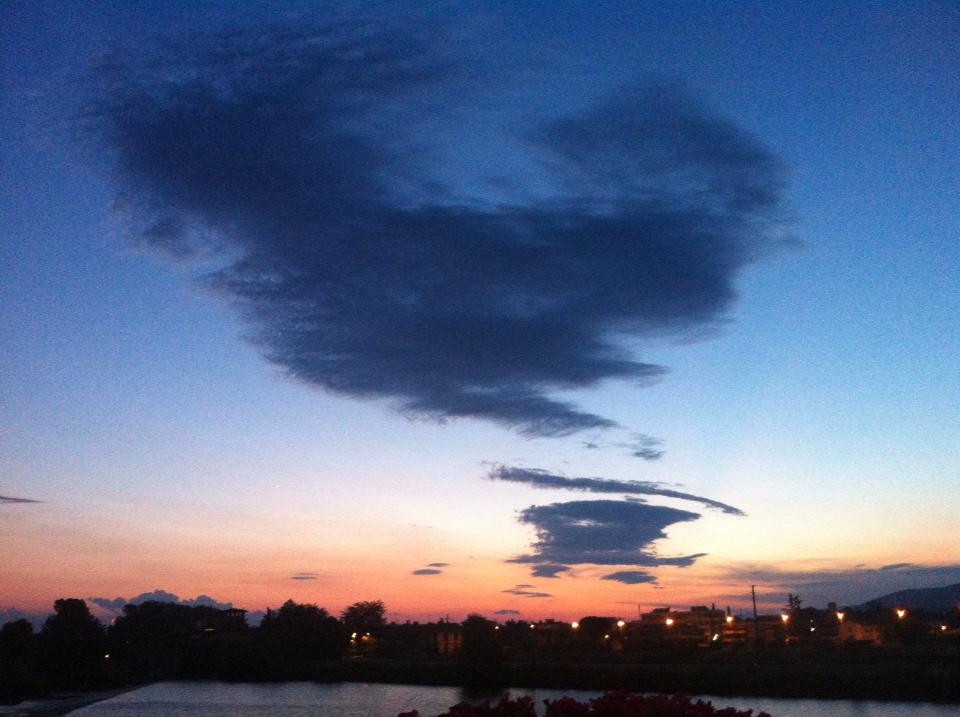
The beautiful sunset on the last night of my recent trip to Italy.

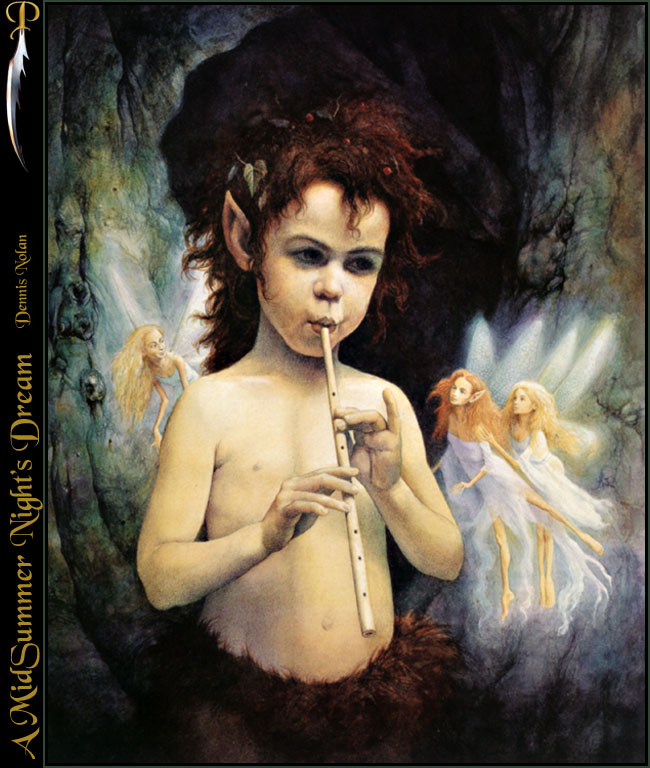
Midsummer dreaming

With a name like Hamlet I was always going to stick out from the crowd. Dad claims he chose the name because it was a dark and stormy night when I was born, and because he knew I’d be a leader. Mum says she went along with it because she’d always liked studying Shakespeare at school and had a fondness for Ophelia (which I think is frankly ridiculous). So anyway, for various stupid reasons I was lumbered with this name, and it’s haunted me ever since. Didn’t they realise schools would still be teaching Shakespeare when they had children of their own? Honestly.

Still, I shouldn’t complain. At least I’m better off than my poor brother. At three years old he’s too young to realise what he has in store for him, but something tells me it’s not going to be pretty. What on earth would possess someone to name their son Puck? Not only does it rhyme with a rude word that means the act of coitus (or copulation – we’re doing sex education at the moment and it’s funny as), it’s also the name of the Fairy King. Mum says it’s romantic, but I can’t see it being romantic when my brother’s friends are old enough to realise the joke.

Parents can be so stupid sometimes.

The fading of the light

She wasn’t ready when the darkness came, but the darkness didn’t care. It rode rough-shod right through her dreams, obliterating all that lay in its path. From that day forth there would be no violin concertos, no marathons, no travelling alone. For how could these things possibly be done in the absence of sight?

Nobody could believe how suddenly her vision ceased to be. At family gatherings the more superstitious members of her clan would posit in hushed tones over the buffet table that the gods had accidentally gifted her with vision before realising their mistake and taking it back.

Whatever the reason for her misfortune she had little choice but to bear it, though to her life without vision seemed devoid of hope and joy. She wouldn’t take her life, though in the early days she had certainly considered it. Her parents wouldn’t bear the strain, nor did they deserve it. Instead she merely existed from day to day, counting the seconds of the clock as they ticked by, wishing things were different.

Then one day a stranger came upon the house. He claimed to be in need of water and a bite to eat. Her parents tried to turn him away but she said no, what harm would it do to take him in, feed and water him and send him on his way?

But the stranger didn’t leave, not that night or the night that followed. He sat and read to her long after her parents were asleep, and told her stories of his travels and the world. When, a whole month after he arrived he asked her to go with him when he left, she didn’t hesitate. What else did she have?

And so they left, with her parents’ guarded blessing leaving a hundred gossiping mouths in their wake. And he kept his promise of showing her the world through his vivid descriptions. On her birthday he bought her a violin and encouraged her to play. A year later they ran a marathon together, him acting as her eyes.

Through him she realised sight was not everything, but rather love. For the first time in her life she realised she was not alone. And she felt blessed.

The Jacket

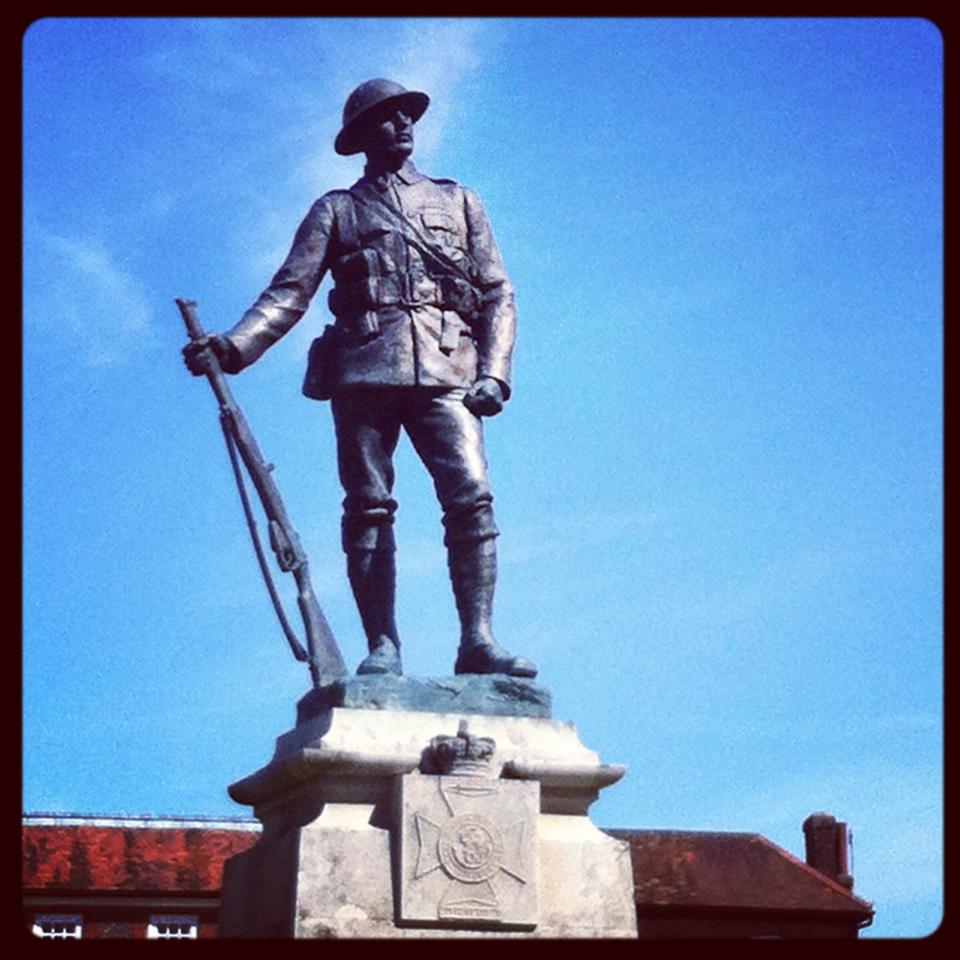
The jacket had hung on the rail, unnoticed, for years, its once vibrant khaki shade now muted by a million tiny dust motes. On those rare occasions when a customer did venture to the far interior of the shop, their grasping fingers would probe the rail and yet somehow never find purchase in the jacket’s soft folds. Even the owner of the shop had neglected to update its price tag in his recent stock take. The jacket, it seemed, had been forgotten.

It hadn’t always been like this. When it was made a century ago the jacket had been stitched by deft and loving hands. Destined for war, it was a most important garment, for it bore not only the mark of its country but also the pride and honour of its countrymen. Such was its power the boy who wore it nigh-on fainted when it was placed into his trembling hands.

But once the war was over the reverence ceased to exist. The jacket was tossed into the dark recesses of a wardrobe, as though it were responsible for all the ills of the war. It wasn’t until the boy, by then an old man, had passed away that it was sold to a collector and brought here, to this place where time stood still and where the tinkling of the bell above the door grew more infrequent with each passing day.

The bell tinkled, and the door opened. Into the shop stepped a young man. He spoke in hushed tones to the elderly shopkeeper, who nodded and pointed to the back of the shop. Shuffled footsteps drew near to where the jacket hung. Fingers probed the adjacent garments, stopping just short of its location. But just as it seemed the jacket had been ignored again, the fingers probed still further and made contact with its arm, then its lapel. Soon the whole jacket had been pulled from the rail and slipped off its hanger and the young man was trying it on. He looked at himself in the mirror, smiled at his reflection and then at the shopkeeper.

The old man helped the young man out of the jacket and shuffled to the counter, brushing off the dust before slipping it into a bag and ringing up the sale on an ancient cash register. Moments later the bell tinkled again to herald the young man’s exit, and the jacket – with its new owner – re-entered the world.

Sisters

“What a beautiful day for a wedding!” Aunt Marjorie says as she scurries into the lounge, a tiny human tornado comprised almost entirely of cobalt blue feathers and taffeta. “Where’s your sister?” she says absent-mindedly, scanning the menagerie of balloons, cards and flowers that scatter the living room like fallen soldiers. The scan finally complete, she rests her eyes on me and gasps. “Lucinda! Why aren’t you ready? The car will be here in fifteen minutes!”

Before I can proffer an answer Mum comes down the stairs; my guardian angel. Though the sisters share physical similarities they are fortunately where the similarities stop. Where Marjorie is more highly strung than a ball of string, Mum takes a more relaxed approach to life, though I suppose with a husband as laid back as Dad she hasn’t had much choice about that. “Marjorie,” Mum says, “the girls aren’t too far off being ready. Why don’t you sit down and I’ll make a nice cup of tea?”

Making the most of this temporary distraction I slink out of the room and begin to climb the staircase, wincing at the squeals of laughter coming out of my sister’s bedroom. Alice, you see, is everything I’m not. Tall, blonde, disquietingly beautiful and clever – an A grade student whose ambition is matched only by her sickeningly loving nature. Don’t get me wrong, I love my sister with all my heart. I just don’t always like her very much. I mean, when the genes got handed out couldn’t the Big Man have given me something? A runner’s up prize of good hair, for example, or nice nails? Instead I got frizzy brown hair, stunted growth and freckles. It’s hard not to feel jealous. Except…

But it’s not my looks that have been the problem. I’ve never had a shortage of boyfriends. They like the elfin look, you see, and I’ve mastered it well. I’ve learned over the years how to make the most of what I do have – a big bust (deep V-neck jumpers go down a treat), long eyelashes (voluminous mascara) and doe eyes (smoky eye makeup sends the boys wild). No, my looks have never been the problem. What’s wrong with me is my personality, or at least that’s what I’ve been told all of my life. Why are you so ungrateful, Lucinda? Why so rude? Why can’t you be clever like your sister? Why can’t you be kind like your sister?

Growing up in the shadow of perfection isn’t easy, but I coped with it as best I could. Sure, I ran wild, but why not live up to the expectations? They were going to think the worst of me whether I went that way or not. But even they don’t know the worst thing that I did. No one can ever know that.

I walk into my sister’s bedroom, still kept as a shrine to her teenage self with her ballerina jewellery box on the dresser and boy band posters on the wall. When I moved out our parents turned my room into a guest room without even asking. Alice sits in the middle of the bed, flanked by her three bridesmaids who are fussing with her hair, her makeup and her jewellery in turn. She turns as I come closer and flashes a megawatt smile. I smile back, hoping she won’t notice that it doesn’t reach my eyes.

An hour later the cars pull up outside the church and we climb out – my sister and her bridesmaids in the Rolls Royce, me, Mum and Marjorie in the taxi behind. The bridesmaids make last minute rearrangements to Alice’s dress as we make our way into the church. As soon as I cross the threshold a wave of nausea washes over me and I hold on to the doorway to steady myself. Mum looks over at me, and in the second that passes whilst locked in her gaze I realise that she knows.

We walk down the aisle to the front pew and take our place with the rest of the family. I’m suddenly conscious of how tight my red dress is, how inappropriate for a wedding. Why did I wear it? Couldn’t I just have let Alice have the limelight for this one day? But I know why I wore it, and as I tug at the hemline and he turns around I feel I might faint.

Taking his cue the congregation turns to get its first sight of the vision in white lace that is my sister. She wafts in as if on a cloud, her arm loosely draped through Dad’s, tendrils of her hair falling lightly over her softly rouged cheeks. She beams at her groom as she processes towards him and takes her place beside him. But as they turn towards one another to proclaim their everlasting love, he shoots an almost imperceptible look into the crowd that says what I already know.

It should have been me.