Detox Diary: Day One

One tedious and short-lived powdered Spirulina phase aside, I’ve never been one for a detox diet, though in truth that says more about my lazy nature than an aversion to the concept. I’m all for a period of healthy living, in fact, and never more so than now, after three consecutive heavy weekends have brought me to my knees, physically and mentally. And so yesterday, after a hearty last supper of cheese-based Spanish tapas dishes washed down with red wine (what?), I went to the shop and bought all the ingredients needed to do this three day detox plan.

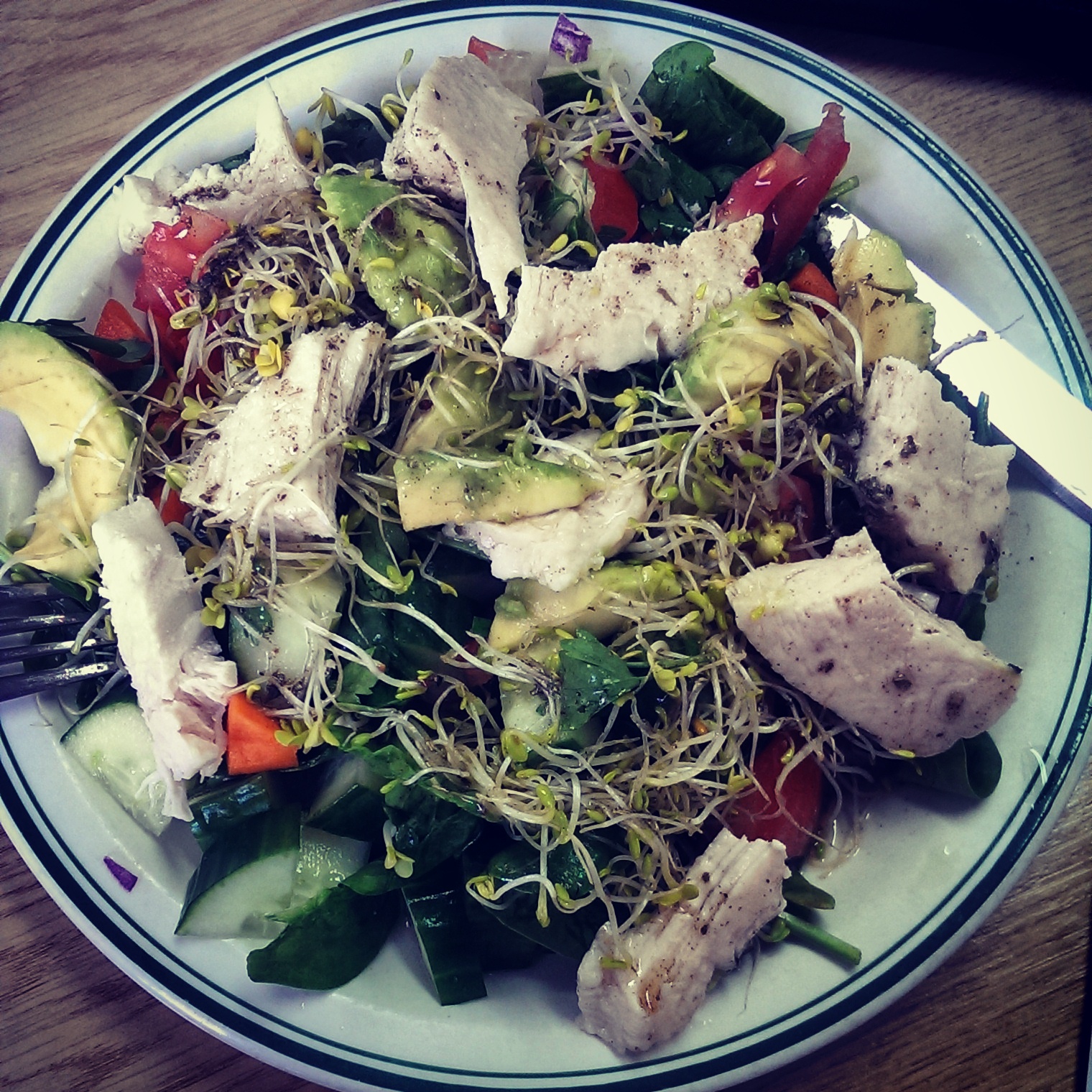
This morning, upon rising, I dutifully prepared my lemon and ginger detox drink and put the ingredients for the fat flushing soup into the slow cooker. When I arrived at work I prepared the coconut milk smoothie, then for a mid-morning snack chopped up some carrot, celery and cucumber for a snack, which I supplemented with eight raw almonds. Lunch time involved a second trip to the shop to buy additional detox plan items for the garden salad with lemon and oil dressing that would constitute lunch.

So far, so good right? Yes, I suppose so. Except for the following:

  1. Celery is Evil
    As in, actually the devil incarnate. Which is particularly upsetting given that it is one of the primary ingredients of this particular detox plan *gags*
  2. Detoxing when you have ice cream in the freezer is the worst kind of torture there is
    Especially when that ice cream just so happens to be Crunchie Blast ice cream, your current favourite ice cream in the whole freaking world *weeps*
  3. Gym? You must be Joking
    I came into work with my gym kit feeling hopeful I would go on my way home from work. The reality of this situation is that living on raw fruit and veg alone provides insufficient energy to walk to the toilet and back, let alone do a workout. Which means physical activity (beyond trips to the loo – give me some credit for decency) is on the back burner until this detox is done.
  4. Read the Recipes
    It helps, because having chowed my way through an admittedly-large looking plate of garden salad (see below) I realised I had actually made enough for two servings, which means no ‘exciting’ afternoon mean green juice for me (despite having spent enough for a deposit on a house on the ingredients for it at lunch time – drat).
  5. Where does the time go?
    Healthy living is time-consuming, there’s no getting around it. All that chopping, grating, peeling and mixing is bloody hard work, in fact. But at least it makes the working day go faster…

Still to look forward to today is one cup (yeah right) of fat flushing soup and a chamomile tea before bed, washed down with lashings of filtered water. And, despite the almost unbearable craving for it, no ice cream whatsoever (because I’m saving that particular luxury for next week in Italy, where I shall be consuming all the ice cream, pasta, pizza and red wine I can shove down my throat. Who says people only do detoxes in preparation for a purge…?)

IMG_20140805_152025

Celebrating Life – and Good Friends

Today I went to Birmingham for the funeral of my good friend’s dad. It was sad and uplifting in equal measures, sad because Brian no longer walks amongst us and he will be sorely missed by those who loved him, and uplifting because so many people turned out to pay their respects. Brian was a larger than life character, and it’s always those people who leave the biggest hole when they pass away. I didn’t know him well, but I knew him well enough to know he would have thoroughly appreciated every moment of today, from the sympathetic vicar who delivered the ceremony in exactly the way he had specified before he died, to the inordinately large volume of champagne that was drunk in his beautifully sunny garden afterwards. I know he would have loved the fact that everyone had come together to raise a glass in his honour, and above all else I know he would have been hugely proud of his son, my friend, who has borne his father’s untimely passing with such strength and courage, helped in no small part by his gorgeous fiancé and wonderful family.

It’s on occasions like today I realise how important it is to count blessings. When I looked around me in the crematorium, which was lined wall to wall with people, I really felt the value of the life that had been lost. I like to think I live my own life well enough to ensure a decent turn out to my own send-off, whenever that might be, but that’s not to say I can’t do more in whatever time I have left on this mortal coil to positively contribute to others’ lives, to make them feel valued, supported and loved as they have me. I felt particularly grateful today at the wake, when I recognised the fantastic and extensive support network of friends I still have from university – not something everyone can claim to have sustained a decade after graduation. This friendship group is special and, despite not getting together nearly as often as we’d like, it is also lasting. I know I’m being a soppy cow but sometimes it’s just nice to take a moment to reflect on all the good things. And I’m sure that somewhere up there in the ether, glass of champagne in hand, Brian Simonite is doing just that too. Cheers, Brian.

10418223_10154347690900057_7830900485526170382_n

For Fellow Aspiring Writers: Advice from the Writers’ & Artists’ Conference

On Saturday I went along to the Writers’ & Artists’ ‘How to Get Published’ conference in Euston. Given my aversion to early rising it was quite a commitment for me to show up at 9.45am on a weekend, but by the end of the day I was so glad I had. I live-tweeted throughout the event but it has since dawned on me that advice drip-fed through Twitter isn’t that easy to come back to afterwards. So for all my fellow aspiring writers I thought I would encapsulate the key learnings in this blog post for reference purposes.

Tom Tivnan from the Bookseller, on self-publishing:

  • 86% of those who have self-published would do so again
  • The print self-publishing market is comprised almost entirely of non-fiction
  • Most self-published e-books retail at around £1
  • 69% of e-books are bought by women and only 11% by men
  • 58% are published by women
  • Crime makes up 50% of the e-book market
  • Amazon controls 75% of the e-book market in the UK
  • The royalty rate of self-published books decreases considerably when the retail price is below £2.49
  • When self-publishing, tweak the price of your book often
  • Remember that people buy e-books for price not content
  • Design matters – it’s all about your brand
  • It’s difficult to get into the print market through self-publishing (Amazon has 20% share)

Stefan Tobler, CEO of And Other Stories, an “unashamedly literary” publishing house:

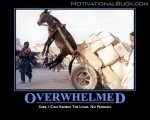
  • “Think of the publisher as the donkey who will get your riches to the reader”
  • The literary fiction market is in decline

John Mitchinson, founder of Unbound, a ‘new way of bringing authors and readers together’: 

  • The concept of Unbound is “about sharing an idea, sharing the potential of the story and, if there is enough critical mass, it will take off”
  • “Publishing is like agriculture. Retailers want the crops with the highest yield and won’t look at anything else”
  • Authors have a 1 in 5,000 chance of getting in with a big publishing house – but there are other ways to get published
  • It’s been in the news recently that the average author’s salary is as little as £11k per year but, f you take the top 10% of authors out of that, the average author makes less than £3k per year.
  • “We’re fighting to keep people reading”
  • Unbound chooses the projects with the best chance of funding
  • People can then make pledges against a particular project. The average pledge value is £35
  • 92 projects have been launched to date. Of those, only 16 failed to achieve funding
  • Unbound has 48k registered users

Polly Courtney, Author, on self-publishing to a traditional deal – and back again:

  • “Everyone’s got a book inside them, but not everyone should publish it”
  • “Whatever way you’re publishing, be sure to build up your own direct fan base.” e.g. by capturing email addresses through cards slipped into the back of your book at a launch event
  • Re-write extensively
  • Never scrimp on cover design
  • Self-publishing CAN work – but it’s all about collaboration
  • For a lot of people the first book is semi-autobiographical. Once you’ve got that off your chest you’re free to write about something else e.g. a theme you particularly care about
  • “If you do get into a conversation with an agent or publisher, ask what their long-term vision is for you and your book. Make sure you understand one another – it’s not arrogant, it’s sensible. Take control of your destiny”

Alysoun Owen, Editor of the Writers’ & Artists’ Yearbook, on traditional publishing:

  • “Finding an agent or publisher is like buying a car – you wouldn’t buy one without finding out about it first”
  • “Be yourself and write the book you want to write”
  • Good things CAN happen to first time writers
  • Identify the market and identify your niche
  • If you can’t encapsulate your story in a 200 word pitch, why should anyone else look at it
  • Self-publishing has gone up by 25% but the lion’s share of the (admittedly plateaued) market are traditionally published books
  • Rejection is not an uncommon thing – all the best authors have been rejected (William Golding 21 times!)
  • Things to do to improve your chances:- Read, Read, Read
    – Research / know your competition
    – Join a writer’s group / attend events
    – Practice e.g. by entering competitions
    – Promote yourself e.g. on Twitter, a blog etc.
    – Be patient
    – Be ambitious

Charlie Campbell, Agent:

  • Agents can tell if they’re the first or two hundredth you’ve submitted to, so research carefully before submitting
  • The bar has been raised, so these days agents need to put more editorial work in
  • Having to do too much editorial work limits how much work you can take on
  • When working in a big publishing house out of thousands of submissions each year, only one or two would be taken on
  • “Sending a partial manuscript is almost never the right thing to do”
  • Writers get rejected by agents, agents by publishers, publishers by supermarkets. If Amazon rejects a book, the reader rejects it
  • Successful stories are imitated until they dwindle into nothing. Do what you want but don’t be too out there. It’s the role of the publisher/agent to talk to you about how you can progress

Jo Unwin, Agent:

  • Take care to read submission guidelines and be targeted
  • “You can only be a debut novelist once in your life, so your manuscript needs to be as good as it can be”
  • “I would strongly recommend getting the whole book as perfect as you can before submitting your opening chapters. It’s a different trajectory if you submit a partial manuscript and don’t complete it for another 18 months. The market will be different and the mood of the agent will be different”
  • Whether an agent likes your book or not is a chemical thing. Writing is a craft you have to work on
  • What an agent does in building a writer’s career outside of the UK market is not to be underestimated
  • “In a synopsis I’m looking for storytelling ability, so tell me everything – including the ending”
  • Don’t use the agent as a sounding board – think of them as sales people

Cressida Downing, Editor:

  • Just because you can hit submit doesn’t mean you should, and just because you should doesn’t mean you should now
  • Whether sending to agents or self-publishing make your work the best it can be. People should find your writing frustrating
  • You can’t be a good writer if you’re not a good reader
  • “I read non-stop, all day, every day – and so should you”
  • Self-publishing is ideally suited to people with an entrepreneurial spirit
  • Novels go through 17 edits, on average, before they are successful in being published
  • Good presentation is crucial – get advice but don’t get someone else to re-write it or it will be their work and not yours
  • If you’re interested in money don’t be an author or work in publishing!
  • If you’re self-publishing and can only afford to invest in one thing, make it the cover design
  • When choosing an editor consider their track record, whether you would prefer to be edited by a well-known author or not, whether their style will fit your work, whether they offer a clear explanation of the service they provide, their costs and timings
  • Tips for going it alone: Never publish your first draft, always get someone to have a look, read it out loud and find a peer group
  • Self-publishing is about far more than writing a book and hitting ‘publish’
  • As long as you know what you’re asking and they tell you exactly what they’re providing, paying an editor can be useful
  • If everything in your story is doing it’s job, great. If not, cut it
  • There are four types of edit:

1. Read and Review

“If you pay one industry expert once in your life make it for this.”

Not a line by line edit, help with grammar/spelling or re-write (though they will say if it needs work in those areas).

Does give advice on how to avoid common pitfalls, how well your book is working and what to do to improve it.

2. Deep Structural

Most similar to advice from an agent or editor in a publishing house.

Doesn’t give line by line re-write and won’t correct spelling/grammar.

Does break down and re-build novel – sometimes to extent of changing genre or structure.

3. Copy

Line by line edit looking for continuity and what works to best show off your prose.

Doesn’t look at structural/major changes.

4. Proof

Picks up errors, typos etc. in spelling/grammar.

Doesn’t give advice on writing.

Preena Gadher, Publicist:

  • A publicist’s job is to make your book stand out from the crowd
  • Once you’re published by a house they’re invested in you and can afford a dedicated PR person. That’s the big difference between traditional publishing and self-publishing
  • Promote yourself with a website, on Twitter etc. Always keep sites up to date
  • Read the paper and magazines you want to appear in
  • Work out who your audience is, and what you have to say that would be interesting/relevant to them
  • The relationship with the publicist works both ways
  • It helps to be shortlisted for / win prizes

Laurie Penny, Blogger:

  • Being time-rich and cash-poor is how a lot of creativity comes about
  • Keeping a blog is good training for editing your work

Hope you will find this as useful as I did.

image

Generation Y: We’re not apathetic, we’re just overwhelmed

Last night, after watching the news, an overwhelming surge of sadness washed over me. There are so many dreadful things happening in the world – bombings in Gaza, terrorism in Syria, war and famine in Sudan, Ebola disease in West Africa, irreversible climate change…the list goes on and on – that sometimes it’s hard to feel positive about the future of the human race. On top of these issues, in the UK we also have untrustworthy politicians who are currently (on top of many other questionable decisions) rushing Big Brother style privacy laws through parliament. The result? We, ‘the People,’ feel powerless and trapped. And none, perhaps, more so than my generation.

Today at work a colleague, herself a generation older than me, was talking about last night’s Newsnight programme, which had a feature on ‘Generation Y,’ as today’s 18-30s are collectively known. The feature discussed the differences between my generation (Y) and hers (Generation X), one being the fact we don’t fight for causes by campaigning in the streets in the same way that many of those who grew up in the ‘welfare state era’ did. One Generation X spokesperson said she didn’t believe this was because Generation Y are apathetic about causes and only interested in being a ‘selfie generation,’ as many older people might posit, but rather that the political and economic issues being faced today seem so big they are impossible to solve. Generation Y have seen uprising fail time and again (Iraq War anyone?), and we’ve lost all faith in the political system to do what’s right. Even if we do stand up to be counted, we don’t believe our voices will be heard, so the collective feeling is ‘why bother?’

We are the first generation to be brought up with the internet, the consequences of which have been far reaching, and both positive and negative. As a Generation Y spokesperson said on Newsnight, we have a thirst for individualism that derives from constant online comparisons, and a drive to be self-reliant rather than state-reliant. We are flooded with information in a way that previous generations were not, and whilst this is liberating it is also, sometimes, quite debilitating. The internet has both connected and isolated us, and whilst social media has led to a level of inter-connectedness never previously imagined, many people feel lonelier than ever.

The rise of face to face gatherings like ‘swishing’ (clothes-swapping) parties (to name but one) shows that, despite embracing the digital age, Generation Y are trying to stay connected with their peers and local communities. Perhaps it’s through these types of initiatives, rather than by waving placards in the street, that we will make some small difference in the wider world we feel so powerless to change.

A final thought (and my own attempt at micro-activism) on Sudan. I have a personal connection, having visited Juba in South Sudan some years ago, and have been deeply saddened to read of the war and impending famine in the region. At the time of my visit in 2006 it was a fairly barren place. I stayed in one of the aid camps and saw little of the locals’ lives outside of the compound. But I do remember an overriding feeling of hope – that things would, and could, get better. Which is why it is so tragic to hear just how much worse they have got since my brief time there. Recent news reports have said there is a serious danger of extreme famine in the coming weeks, but there is no money to run a big advertising campaign to ask for funds. And so I close by asking anyone with a few pounds to spare to consider donating to this cause via World Vision.

image

On Being Overwhelmed – and Finding Perspective

For the past couple of weeks I’ve been doing my typical headless chicken act, heaping unnecessary pressure onto myself with an extra -large spoon and wondering why I’ve been feeling totally overwhelmed and unable to write a damn thing in what little free time I’ve managed to carve out for myself. The culmination of this stress was evident when I got around to submitting the one piece of recent writing I was really proud of to a competition on Monday – only to realise that the deadline was midnight the night before. Fortunately my super-pragmatic boyfriend was on hand to prevent me falling too far into a slough of despond over the incident, but nevertheless it made a further dent in my already damaged armour.

The truth is, whilst I established long ago I want to be ‘a writer,’ I grapple every day with what sort of writer I want to be. One day I’ll write a magazine feature pitch, the next I’ll plan a novel or start editing a previous story. Then I’ll turn my attention to short story competitions and try to churn something out for them.  On top of that I’ve recently completed an eight week sitcom writing course at the City Academy, and have this week embarked on a seven week crime writing course at the City Lit and signed up for a conference next weekend on how to get published – all this as well as holding down a job four days a week. Oh, and did I mention I’m also working on a screenplay idea with my writing mentor?

Just reading that last paragraph back makes me feel anxious, it’s no wonder I’ve been feeling overwhelmed. But what I’ve realised today, after having given myself a couple of days’ downtime (by which I mean no pressure to write anything, having impromptu catch ups with friends, sitting in the sun at lunch time instead of being hunched over my computer fretting about what to write and yet still not writing), is that when it starts to feel too much that’s generally because it is too much. It won’t help to try and force yourself to do more, the only thing that will work is to allow yourself to do less. Only then can you regain perspective and control over your situation. And, in my case, only then can I remove the creative block that undue amounts of pressure create. This realisation has made me feel instantly calmer, and you know what? I can feel the ideas start trickling back into my brain just like a tap that was turned off has been turned on again. Perspective isn’t always easy to find when you’re mired in the mud, but when you do find it again it’s both a joy and a relief. Phew.

Banishing Self-Indulgence

Earlier today I wrote one of those typical woe is me blog posts, alluding to how hard everything felt, how lacking I was in inspiration etc. But before I posted it I stopped, my finger hovering over the mouse key, and asked myself: What good will it do to share this with the world? It may well be cathartic to get things off your chest, but haven’t you done that just by writing it? Don’t you feel a little lighter as it is? And you know what? I did feel lighter just for having written it. Much like a letter to an ex that never actually gets sent, I had expunged the negative emotions without the need to inflict them upon the world. So that was one thing that happened today.

Another thing that happened was my reading of this article, which can, I believe, be best surmised by the following excerpt:

“The 8-hour workday is too profitable for big business, not because of the amount of work people get done in eight hours (the average office worker gets less than three hours of actual work done in 8 hours) but because it makes for such a purchase-happy public. Keeping free time scarce means people pay a lot more for convenience, gratification, and any other relief they can buy. It keeps them watching television, and its commercials. It keeps them unambitious outside of work.

“We’ve been led into a culture that has been engineered to leave us tired, hungry for indulgence, willing to pay a lot for convenience and entertainment, and most importantly, vaguely dissatisfied with our lives so that we continue wanting things we don’t have. We buy so much because it always seems like something is still missing.”

I don’t know about you, but reading those two paragraphs struck a chord so deep within me that the hairs on my arms stood up of their own volition. Why? Because that person with no time to be ambitious outside work, who feels constantly dissatisfied in a way they struggle to articulate and who spends money they don’t have on ways to make themselves feel better: That person is me. And most likely also many of you. Of course (trust fund children aside) we have to work for a living (and in this respect with a four day week I can complain less than many about my lot), but it’s so true that outside work it takes (what often feels like) a superhuman effort to cultivate the kind of extracurricular activities that leave you feeling wholly satisfied and fulfilled.

But, that aside, the fact is that those with true talent and passion DO manage to make the most of the time they have, no matter how little it is. They don’t sit around complaining about being oppressed and enslaved by the organisations they work for, but rather work out ways to escape their clutches and create opportunities for work – and living – on their terms. Whether incarcerated by consumerism or not, we all have choices. And our choices are the difference between a life of success and a life of failure. Which is a pretty sobering thought.

image

Riding the Hamster Wheel

Quote

After the success of my sitcom writing course (writing a 15 minute script and having it acted out by a Game of Thrones actress does count as success, right?) with the City Academy I have once again grasped the nettle and signed up for a 7 week summer course in crime writing, this time with the City Lit. This will run concurrently with the screenplay idea I’m working on with my amazing writing mentor, so I’ll have lots to keep me busy!

You see, what I’m coming to realise is that being busy is always best – or at least that’s the case with people like me, who are creatively minded and enthusiastic but tend towards laziness and phases of paranoid inactivity. Deadlines are key to productivity, and without concrete plans (submit essay by x, write plot outline by y) it’s all too easy to drift out with the tide, never to return to shore. So whilst I will quite often bitch and moan about not having enough hours in the day, I know deep down without these goals and targets I would lack the momentum to achieve anything at all.

Discipline, however, is a different beast entirely, and one that’s far more difficult to tame. You can set all the goals and targets that you like, but if you don’t ‘show up’ regularly, as a good friend recently said to me, the game is lost. And the fact remains that whilst I’m full of good intentions and prone to bursts of fervour, showing up regularly is still something I struggle with. That, and the idea that you don’t have to be in the ‘right’ mood to ‘write,’ nor even must you know where the writing will take you. You just have to sit down and do it. No but-I-have-to-hang-out-the-washing-then-go-to-the-gym-and-make-dinner excuses.

And on that note, I’m just off to the gym and to make dinner before I sit down with my laptop for the evening…..

image

Nostalgia Rules

Tonight, over dinner with my best friend, we took a stroll down memory lane and revisited our memories of the family holiday we spent in Corsica when we were 15 (dare I even speak aloud that was not too shy of 20 years ago now?!) On a recent visit to her family home she found a wallet of photos from the holiday, and we spent a good couple of hours poring over them and recalling all the funny moments we had shared and the people we had come across during our time on the island.

Whilst the nostalgia trip was in itself a wonderful and long overdue experience, what interested me most was that we were able to remember things that had long since been consigned to the depths of our memories – so much so we thought they had been lost forever, when, in actual fact, they had spent all these years gathering dust in boxes at the far recesses of our minds.

The prompted recollection of names (like Ingrim, the lifeguard who rescued us three times from sea when our newfound windsurfing skills failed to render us proficient enough to turn around) and occasions (like the time we found a litter of kittens in our luggage on a previous childhood holiday to Italy, or the time we blagged our way into a Corsican nightclub foam party) has triggered so many other, related memories in my mind (did I really wear underwear from Knickerbox as outerwear?!), which has sprung open like Pandora’s Box.

It’s comforting to know nothing in life is lost, but rather pushed aside by other, newer and more relevant memories. And that all it takes to recall what’s been forgotten – and remember what it was like to be in those long forgotten moments – is some visual prompts and an animated conversation with a good friend.

image

P.M.A*

In recent weeks I’ve felt my old nemesis stress creep up on me. This was, in part, why I took the decision to have a week’s ‘staycation’ last week. And, as I sit here on the eve of returning to work, I have to say it’s done wonders. Not only have I achieved lots of my writing goals – the other reason for my taking some time off – I have also created some much-needed thinking and breathing space. It’s frightening how hemmed in you can feel by life if you don’t do that from time to time, and as someone whose standard response is to run away when the going gets tough – usually by going off travelling every three years or so, when the daily commute gets so much I feel murderous – I’ve been delighted to realise that the mental peace and clarity I’ve been searching for aren’t always that far afield.

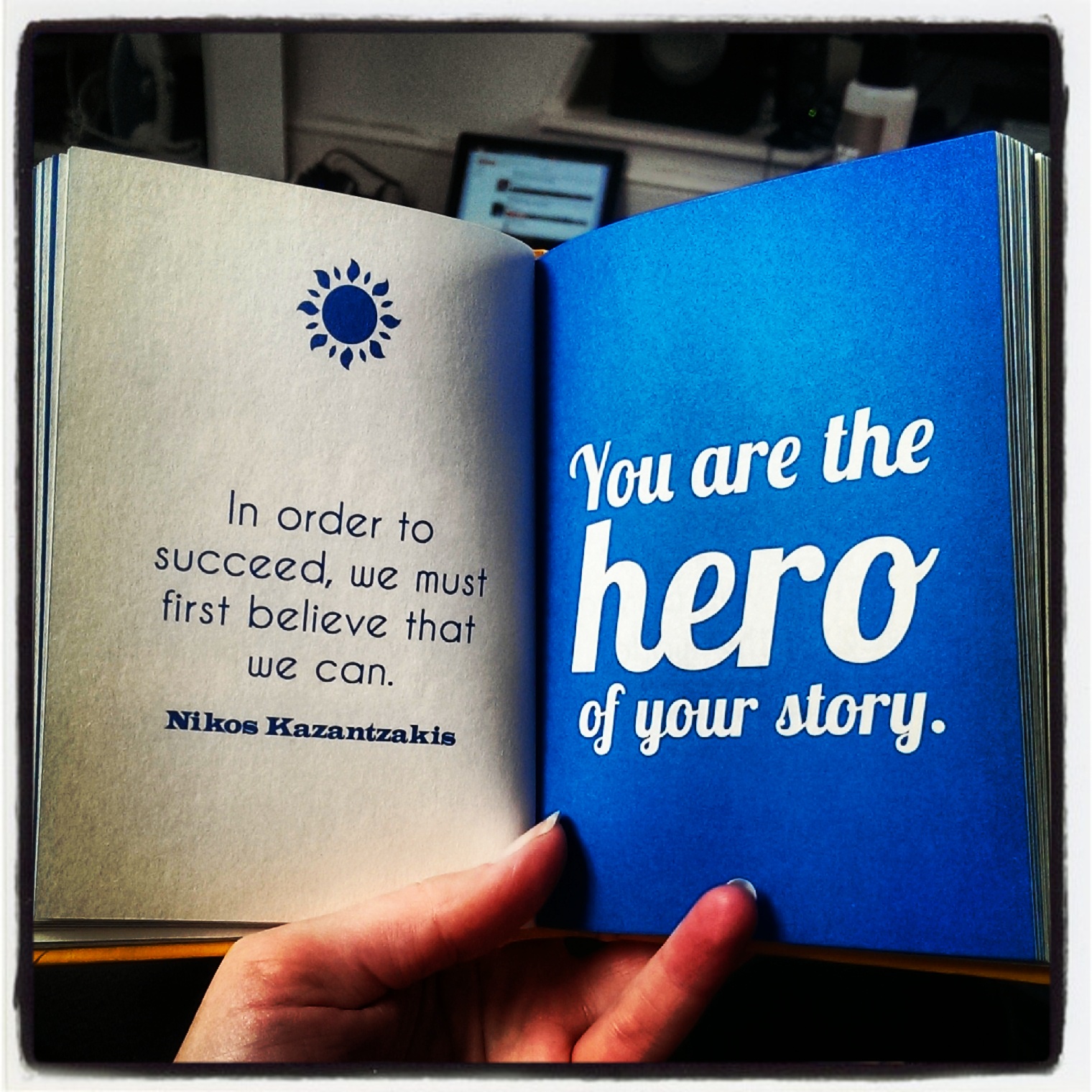
I’m writing this post because I want to hang on to this feeling of positivity, and to be able to refer back to it when I inevitably have moments of sinking back below the mire. I’ve also just been leafing through a little book called ‘Carpe Diem-Make the Most of Life,’ which was lent to me by a good friend and which is full of uplifting and inspiring quotes. Despite being a pessimist by nature, in moments like this I realise how wonderful life is, and what a monumental waste of time it is to be negative. As the page in the photo rightly says, ‘You are the hero of your own story.’ And nobody likes a negative hero, right?

image

*Positive Mental Attitude

Compare This

Last week I read about a one-woman play that was both written and performed by a girl in her early twenties*. Instead of thinking ‘wow, that’s an impressive amount of talent at such a young age’ I’m ashamed to admit my first default reaction was ‘urgh, some people have all the luck.’ And that’s not an isolated incident. Friends’ promotions, publications, engagements and luxury holidays (to name but a few life events) have often left me cold – not because I’m so hard-hearted I can’t be happy for them, but because I can’t help but compare myself to them, and always end up feeling inadequate.

Comparison is the enemy of success. When you spend all your time comparing yourself to others you get paralysed by the fear of failure. I’ve only just found the courage to openly admit to myself I’ve been doing this for years, and begin to acknowledge that it’s not only unhealthy but also downright silly. If we obsess enough over others’ successes we may well be able to emulate them, but the pursuit of that goal can destroy all the good things in our own lives. Is it really worth that?

When we reach the pearly gates at the end of our lives wouldn’t it be better to stand up and say with pride we took our own path in life, rather than following others’? Each one of us was made unique, with different strengths and weaknesses. Why try to fit a square peg in a round hole? I can only be me. And what I’m finally coming to realise is that being me is just fine. No, not fine. Being me is great 🙂

image

*In light of the above I’m going to see this play tonight. It’s time to buck the comparison trend and support a fellow female writer 🙂