The awakening

Wrote this as a way of getting to know Michael, one of the protagonists in my new story. This scene is from his childhood:

At nursery school Michael had been too young to understand why he was different. But today was his first day at big school, and his small world was about to change in ways he could not have imagined.

“Was that your grandma?” asked a small boy in blue dungarees and glasses.

Michael turned to the boy and frowned. “No,” he said. “She’s my mum.”

Now it was the other boy’s turn to frown. “But she’s so….old.”

Both boys turned to watch as Michael’s mother walked out of the school gates. Was his mother old? Michael had never really thought about it. Why would he? She was his mum, and that was all there was to it.

“Aren’t all mums the same age?” Michael said.

The other boy regarded him with a cool stare, and Michael felt suddenly like he was being tested, and, worse still, that he wasn’t doing very well. “No,” said the boy, his eyes rolling in their fat little sockets, “of course they’re not. Well, not exactly the same age, anyway.”

“Oh, right.”

“As in,” the boy continued, “they can’t all be born on the exact same day. That would be impossible. But-” – and here he paused for dramatic effect – “mums normally look the same age – even if they’re not. Only your mum looks more like a grandma than a mum. She’s even got grey hair.”

Michael felt a knot of something horrid form in the pit of his stomach. Before he had a chance to work out why the teacher began to round them up and lead them towards the hall for first assembly. As they walked through the heavy swing doors into the school, Michael cast one last mournful look over his shoulder. He couldn’t put his finger on it, but he had the distinct feeling nothing would ever be quite the same again.

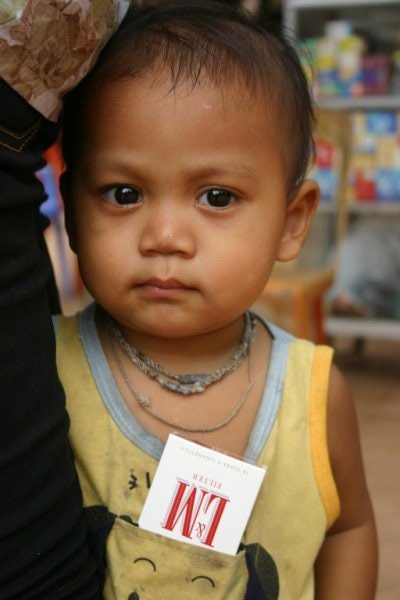
I took this photo in Cambodia in 2007 and have just stumbled across it for the first time in ages. I love the look on the little boy’s face – less so his dirty clothes and the packet of cigarettes tucked into his pocket 😦

John Doe

John Doe woke to the sound of rowing neighbours and the view of his alarm clock’s blinking red light. In two minutes the alarm would sound, a siren call demanding he rise and actively participate in life. He reached out to flick the switch that would silence it before it began, a fleeting flicker of satisfaction rippling across the otherwise flat vista of his personal horizon.

He washed and dressed, then carelessly threw some cat food in the bowl as he exited the kitchen. As he stepped out into the street he paused to look up at the sky. He sighed. It was another grey day after a succession of equally grey predecessors. As he walked towards the train station it began to rain. He had no umbrella.

The train platform was crowded, five deep in sleep-deprived commuters, not one of them wanting to be where they were. John Doe positioned himself just back from where he knew the doors would be. Fat rain drops splashed onto his cheeks. Next to him a fat woman jostled for space for her obscenely large breasts. A man coughed in his face.

The train pulled up and in the ensuing scramble someone stumbled, cried out. But, intent on catching their trains, not one person helped their fallen comrade. She was a businesswoman, early thirties, or so John Doe suspected. As the doors closed inches from her face she pulled her skirt down to cover her modesty and slowly rose to her feet, cursing as the blank expressions of those who had safely boarded the train began to move.

John Doe moved into the space that had been created by the evacuation of the other commuters from the platform. The businesswoman, having recovered herself, stood beside him, a scowl plastered on her otherwise pretty face. A tidal wave of people rose up from the depths of the tunnel at the end of the platform, spilling over the lip of the top step and thronging all around them.

A disembodied voice announced the next train would be five minutes late, and a collective sigh breathed through the impatient crowd. Behind him John Doe heard a woman with a high pitched voice screech into her phone that she was about to miss a meeting.

After five minutes the train had still not arrived, and frustrations were at fever pitch. There were now so many people on the platform that John Doe could feel a pressure against his back as they forged ever forward. A woman – perhaps the businesswoman, though John Doe could no longer be sure – shouted, begged for people to stop pushing. But still they pushed.

As the train finally pulled into the platform there was a blood curdling scream. The commuter mob swayed uncertainly. Another scream, more prolonged this time, followed by a man’s voice: “For Christ’s sake, move back!” Eventually the message filtered through and the swarm retreated, parting ways enough for everyone to see the twisted form of John Doe splayed across the track.

Rather different from the ones in central London…

You are what you eat

Whilst waiting for the special ‘feminist edition’ of Bookslam, featuring Hadley Freeman and Caitlin Moran, I read this article in the Standard about Mimi Spencer, author of the 5:2 fasting diet – and also, it’s worth noting, the Standard’s fashion editor – about how her diet’s revolutionised her life. Not only has she dropped two dress sizes from a perfectly healthy size 12 to a skinny size 8 as a result of radically cutting down her eating two days out of seven, she’s also clearly rolling in cash, as her recent holiday to Madagascar is held up to prove.

The timing of my reading the article was ironic, given that both Hadley and Caitlin would soon after read passages from their new books that were chosen specifically to demonstrate that women shouldn’t feel they have to look, feel or act a certain way in order to be a success. Both women would talk about the objectification and suppression of women not only by men but also by the ever-burgeoning women’s magazine market and even their own bodies (Caitlin sharing some particularly graphic details of her first menstruation, and commenting that it was no wonder women struggled to wave the feminist flag before the advent of sanitary products when they were forced to spend vast swathes of their time washing blood-soaked knickers – a fair point).

Whilst many converts of the 5:2 diet will no doubt jump to Mimi Spencer’s defence, it’s hard (for me at least, and I speak as a woman whose love of food cannot be overstated) to imagine really being bothered enough to change your entire lifestyle for the sake of dropping a couple of dress sizes. Take going out for dinner as an example. Does being on the 5:2 diet make it necessary to rearrange every social occasion to fit in with which days you’re starving yourself and which you’re not? Or do you just sip water as your friends devour delicious morsels of tapas washed down with red wine?

But it’s not the 5:2 diet specifically I wish to criticise in this post, it’s more the point that Hadley and Caitlin were getting at; that women should be able to be who they are, without feeling the constant pressure to be thinner, prettier, better in every way. Why shouldn’t we eat what we want, when we want, as long as we appreciate the fundamentals of a balanced diet and a balanced life? Why should we starve ourselves two days each week because the women’s magazines tell us it will make us happier? How can cake deprivation make anyone happier, EVER?

My opinion, for what little it’s worth, is that life’s too short for fad diets. Of course we should eat healthily, but there are limits, and starving for two days a week must surely be one of them? I know proponents of the 5:2 will wax lyrical at this stage about the many health benefits of the diet (concentration allegedly being one of them – now I don’t know about you, but I’m not sure I’d be able to concentrate all that well after eating half a carrot and a dry Ryvita for my lunch), but in case they hadn’t noticed there are also rather a lot of health benefits to the ‘everything in moderation’ approach – not least to our mental wellbeing.

I’ll close with an apt quote from G.K Chesterton, who had some sage words on health:

“The trouble with always trying to preserve the health of the body is that it is so difficult to do without destroying the health of the mind.”

Quite – now pass the Dairy Milk.

Slightly hypocritical of me to post an article slagging off fad diets whilst commencing a wheat and gluten free period, but my dear friend Sian (who attended Bookslam with me last night) assures me it will revolutionise my life. And, er, make me look better…Oh.

One last excuse

I’ll admit (and yes, I know I’m using the word ‘I’ – argh) that things have gone rather awry this past few days where posting on this blog’s been concerned. In large part this has been due to poor advance planning of the bank holiday weekend, two consecutive afternoon rooftop parties (get me with my busy social life) on Saturday and Sunday having left virtually no time for writing. However, it’s fair to say I also experienced some not insignificant technical issues (wifi being down, computers crashing etc) that meant having to upload to the blog via smartphone – which apparently didn’t work very well.

So anyway, we are where we are, no point crying over spilt milk etc. The main fact is I did still find a way to post, even if the posts themselves were substandard in quality and not always accompanied by pictures. As recompense I’d planned to wow you with a stunning comeback blog today, but time has run away with me yet again, and as I’m now about to run out of the door to tonight’s Bookslam (featuring the great Caitlin Moran and Hadley Freeman, no less) this somewhat cobbled together piss-poor excuse for a blog post will once again have to do.

I’m better than this. And I’m sorry.

Normal service will resume tomorrow.

No more excuses.

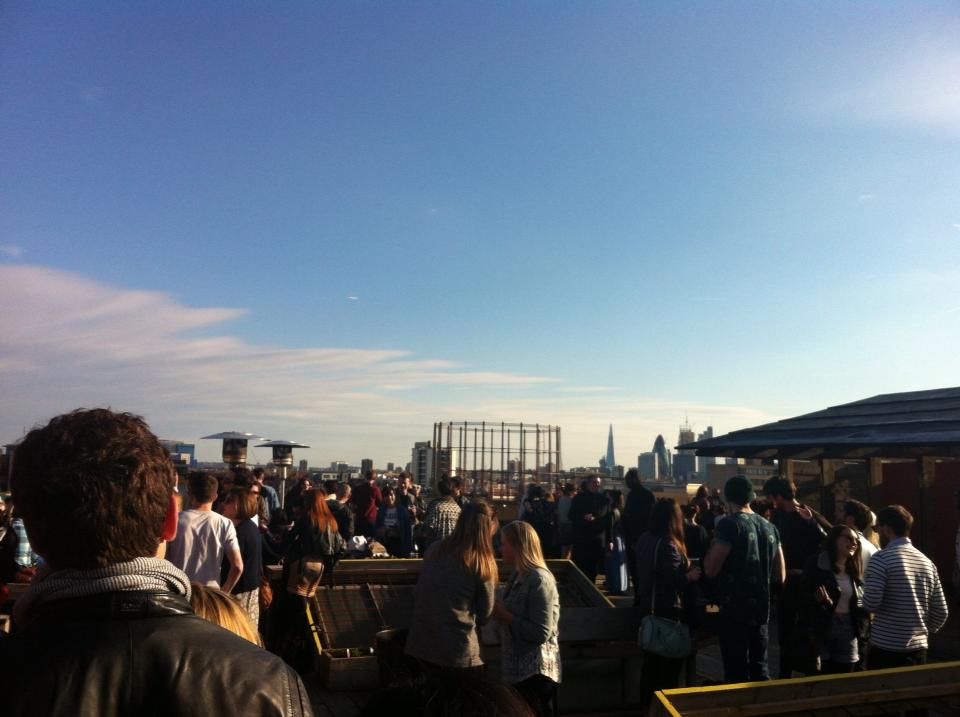
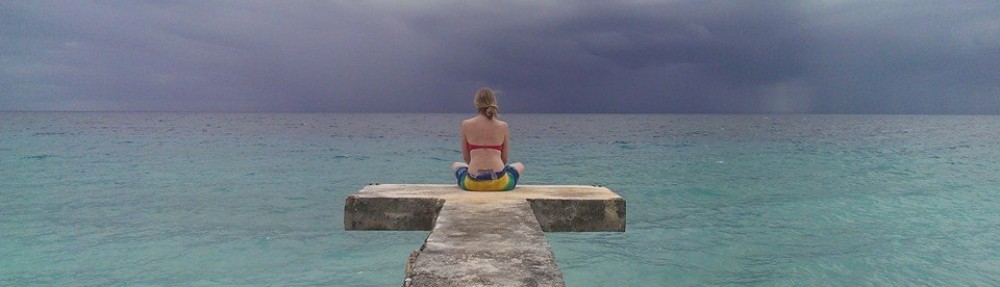
This was where I was on Saturday afternoon when I should have been writing. You’ve got to admit it’s appealing…

Past Post: Story Time (re-posted from yesterday due to technical issues!)

It’s almost seven when I pull the front door closed behind me and hear its reassuring click. If it could speak it would be telling me I’m safe, nothing can harm me now. Let’s pretend, it would continue, that the outside world never even existed. Just for tonight, let’s pretend.

My brown Italian leather bag slides off my shoulder and lands in a crumpled but delicate heap on the floor. I kick off my shoes and walk down the hall into the kitchen, sniffing the lemon-scented air. The sheets are hung, the draining rack emptied. The cleaner has been.

I cook on autopilot, chopping peppers and chilis, throwing them into a frying pan and watching as the yellow flame laps hungrily at its base. I leave it unattended as I go to run a bath, catch sight of my reflection in the bathroom mirror and wince. The day is etched on my face with alarming clarity.

This is my fourth consecutive stir fry, I realise as I swallow the last overcooked morsel of Quorn, flick off the banal television programme I was barely even watching and take my bowl into the kitchen to wash up. I run the water for too long, watch as the soapy suds spill over the bowl and into the pan beneath. I refill the draining rack, dry my hands. As I walk past the fridge I stop, consider a glass of wine, then think again.

My mind is racing as I sink beneath the surface of the water. I lie there motionless, like a hippo in a watering hole, watching as the steam rises up and curls around and back in on itself.

I know it’s time, and yet I hardly dare entertain the thought of doing what I’m about to do.

I drain the bath, pat my hair dry with a towel and slip into my fluffy robe and slippers, padding softly down the hall into my bedroom. For a fleeting moment I entertain the thought of putting on mascara, lipstick, perhaps even a touch of blusher, but then dismiss the idea as ridiculous. What would be the point?

The bedroom door scratches across carpet, then clicks into place like the last piece of a jigsaw. I turn the key softly in the lock, dim the light. I pick up the box of matches on the bedside table, strike one and light the candles. The room is filled with dancing shadows and the cloying scent of vanilla. It tickles my throat and makes me nauseous. Or is it the fear that makes me nauseous?

I bury the fear in the pit of my stomach and kneel down, reaching underneath the bed for the box and stroking its walnut veneer as I pull it out. Questions rise up within me like a volcanic eruption. I suppress all but one. What if?

My hand is shaking as I turn the ancient key in the lock. It opens with a serpent’s hiss and I swallow hard. I know what’s coming. It’s judgement day.

I lift the lid and suddenly the air is flooded with a heady combination of dust and profanity.

“What the bloody hell do you think you’re playing at?”

“We could have died in there!”

“Cooped up like that all this time – it’s worse than prison!”

A bubble of relief rises up inside me and I laugh.

“Well that’s just brilliant! Now look at her – she’s laughing at us!”

 I look down at dishy doctor Dan, standing proud in his starched white coat, arms folded across his chest as he glowers at me with all the square jawed impudence he can muster. From behind him Tess steps into view, her blonde hair tumbling down over her shoulders like a waterfall. She echoes her husband’s defiant pose.

“Look,” I begin with a shrug, searching their tiny faces for some glimmer of forgiveness but finding none, “I’m sorry, okay?”

“Well maybe sorry isn’t enough this time,” comes a shrill voice from the far side of the box. I search out its owner, unsure after all this time of to whom it belongs. My eyes, adjusted to the candle light, alight upon a slender figure clad in a silk kimono cocktail dress.

“Jacqueline, my favourite villain,” I say, my smile filled with genuine warmth.

“Don’t favourite villain me,” she sniffs, keeping her steely gaze on mine. “Where were you?”

I lower my hand into the box. She regards it with the cool conviction of the criminal mastermind that I know her to be, then steps up onto it. I lift her up until she is level with my eyes.

“I am sorry,” I say again, conscious that my words are scant consolation after what I have put her through – what I have put them all through. “Really, I am. It’s just that, well, life got in the way.”

I scan the sea of tiny faces, feeling the warm familiar glow of recognition as each one comes into focus. Lithe-limbed Amelia, purple-haired Clarice, kind-hearted Albert. How could I have left them for so long? What was I thinking?

“Well come along then,” Jacqueline snaps suddenly, wrenching me from my reverie. I look at her, my eyes unfocused, and blink uncomprehendingly. “Put me down,” she hisses. I do as she says.

“Right,” says Albert, stepping forward from the assembly line, his walking stick tapping on the bottom of the box as a wide grin spreads over his weathered old face. “I think it’s about time you picked up where you left off, don’t you?”

I smile back, and a cheer erupts from the tiny crowd beneath me. My crowd. My characters. It’s story time.

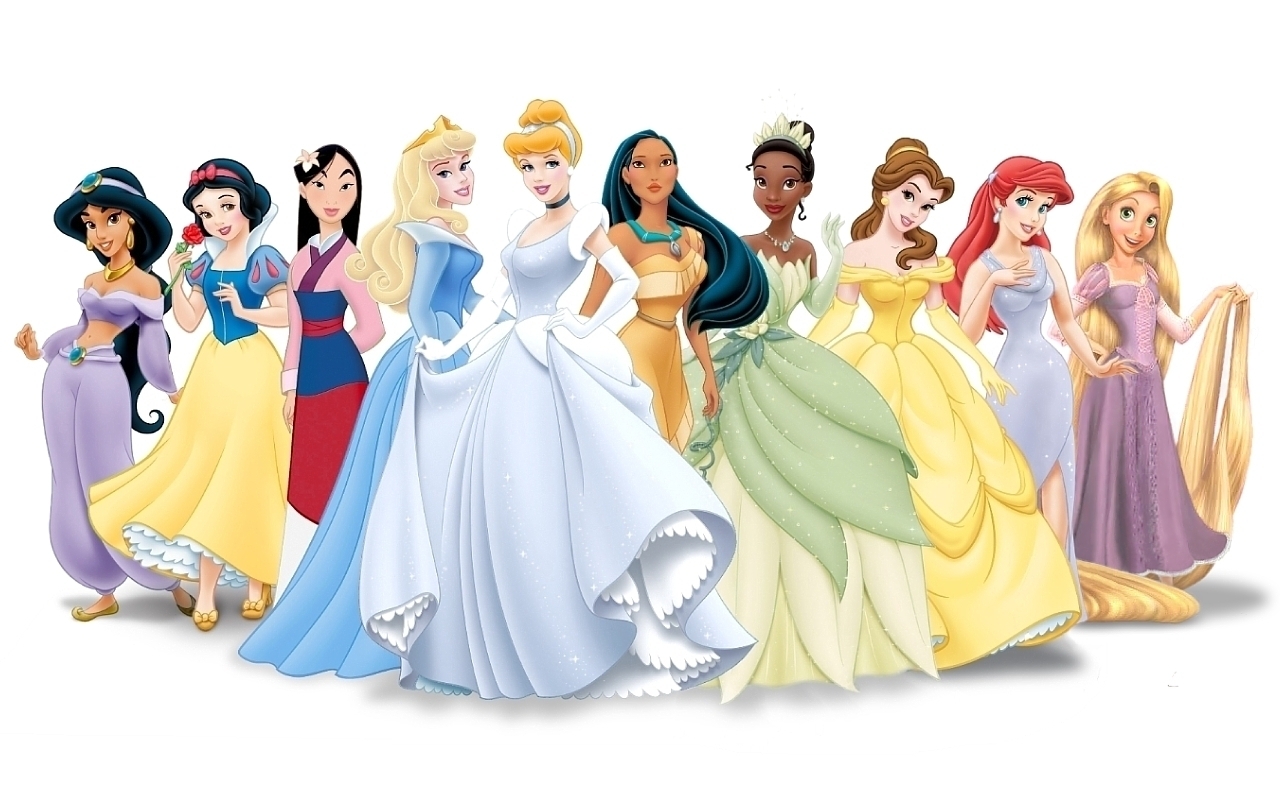
The Disney Princesses were my first literary loves, so they had to feature in this post..
Give young people a chance

Yesterday afternoon I popped into the office to meet some of the members of our Youth Led Consultancy Board (YLCB for short). We’ve been grappling with what the charity’s strapline should be for a few weeks and all felt it was important to get input from the young people – who have themselves all completed the Teens and Toddlers programme – because without it we’d be hypocritical to call ourselves a truly youth-led charity.

Within minutes of starting the brainstorm they’d come up with a better suggestion for the strap line than any of the ones we devised in the staff brainstorm meeting last week. It was so inspiring to meet them and find out what they’re all doing now-mostly about to finish college exams and waiting for results to find out if they’ve got university places. They’re living proof our programme really does work at helping disadvantaged young people get into further education and employment, and it was a joy to see how bright, motivated and enthusiastic they all are.

Working with the young people is teaching me so much about the dangers of preconceptions and stereotypes. So many people write off vast swathes of today’s youth as being wasters who refuse to do the necessary work to succeed, but for most that’s categorically not true. They want to achieve, they just need extra help to believe that they can.

This one was taken in 2007 when I made a banoffee pie and brought it into the orphanage for the kids to try – they couldn’t get enough of it!

Bank holiday ramblings

Today is an April showery-May-the-4th. Not having anticipated this in the wake of several glorious days of sunshine, this means I am umbrella-less, and therefore at the mercy of the weather gods. The situation is further compounded by two factors. Firstly, not only is today April showery in nature, it is also blustery. This, perhaps, bodes not well for a rooftop (ergo ‘open air’) party in East London. Secondly, sleep deprivation levels are high, my fail safe plan of having a quiet night in to prepare for the weekend having been woefully unmatched by the plans of the other residents in the abode in which I slept. Hence there has been no morning run around Regents Park (though see earlier point about rain-does this let me off the hook on that one?)

In short, conditions for embracing a full on weekend of social engagements are far from optimal. But you know what? It doesn’t even matter. Because not only is it a bank holiday weekend (I’ll admit it smarts slightly that I won’t be paid for Bank Hol Monday, since Mondays are my official days off now I’m part time), I’m also en route for baby cuddles in Herne Hill. And everyone knows baby cuddles make EVERYTHING better.

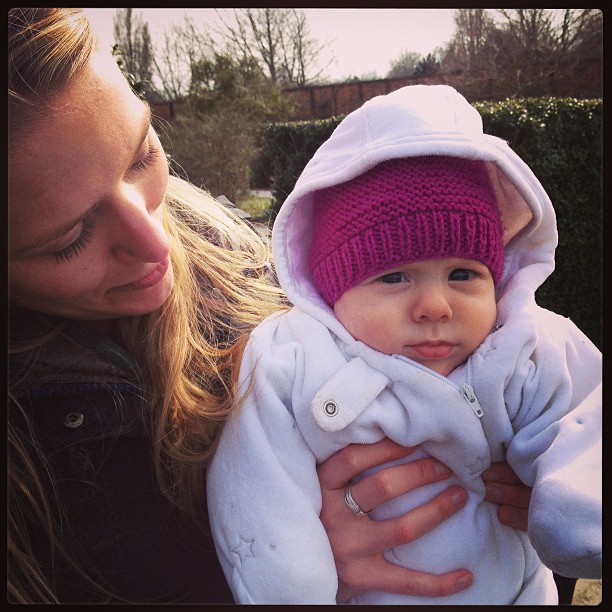
As i don’t have a snap of today’s cuddle, here’s one that was made earlier (ie last time)

Ruby

For today’s post I’m going to take one of the characters of my new novel for a quick test drive, to see how we get along with one another….

It was a clear day; sunny and warm, the seemingly endless blue sky punctuated by infrequent puffs of white cloud. Camden Lock was thriving with people; predominantly foreign students and punks with brightly coloured spiky hair and platform steel toe-capped boots.

Ruby loved the diversity of the crowd, the way it ebbed and flowed around her like the tide. She shrugged off her black leather jacket and let it fall onto the guitar case at her feet. Running her slender fingers through her coarse blond hair she yanked it away from her face, securing it without ceremony at the nape of her neck with a hair tie and pulling the ponytail out of reach of the guitar strap around her neck.

She’d bought the guitar with the last of her savings, not long after she’d arrived in London. At the time it had seemed like madness to part with all that she had, but she’d trusted in the providence of her musical ability, and whilst it hadn’t yet paid dividends it was at least keeping a roof over her head. Well, that and the job at the frozen yoghurt parlour – and Max’s hospitality, of course, though the true motives for his generosity were plainly evident, if not to him then everyone they knew.

She wouldn’t play for long now. This impromptu set was just to warm her vocal chords up ahead of the main event; her first live gig with the band. Tonight’s competition at Barfly would be the culmination of five years of hard work and determination, and failure was not an option.

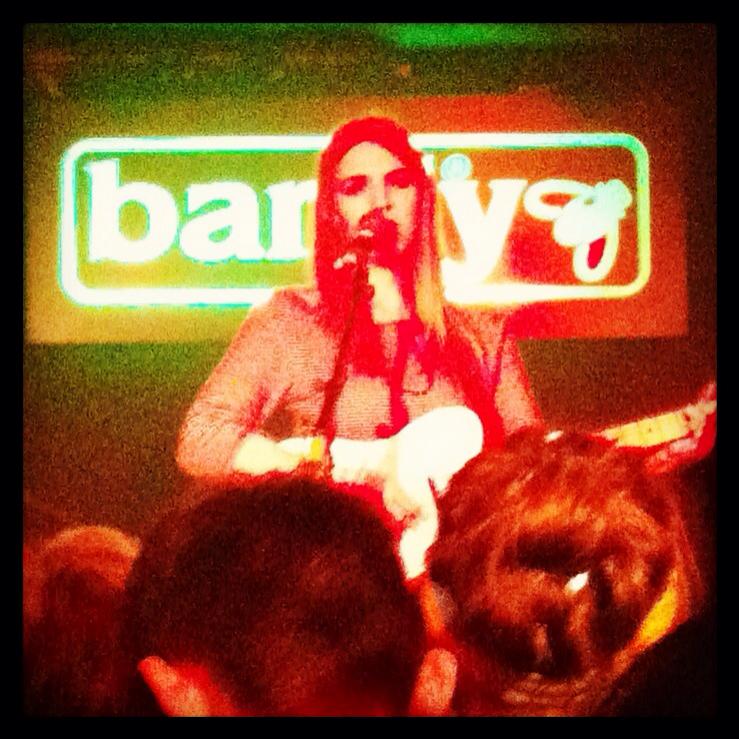
This is the lead singer of Slow Club, who was the inspiration for Ruby’s character (though any similarities between the two are purely coincidental).

Is there a cost to reaching our full potential?

So many of us spend our lives rushing around, jumping from one task to the next with scant regard for the strain we’re putting on our minds and bodies by not giving them a rest from time to time. But if we spend too much time resting will we ever achieve our full potential?

According to Dictionary.com, potential is defined as “possible, as opposed to actual,” or “capable of being or becoming.” Would it not follow, therefore, that to reach one’s full potential one must be entirely capable of becoming their best self? And that to be entirely capable one must be entirely focused all of the time – thus relinquishing leisure pursuits and anything unrelated to the ultimate goal?

Take wanting to be a published author as an example; it’s all very well wanting it, but if you don’t have the drive and determination to stick at it when the going gets tough how can you expect to succeed? It’s a well-known fact that even JK Rowling herself was rejected countless times before finally reaching the heady heights of success. She achieved her potential only by working through the low moments instead of giving up, and rising, Phoenix-like from the ashes of the rejection pile to come back stronger and more inspired than before.

Of course the danger of not resting enough is burn-out. It would clearly be unwise to never take a break from your desk, because your productivity levels would suffer due to tiredness. Nobody can concentrate for eight hours in a row – well, maybe David Blaine, but apart from him no one (surely?)

The key to achieving your potential, then, is simple (and best said in the words of the great Winston Churchill himself): Never, never, never,never give up. Unless, that is, you are in dire need of a rest. And, perhaps, an accompanying glass of chilled Pinot Grigio. And on that note…

I think this is the best photo I’ve ever taken, and it perfectly encapsulates the concept of never giving up. This was part of an exhibition at the London Zoo – ants are just the most amazing creatures!

There’s no such thing as a ‘bad’ kid

I’ve just got back from my first afternoon visiting a Teens and Toddlers project at a nursery. Much as I’m ashamed to admit it I did have preconceptions about what the teenagers would be like. I’d assumed they’d be surly and uncommunicative, and that it would be difficult to engage with them, especially given that the teens on our programme are chosen precisely because they’re deemed to be more ‘at-risk’ (of dropping out of school, having children young etc.) than their peers.

But I’m delighted to say my experience was a total eye-opener and my preconceptions have been shelved. The six boys on the project I visited are all thirteen years old, and whilst they are typical teenagers who don’t always listen, aren’t all that keen on looking you in the eye and occasionally act up, on the whole they’re really lovely kids.

Classroom sessions aside, the real joy for me was seeing the way the boys interacted with their ‘toddlers’ in the nursery. It was a gloriously sunny afternoon which meant the toddlers were racing around outside in the play area. One of the boys had arrived at the nursery fuming about having had a personal possession stolen at school, and the facilitators were initially reticent about allowing him into the nursery to see his toddler, lest he carry his anger through to their session. Once he was out there, however, he was totally unselfconscious and behaved impeccably with his toddler. He even had a number of toddlers gathering around him to play because he was so much fun to be with.

Another boy, who had in the earlier classroom session refused to look any of us in the eye and acted bored, came alive with his toddler and spent ages lying on the ground play-fighting with them. I saw each of the six interacting with their toddlers in such a heart-warming way that it made me see every one of them in an entirely new light. When we returned to the classroom after the session with the toddlers they were alive with enthusiasm and keen to talk about the progress they had made with their toddlers.

At one point in the classroom we discussed what age would be the right age to have children. All the boys unanimously agreed that older than twenty five was ‘past it’ as far as they were concerned, which made me – a childless woman of thirty one with no immediate plans to have children – laugh. It’s been so long since I was their age I’d forgotten how old twenty five seems; like a lifetime away, though of course it’s really not.

Watching the boys – and the toddlers, come to that – today, it really wasn’t obvious that they have turbulent home lives. But I was reliably informed by the facilitator that some of them have an awful lot on their plates given their age. It’s hard enough being a teenager without having a host of problems to deal with in your personal life.

I’ve come away feeling more certain than ever that the work my charity’s doing with vulnerable children and disadvantaged teenagers is vital for the future of this country’s young people. No young person is inherently a ‘bad kid,’ it’s just that some of them need extra help to navigate their way through turbulent periods in their lives and stay on the right track. Shouldn’t every young person in that situation have the right to such help?

Meeting the boys today made me think of the boys I taught in Tanzania in 2007, some of whom were about the same age then as these boys are now. I wonder what became of them and where they are now.