Gratitude, Acceptance and Umbrellas

It’s been a while since I last updated my blog. This is, in part, because I’m currently focusing on addressing some of the issues in my life that are blocking my path to fulfilment and success. At the moment I’m reading two neuropsychology books, one on Hardwiring Happiness by Dr Rick Hanson (whose TED talk on the issue can be viewed here), and the other on conditions arising from neuropsychological damage, The Man who Mistook his Wife for a Hat, by the brilliant (and, sadly, now also suffering from terminal cancer) Oliver Sachs. Alongside the Chopra Centre guided meditations that I am trying to do on a regular basis (which I think I mentioned in a previous post), these books have been helping me to understand some key facets* of the human condition that need cultivating in order to experience true fulfilment. These are:

Part One: Gratitude

It sounds obvious, but how many of us really take the time each day to count our blessings? I think I’ve touched on this before, but now more than ever I am realising how important it is to consciously feel gratitude in order to overcome negative emotions like anxiety, jealousy and fear. It is only by recognising the value of what we have – primarily the people in our lives who bring us joy and make us feel secure and loved – that we can create a sense of calm and acceptance. Which brings me onto…

Part Two: Acceptance

This morning I walked past the elderly homeless man who sleeps in a doorway along my route to work. For a time, during January, he disappeared, and I hoped he had found somewhere warm to spend the rest of the winter. But no such luck. Recently he has been back, huddled with his worldly belongings on the grey concrete step. I have wanted to do something for him ever since I first saw him, but was unsure whether he would welcome being approached and offered charity. Today I had my chance, as I had slipped into my bag a slice of the delicious tarte au sucre that was left over from the dinner party I hosted on Sunday night. As I passed him I had the urge to offer it to him. He declined. And you know what? I stifled the selfish compulsion to feel rebuffed, and in that moment realised that acceptance is an important part of coming to terms with life. We can’t change other people; we can only change our own thoughts, deeds and actions. I’m glad I offered him something, even if he didn’t want it, because generosity is part of being human – it connects us to one another, and it makes us feel less alone.

Part Three: Umbrellas

Also on my walk to work today, the air was damp with the drizzle I’m coming to learn is characteristic of life here in Brussels. But rather than putting up my umbrella the second I felt a droplet of water on my forehead, I deliberately waited until the rain was sufficiently heavy to warrant me being protected from it. And in that moment it occurred to me the umbrella could be used as an analogy for life:

Life is about learning when you need an umbrella to protect yourself – and when you are strong enough to walk in the rain.

The path I’m currently treading makes me feel ever more keenly that it isn’t possible to protect ourselves from the negative things in life – they are an intrinsic part of it. What matters is working on our ability to face them head on; to be humble, selfless and brave.

*Interestingly, one meaning for the word ‘facet’ in the dictionary is ‘one of the small, polished plane surfaces of a cut gem’ – it struck me this was also a good analogy for life, which has so very many different aspects, hence the image I have chosen to accompany this post.

Justin-Maller-Facets-90

I never knew facets could be so beautiful.
Existential Musings to kick of Mindfulness Month

Last night, before bed, I found myself engaged in a discussion about the nature of the universe, how humans (and the world as we know it) came to be, and what, if anything, happens after we die. This wasn’t light subject matter for a Sunday evening, and I must confess that, as fascinated as I am by the incredible phenomenon of our existence, I am, in equal parts, utterly terrified by it. My partner and I are at opposite ends of the spectrum where explanation of our existence is concerned – he takes an entirely scientific view and has no belief in a greater being or purpose. As far as he is concerned, therefore, when humans die, we cease to exist. There is no Heaven, no Hell, no reincarnation, not even, as Buddhist philosophy posits, a higher, purer form of consciousness that our ego-less selves return to. There is just nothing, until sometime in the far distant future (or perhaps not even future, since quantum physicists believe that time itself is a construct of our tiny minds because they are not capable of perceiving more than three dimensions – I won’t even begin to go there) another Big Bang-type event occurs and gives rise to another civilisation like ours – as has, statistically speaking, most likely happened before, and will continue to happen, ad infinitum. Whilst this argument fascinates me, it also makes me feel so entirely insignificant that it makes me want to cry. In fact, I’m embarrassed to admit that last night whilst having the conversation I actually did cry, quite suddenly and without warning, and purely as a result of the stabbing terror that accompanied the mere suggestion there is nothing more to this life, that we are but a happy (some might not use that word) ‘accident’ of the universe.

I was brought up in a family with religious beliefs, and if pressed I would say that I still sit more on the side of there being ‘something out there’ than not, though that’s not to say I would currently classify myself as a practising Christian – far from it. Whilst I completely appreciate the argument that religion is merely a construct of the narrow human mind in an attempt to comfort itself about the impending nothingness after death and the relative obscurity and pointlessness of its existence, I don’t entirely buy it. Maybe that’s precisely because my own narrow mind is so terrified that it has adopted that default position. But somehow I just feel so deeply and intrinsically certain there is more to this puzzle than we are capable of understanding – more than even science can explain. I don’t believe in the notion of a white-bearded God who sits atop a cloud, nor do I believe in a red horned Devil stoking the fires of Hell. If anything I’m more inclined to align myself with the Buddhist idea of losing our egos and returning to one consciousness – as frightening as it is to think of losing that part of myself that makes me unique, I think I can buy into the concept of enlightenment and acceptance of what is, what has always been and what will always be. I might even be convinced to some extent in reincarnation, and living other lives as a pathway to higher states of enlightenment. I certainly believe in the existence of ghosts – whether they are really the spirits of dead people or rather the imprints of those people due to some kind of space/time lapse or interference I’ve (obviously) no idea. But now I’m really going off piste.

If you’ve read this far the chances are you think I’ve gone quite crazy. And maybe I have. But isn’t it important for us to think about the nature of our own existence? As tempting as it is to put it in a box labelled ‘too scary’, isn’t it a good thing to question why we are here and what happens once we are no longer? It’s certainly a topic that is playing more on my mind with advancing years (as well it might, for obvious reasons).

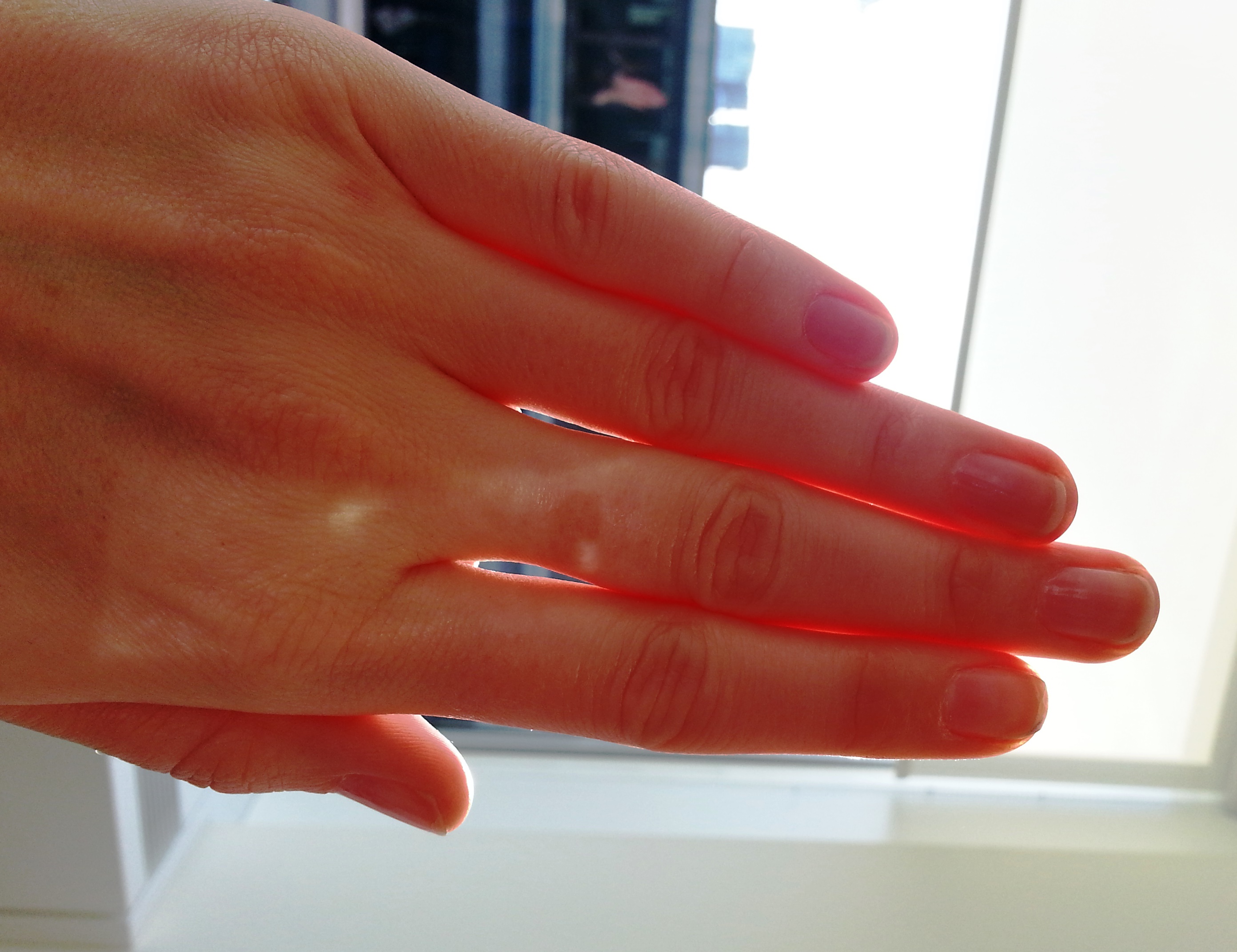
I said I’d make February a month for mindfulness, and this topic seems a good place to start. This morning I listened to the Inner Fire guided meditation from the Chopra Centre, which focused on accepting change. At the end was a one minute poem, and it was highlighted that one minute is all it takes for the blood in our circulatory system to pump around the entirety of our bodies. Isn’t that amazing? In a single minute we essentially change completely on a cellular level. Last night my boyfriend held my hand up to the light to draw attention to the red hue fingers have in such a situation. He pointed out that redness was the iron in our bodies – iron that was created in the Big Bang, and which was but one of many incredible ingredients that make up what we are. This blew my mind, to some extent, but also fascinated me. We are such complex beings and this universe is huge beyond our comprehension. Isn’t it important, therefore, that no matter what lies ‘beyond’, we make the most of every second that we exist, in this context and in this realm of consciousness?

I will finish this somewhat existential blog post with a fascinating story one of my friends re-posted (somewhat coincidentally) on Facebook today:

In a mother’s womb were two babies. One asked the other: “Do you believe in life after delivery?” The other replied, “Why, of course. There has to be something after delivery. Maybe we are here to prepare ourselves for what we will be later.”

“Nonsense” said the first. “There is no life after delivery. What kind of life would that be?”

The second said, “I don’t know, but there will be more light than here. Maybe we will walk with our legs and eat from our mouths. Maybe we will have other senses that we can’t understand now.”

The first replied, “That is absurd. Walking is impossible. And eating with our mouths? Ridiculous! The umbilical cord supplies nutrition and everything we need. But the umbilical cord is so short. Life after delivery is to be logically excluded.”

The second insisted, “Well I think there is something and maybe it’s different than it is here. Maybe we won’t need this physical cord anymore.”

The first replied, “Nonsense. And moreover if there is life, then why has no one has ever come back from there? Delivery is the end of life, and in the after-delivery there is nothing but darkness and silence and oblivion. It takes us nowhere.”

“Well, I don’t know,” said the second, “but certainly we will meet Mother and she will take care of us.”

The first replied “Mother? You actually believe in Mother? That’s laughable. If Mother exists then where is She now?”

The second said, “She is all around us. We are surrounded by her. We are of Her. It is in Her that we live. Without Her this world would not and could not exist.”

Said the first: “Well I don’t see Her, so it is only logical that She doesn’t exist.”

To which the second replied, “Sometimes, when you’re in silence and you focus and you really listen, you can perceive Her presence, and you can hear Her loving voice, calling down from above.” – Útmutató a Léleknek

Food for thought.

20150202_095101

Stop Fighting Hate with Hate – Try Love Instead

As tempting as it is to wallow in depression at the future of humanity after today’s horrific massacre of satirical cartoonists in Paris, to do so would achieve one thing and one thing only: It would mean the terrorists have won.

Whilst it’s heartening to see the numerous messages of support for the victims (and indeed for freedom of speech itself) on social media, as well as the hastily organised rallies across Europe and the newly created cartoons in response to the tragedy, less heartening is the hashtag #killallmuslims, currently trending on Twitter.

It is sadly inevitable that the events of today will lead to reprisals against innocent Muslims, as well as the usual torrent of ignorant comments about religion being the root cause of all evil. But as British journalist Emily Davis succinctly put on Twitter in the aftermath of the incident: “Islamic extremists. Not Islam. They are different entities and shouldn’t be casually associated. Terror has no religion.”

Terrorism in the name of religion is NOT religion, but rather extremism based on a warped perception of it. As someone who has grown up in a household with religious leanings, I have witnessed the positive side of having faith, such as the sense of community and charity that it fosters. Blaming religion in all its forms for this kind of evil, extremist activity is almost as ignorant as the terrorists themselves. Not only that, it instigates a misguided campaign of hate against innocent people who are merely trying to follow their religion in the name of peace.

If only we could all learn to practice tolerance and acceptance, we might yet be able to pull ourselves back from the brink of what could well be the end of civilisation as we know it. Hate is not the way to fight hate. The only thing that will defeat it is love.

je-suis-charlie

Being Present

I’ve just walked home from work. I did the same on Tuesday, but that time I was plugged into my music, walking in time to the beat in my ears but oblivious to the beat of the world around me. Tonight was different. It was a conscious decision to take in my surroundings, to be fully present in this balmy late September evening in the city I’ve called home for the past eleven years but am soon to leave behind for pastures new. I wanted to absorb its every detail, soak it up like a sponge, so that when I’m no longer here I can conjure it any time I like, simply by closing my eyes and remembering:

The Friday evening chatter as the bars by Borough Market began to fill with thirsty punters, relieved to see the end of the week; intricate brickwork in the arches leading down to the riverfront; tourists in droves slowly ambling with cameras and ice creams, no urgency or sense of purpose; runners dodging walkers like bullets; a man with unkempt hair, a typewriter and a sign saying ‘stories while you wait’ (what’s his story, I wonder); an Aussie in breeches calling ‘roll up, roll up to the cabaret freak show’ on the south bank by Waterloo; photographers waiting for the perfect shot as the sun slid down behind the Houses of Parliament, painting the sky in pinks and oranges like a famous work of art as the water lapped peacefully beneath, its surface soft as velvet; buskers with a range of instruments and abilities, one man in particular by the London Eye whose eye I caught as I walked past and whose voice was heaven wrapped in caramel with sprinkles on top; couples strolling hand in hand with smiles as wide as the mighty Thames along whose banks they walked; a discarded jumper that spoke of being forgotten, or perhaps cast off in a moment of passion or overheating; plants in pots outside offices, wilting and browning in the unseasonal heat; drunks gathered on steps with cans of lager, their pastime more acceptable somehow in the context of a Friday night when all around them office workers did the same; a bouncer underneath the bridge in Vauxhall, trying to entice me into his bar for happy hour; a leaf almost but not quite out of my reach as I jumped to touch it; a Portuguese café called The Three Lions where families spilled onto the street; children arriving home from school clutching violin cases and empty bags of fried chicken.

These are the myriad people and things that make up this special city, bringing her to life in all her kaleidoscopic glory. These are the things I will miss; the things I leave behind.

IMG_20140919_203744

The Never-Good-Enough Club

What is it about the human condition that makes it so damn hard to celebrate our achievements yet so easy to lambaste ourselves for our failures? Take my experience of today as an example: After waking at 8am still feeling exhausted from my friend’s (amazing) hen weekend I decided to have extra hour’s sleep to ensure maximum productivity for rest of day. When I re-woke up at 9am feeling good I not only wrote my morning pages for the first time in weeks, I also wrote a ‘to do’ list for the day which comprised the following: 

  • Do physio exercises
  • Write short exposition scene for sitcom class homework
  • Devise comedy sketch show idea (as above)
  • Write first episode of sitcom
  • Write dialogue piece for tomorrow’s sitcom class (homework set by guest speaker)
  • Update short story competition spreadsheet
  • Write a new short story
  • Go to shops (to purchase shampoo, floss, Brita filters and dinner, should you be interested in the mechanics of my banal daily existence)
  • Go to gym for twenty minute cycle
  • Do washing

By 10am I had showered, completed my physio exercises, eaten breakfast and written the exposition scene. By 11am I had come up with an idea for the sketch and put the washing on. By 1pm I’d done my shopping and been to the gym. By 2pm I’d written the dialogue piece, and by 5pm I’d written three quarters of the first episode of my sitcom. As I sit here at 8pm I’ve all but finished (bar a few closing lines) the sitcom episode, updated the short story competition spreadsheet, caught up with my best friend in the US (on the phone) and my good friend in Hawaii (on Whatsapp), and am now writing this post. But do I feel a sense of satisfaction? Not really, because of the ten things on today’s to do list, I only managed to complete nine. And that one outstanding task (writing a short story) is hanging over me like a dark cloud – so much so it may as well be a neon sign over my head saying ‘FAILURE.’ If only I’d got up at 8am and used that extra hour instead of sleeping in, my inner critic reasons, I might have ticked that final box and ended the day with a very different sign over my head: A sign that said ‘SUCCESS.’

The reason I’m sharing this is because I know I’m not alone; there are many others like me. Perhaps it would be better if we lowered our expectations of ourselves and set easier targets that guaranteed success. But, in doing that, would we not just be letting ourselves off the hook and accepting there are limits to our capability? True, it’s no fun always feeling like you’re underachieving because you don’t meet your own high targets, but at least you have the ambition to set high targets in the first place, and the inherent belief that, in exceptional circumstances, you are capable of meeting them.

I think the real answer to this conundrum lies in acceptance; of ourselves, of our abilities and, perhaps most importantly of all, of the distance between our dreams and our realities. We may not always manage to tick everything off our daily lists, but as long as we’re keeping up enough forward momentum to inch ever closer to fulfilling our potential, that might just be okay.

Image

The Wonder Years (or why ageing maybe isn’t so terrible after all-maybe)

Today I was listening to Radio 1 Xtra (I know what you’re thinking – isn’t she a bit old to be listening to that?) when the dj, an enthusiastic chap with a penchant for substituting every other word with “cuz” (yup, definitely too old) began bemoaning the speeding up of time as people get older. “I mean cuz,” he said, “I’m only twenty six and already it feels like a week goes by in a day. Imagine being, like, fifty! How bad would it be then?” How bad indeed.

When it comes to whining about ageing I’m hardly one to talk. Until I reached my current age of *coughs* thirty two I’d always enjoyed lavish birthday celebrations, but as my thirty third hurtles towards me at alarming speed (that dj was right, dagnamit) I must confess I’m feeling hugely (and that’s an understatement) underwhelmed (I am also aware, at this point in proceedings, that older readers may well be gnashing their teeth and branding metaphorical claw hammers positioned directly above my skull). The logical part of my brain is constantly telling me that there’s nothing I can do to stop the process so I may as well accept it, yet I can’t stop fixating on my frown lines long enough to listen to it.

If it’s true that you’re only as old as the man you feel then I’m twenty seven all over again. Though, in all seriousness and as great as it is, being a woman who is five years older than her partner is not without its challenges. Fortunately I’ve always been young for my years in both spirit and looks (an old soul I most certainly am not) and so, for the time being at least, it suits me to be living a youthful and relatively unencumbered lifestyle. But that’s not to say I don’t continually worry whether what I do is age appropriate, or draw constant comparisons with my peer group, many of whom are now playing out the traditional marriage and 2.4 children scenario with aplomb. Don’t get me wrong, I want that myself desperately, and not in the TOO distant future either (cover your ears darling), but right now the thought of sleepless nights, snotty noses and nappies is enough to bring me out in a cold sweat. I want to go on more adventures before I settle down, to live a bit more and eke out just a bit more time for being selfish. But what about convention and my biological clock? Wahhhh!

Then, in the midst of all these brain-churning thoughts, I stop. And a realisation dawns on me. No matter how old we get, those of us who do keep ageing are the lucky ones. So many people’s lives are tragically cut short before they have a chance to worry about worry lines, or contemplate the future of their relationship or career. As the Buddhist way of thinking goes, when all is said, done and worried about (I made that last bit up), all we have is this very moment – so what’s the point of worrying about a future that we cannot guarantee?

And so, in light of the above (and ignoring the current agony I’m in with no doubt age-related back issues) maybe it isn’t quite my time to switch over to Radio 2 after all. Isn’t that right, Cuz?

image

What Grown-ups don’t tell you about Growing Up…

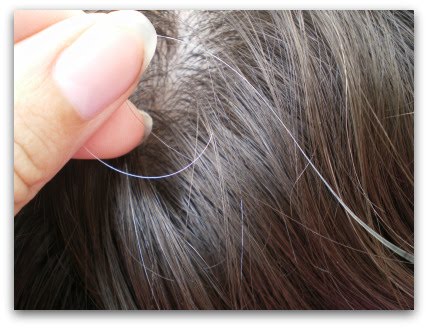
Earlier today I was washing my hands in front of the bathroom mirror when I noticed something horrifying – what looked suspiciously like a grey hair. Now I know we all go grey eventually, and I’m also aware as a result of my peers’ experiences that it’s not uncommon for the odd grey to sprout in your early thirties. But, naively it now seems, I thought that just applied to people with dark hair (the recent media furore surrounding Kate Middleton’s apparently greying locks not having escaped my attention), not blondes. And I certainly never thought it would apply to me.

I’ll never forget the day my mum came into my bedroom when I was at home one weekend several years ago. She looked into the mirror and announced in a pained voice: “You know darling, when I look at myself now I can’t believe it’s really me – inside I still feel the same as I did when I was in my twenties. It’s horrible getting old.”

That moment was a turning point for my twenty-something self, as hitherto I’d always laboured under the misapprehension that one day – most likely when I hit my thirties, which at that time still felt like aeons away – I would magically feel grown up and more than able to assume the responsibilities befitting such a status. Realising this would not, in fact, be the case, was like receiving an unwanted and aggressive slap in the face.

No matter how much you sugar coat it, the truth is that there is no magic age when you become a grown-up – indeed many people (and I fear I may fall into this category) go through their whole lives never quite feeling like one (conversely, some people – who are in the minority, I might add – seem to have come out of the womb responsible adults, though for the purpose of this post I shan’t get into talking about them). When our bodies begin to show signs of ageing, therefore, it feels like a betrayal. How can we have grey hairs – surely a sign of our imminent demise? – when we still feel (and often act) like teenagers? It’s not fair! (I am stamping my feet as I type this – very mature).

Having re-examined the rogue hair in the mirror this afternoon I think I may, in fact, have been mistaken about it being grey. But, whether it was a trick of the light or not, something tells me that moment might have been quite pivotal in the next stages of my development. Each decade brings with it new learnings, and today I’ve discovered that grey doesn’t equal grave. A cheery thought to leave you with on a Friday!

Defining Potential

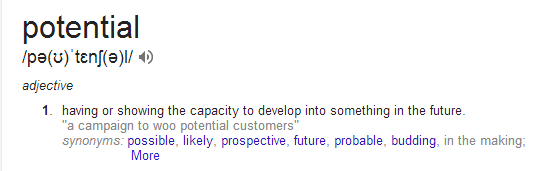
potential


Reading this article on the BBC News website today really struck a chord. Rumination is something I have always excelled in (shame I couldn’t have excelled in something more useful, like academia for example). Not to the point of falling into a depression, you understand, but often to the point of being paralysed by feelings of disappointment in myself – for not working harder, not being more assertive etc. (trust me, the list goes on and on).

In recent months and years, however, I have begun to develop a coping strategy in response to this. It’s gradually becoming easier to recognise when those familiar feelings of self-doubt are creeping up and to nip them in the bud. Perhaps this is a positive result of the ageing process (there have to be some, right?), whereby we come to know ourselves that little bit better as each year passes, so that over time we realise it’s not worth beating ourselves up for our failures, and is far better to just accept them and move on.

Instead of wallowing when we feel we have failed, we should celebrate when we have succeeded, because only then will we start to positively re-affirm who we are and what we can achieve. It makes me sad to see so many people failing to realise their potential in life – myself included. But what is ‘potential’ really? Maybe part of the problem is our definition of that word, and our perception of how much we are really capable of. If we were kinder to ourselves and other people perhaps it would be easier to put our failures behind us and stride into the future unencumbered?

Don’t be S.A.D

Much as we may hate to admit it the signs are becoming increasingly harder to ignore; daylight hours are waning, the sun is slowly starting to retreat out of our reach and there’s a desperate aura surrounding the pavement drinkers that says that they know their outdoor drinking days are numbered. In the words of my beloved Game of Thrones (the most amazing TV series since 24, for those of you who may not be familiar with it and have clearly been living beneath a rock for the past year): Winter is coming.

It’s not as if we can bemoan the lack of decent summer weather this year, though as a nation of moaners I’m sure many people will. After last year’s wash out the past few weeks have been almost entirely pleasant – we’ve even had a mini heat wave for goodness’ sake! (Bless). You can’t say fairer than that, eh? And so as the nights draw in we must accept the fact that no matter how well the weather gods treat us, the summer season will never feel long enough.

There will never be enough days spent languishing bare-legged and brown-skinned in the park, or sipping cocktails on a rooftop at the many pop-up bars that spring up like rabbits as soon as there’s a hint of summer blooms scenting the air. We will never eat enough ice cream (FACT), nor spend enough time building sandcastles on British beaches like we did when we were five years old. We will never have our fill of wandering by the river on a hazy summer’s eve as the sun starts its unhurried journey towards the horizon, pulling a veil of pink across the sky.

It’s true that winter creeps up like a thief, wrapping its cloak of darkness around our shoulders almost before we know what is going on. But lest we complain about the changing of the seasons we should remember the positives that each season brings. Winter may be cold and dark but it also offers cosy nights in pubs drinking mulled wine, and even cosier nights in sipping on hot chocolate. It also boasts the accolade of being the festive season, which brings families together and puts delicious food on the table. So you see, it shouldn’t be feared but rather embraced.

The changing of the seasons is Mother Nature’s way of showing us just how wonderful this world we live in really is. Granted, the seasons in this country tend to be particularly harsh, but if it was always summer and never winter would we really appreciate the summer as much as we do? What would we have to grumble about then?

Friends like these

Today I’ve been trying to remember the world before social media took hold. This shouldn’t have been difficult, considering I pre-date it. And yet it was. I actually struggled to remember how people – myself included – expressed themselves (read also: showed off) to their peers and wider social groups. I’m certain we did use online networks (hazy memories come to mind of painstaking waits for screeching modems to connect, woefully basic Internet chat rooms and a now long-redundant profile on Bebo, the amateur precursor to Facebook), but I can’t honestly remember more than that.

Further rumination on this subject has me wondering if we actually cared as much in the ‘old world’ about what people thought of us and how we were perceived. Or was it, in fact, the dawn of the social media age that was responsible for turning a whole generation (and most likely all subsequent generations) into shallow, self-obsessed egotists who would rather spend their leisure time posting photos to make their friends jealous than actually enjoy whatever it is they’re doing?

I think the reality is that people – children, adolescents and adults alike – have always and will always have an inherent desire to be liked and to feel part of social groups. Before Twitter and Facebook were invented we flirted with rudimentary forms of social networking to extend our reach into such groups. Before those existed we made do with making friends in ‘real life’ situations. Our need to be accepted and popular was just as great, but we just had smaller social circles.

Now that social networks have become stratospheric in their popularity we have grown greedy for more. It’s a natural progression, but a dangerous one. Having hundreds of ‘friends’ on a social networking site can make you feel popular, but if you can count the number who would be there for you no matter what on less than one hand it speaks volumes about the meaning of those ‘friendships,’ and how much homage we should really pay them.

Image

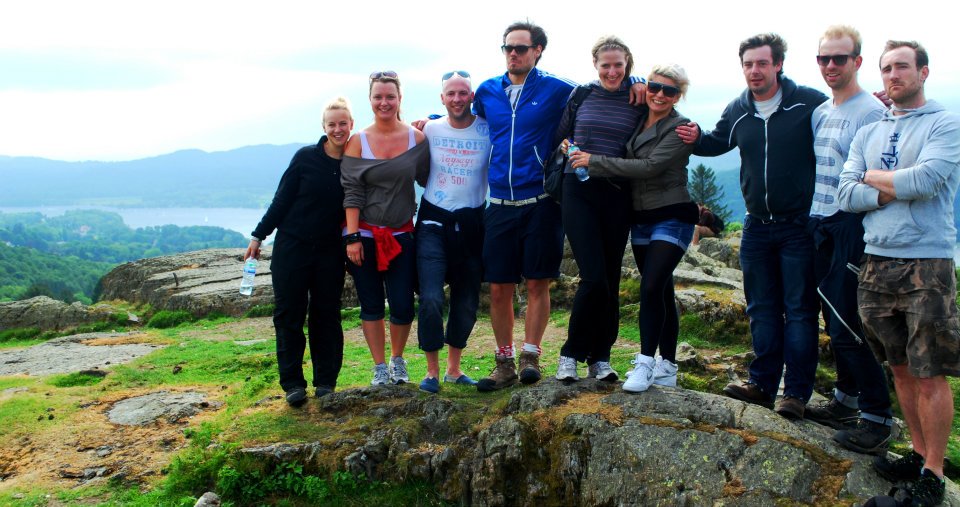
Thinking about friendship groups and the importance of being accepted reminded me of this group photo from a holiday last year in Windermere. We had such a fantastic time and all got on so well – it’s times like those you realise the importance of having REAL friends who are always there, through the good times and the bad.