Thoughts from Brussels

Exactly one week ago we woke to the news that 129 people had been murdered in cold blood by terrorists in Paris. These were ordinary people like you or I, who were letting their hair down after a busy week, enjoying a few drinks, dinner or a concert on Friday night. But the terrorists had other ideas.

It has since transpired that one of the masterminds behind the Paris attack came from the Molenbeek district in Brussels, one of the most deprived areas in Belgium, which is purported to be an easy target for Islamic State (ISIS) militants trying to recruit young Muslims. It is also, incidentally, where my office is located.

Belgium is coming under fire for its lax security measures where tracking terrorists is concerned. For a small country a disproportionate number of people have been recruited to ISIS and left to fight for them abroad – indeed some reports claim Belgium has supplied the highest per capita number of fighters to Syria of any European nation –between 350 and 550, out of a total population of 11 million that includes fewer than half a million Muslims.

These are worrying times, made more worrying still for those of us residing in Brussels by the news this morning, exactly one week on from the news from Paris, that the threat level in Brussels has been raised to very serious, with metro services suspended all weekend, concerts cancelled and a warning not to go to public places.

I feel conflicted by this latest threat. A part of me is defiant and wants to continue exactly as I always would, because to do otherwise, to change our way of life, is to show them they are affecting us, to let them win. But obviously there is also a part of me that is concerned for my welfare, for my partner’s and friends’ welfare. A portion of my daily commute involves taking the metro. Should I now avoid it, in case of an attack? Or carry on taking it and trust in the security forces (and statistics that would probably say my likelihood of being caught up in an attack is small) to protect me from harm?

At any rate, I can’t help but feel the terrorists would be stupid to do anything now the threat has been raised. Far better to wait until it has subsided, until people are less scared and come out of their shells to resume normal life, and do it then. We must remain vigilant. But, beyond that, what can we do?

The bigger issue does of course tug at my heartstrings every day. The ignorance, bigotry and racism shown by so many in the face of the refugee crisis is not only dividing communities but playing directly into the hands of the terrorists. I am not so naive to believe this situation can be resolved purely with love. Sadly now we have let it develop this far the only way it can be addressed is with more violence and bloodshed. But I do believe it is essential that people are tolerant, and that they seek to be informed about the situation instead of believing the hateful bile reported in the tabloids.

In the West, until now, we have been largely protected from the terrible things that have been happening across the world for decades – many of which were, ironically, brought about by the actions of our own governments. Our hands are not clean, and it’s time we stopped pretending that they are, that what is happening now in Europe is nothing to do with us. We funded terrorism for our own economic gain, and it backfired. Now those terrorists have become strong, and they are striking at the heart of the freedom we hold dear. They are also, let’s not forget, driving terrified people from their countries, terrified people who now reside at refugee camps across Europe. These people are like you or me. They are not, as the idiotic Republican hatemongers in the US would have us believe, ‘rabid dogs’ seeking to kill us all.

We started this, it is our responsibility to finish it. And beyond the guns and rhetoric, it is all of our responsibility to bring about a society that is centred around tolerance, hope and love. If we can succeed in this the world, and humanity as a whole, may yet be saved.

image

Proof of Life / Life Lesson

Last night I took my external hard drive from its safe spot in the bottom of the wardrobe, plugged it into the computer and switched it on, with the intention of finding a photograph of me and R to use on our wedding website. Minutes later, on being asked to do something, I jumped up, and, forgetting the wire was in in my way, walked into it and sent the hard drive crashing to the ground. My heart stopped. And, sure enough, when I tried to turn it back on the computer failed to recognise it. It also made a beeping noise (which, as I later read, is never a good sign). A brief call to a data recovery specialist confirmed that paying for professional help was not an option (500-800 Euros? You have got to be kidding me). In the end we whacked it in the freezer for good measure, on the advice of one website that admitted it was a dubious and last ditch method but might possibly work (yeah right), but it is with a heavy heart I am forced to accept that it – along with about five years’ worth of photos – has gone. And most galling of all is that I’ve been here before, having done the same thing a few years ago (and failed to get the data back after parting with 50 quid).

I feel ridiculous admitting it but I’m devastated. Last night I was inconsolable, and couldn’t stop crying. Rightly or wrongly, I value photos enormously. They are a means of remembering all that’s happened in my life, of connecting with my past and demonstrating how I’ve made my mark on the world. Perhaps it’s that last point that’s the most psychologically interesting. People sometimes tease me about how prolific I am on Facebook, and I have often questioned my need to share the details of my life on social media. However, I don’t believe I am a narcissist. My motivation in sharing pictures in particular is not about boasting, or at least my conscious mind disputes that notion. I suppose I do feel a strong need to make my existence in this world tangible, and posting pictures is akin to sticking a sign in the ground saying ‘I woz ‘ere’.

Photographs are, essentially, proof of lives that have been lived. Loath as I am to admit it, on further analysis there is almost certainly a link to my fear of death – of dying, and of people I love dying. I guess I feel somehow that by capturing images I’m keeping myself present, real, alive. And similarly, by capturing pictures of my loved ones I am keeping them alive, and if, God forbid, anything bad should happen, to me or any of them, at least those memories will exist and can be treasured. Is that morbid? Perhaps. But it’s also true.

But what’s done is done. I must move past the sadness, anger and frustration that I’m currently feeling. I’m glad I’m so prolific on Facebook now because I do at least have low resolution copies of the lost files; the memories are not gone forever. But even if they were, what’s most important is the fact I have my health and I have my loved ones – here, in the present, not in the past, which now no longer exists, except in my heart, my mind – and a few low resolution images on Facebook.

past-quotes-images-8-2f1801e1

Gratitude, Acceptance and Umbrellas

It’s been a while since I last updated my blog. This is, in part, because I’m currently focusing on addressing some of the issues in my life that are blocking my path to fulfilment and success. At the moment I’m reading two neuropsychology books, one on Hardwiring Happiness by Dr Rick Hanson (whose TED talk on the issue can be viewed here), and the other on conditions arising from neuropsychological damage, The Man who Mistook his Wife for a Hat, by the brilliant (and, sadly, now also suffering from terminal cancer) Oliver Sachs. Alongside the Chopra Centre guided meditations that I am trying to do on a regular basis (which I think I mentioned in a previous post), these books have been helping me to understand some key facets* of the human condition that need cultivating in order to experience true fulfilment. These are:

Part One: Gratitude

It sounds obvious, but how many of us really take the time each day to count our blessings? I think I’ve touched on this before, but now more than ever I am realising how important it is to consciously feel gratitude in order to overcome negative emotions like anxiety, jealousy and fear. It is only by recognising the value of what we have – primarily the people in our lives who bring us joy and make us feel secure and loved – that we can create a sense of calm and acceptance. Which brings me onto…

Part Two: Acceptance

This morning I walked past the elderly homeless man who sleeps in a doorway along my route to work. For a time, during January, he disappeared, and I hoped he had found somewhere warm to spend the rest of the winter. But no such luck. Recently he has been back, huddled with his worldly belongings on the grey concrete step. I have wanted to do something for him ever since I first saw him, but was unsure whether he would welcome being approached and offered charity. Today I had my chance, as I had slipped into my bag a slice of the delicious tarte au sucre that was left over from the dinner party I hosted on Sunday night. As I passed him I had the urge to offer it to him. He declined. And you know what? I stifled the selfish compulsion to feel rebuffed, and in that moment realised that acceptance is an important part of coming to terms with life. We can’t change other people; we can only change our own thoughts, deeds and actions. I’m glad I offered him something, even if he didn’t want it, because generosity is part of being human – it connects us to one another, and it makes us feel less alone.

Part Three: Umbrellas

Also on my walk to work today, the air was damp with the drizzle I’m coming to learn is characteristic of life here in Brussels. But rather than putting up my umbrella the second I felt a droplet of water on my forehead, I deliberately waited until the rain was sufficiently heavy to warrant me being protected from it. And in that moment it occurred to me the umbrella could be used as an analogy for life:

Life is about learning when you need an umbrella to protect yourself – and when you are strong enough to walk in the rain.

The path I’m currently treading makes me feel ever more keenly that it isn’t possible to protect ourselves from the negative things in life – they are an intrinsic part of it. What matters is working on our ability to face them head on; to be humble, selfless and brave.

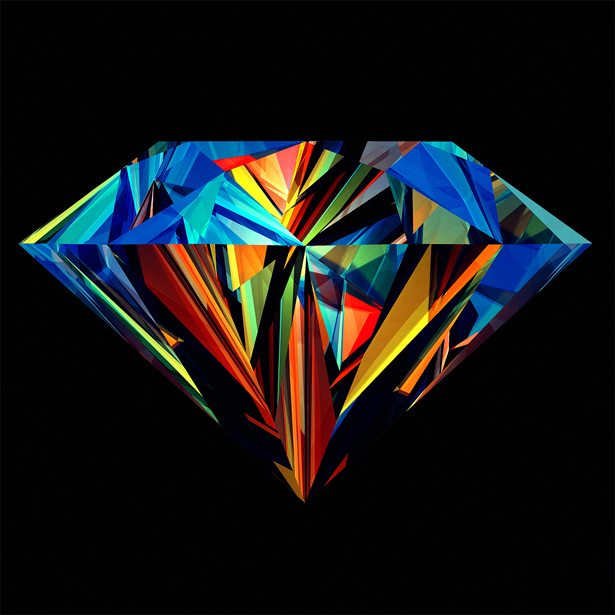
*Interestingly, one meaning for the word ‘facet’ in the dictionary is ‘one of the small, polished plane surfaces of a cut gem’ – it struck me this was also a good analogy for life, which has so very many different aspects, hence the image I have chosen to accompany this post.

Justin-Maller-Facets-90

I never knew facets could be so beautiful.

Existential Musings to kick of Mindfulness Month

Last night, before bed, I found myself engaged in a discussion about the nature of the universe, how humans (and the world as we know it) came to be, and what, if anything, happens after we die. This wasn’t light subject matter for a Sunday evening, and I must confess that, as fascinated as I am by the incredible phenomenon of our existence, I am, in equal parts, utterly terrified by it. My partner and I are at opposite ends of the spectrum where explanation of our existence is concerned – he takes an entirely scientific view and has no belief in a greater being or purpose. As far as he is concerned, therefore, when humans die, we cease to exist. There is no Heaven, no Hell, no reincarnation, not even, as Buddhist philosophy posits, a higher, purer form of consciousness that our ego-less selves return to. There is just nothing, until sometime in the far distant future (or perhaps not even future, since quantum physicists believe that time itself is a construct of our tiny minds because they are not capable of perceiving more than three dimensions – I won’t even begin to go there) another Big Bang-type event occurs and gives rise to another civilisation like ours – as has, statistically speaking, most likely happened before, and will continue to happen, ad infinitum. Whilst this argument fascinates me, it also makes me feel so entirely insignificant that it makes me want to cry. In fact, I’m embarrassed to admit that last night whilst having the conversation I actually did cry, quite suddenly and without warning, and purely as a result of the stabbing terror that accompanied the mere suggestion there is nothing more to this life, that we are but a happy (some might not use that word) ‘accident’ of the universe.

I was brought up in a family with religious beliefs, and if pressed I would say that I still sit more on the side of there being ‘something out there’ than not, though that’s not to say I would currently classify myself as a practising Christian – far from it. Whilst I completely appreciate the argument that religion is merely a construct of the narrow human mind in an attempt to comfort itself about the impending nothingness after death and the relative obscurity and pointlessness of its existence, I don’t entirely buy it. Maybe that’s precisely because my own narrow mind is so terrified that it has adopted that default position. But somehow I just feel so deeply and intrinsically certain there is more to this puzzle than we are capable of understanding – more than even science can explain. I don’t believe in the notion of a white-bearded God who sits atop a cloud, nor do I believe in a red horned Devil stoking the fires of Hell. If anything I’m more inclined to align myself with the Buddhist idea of losing our egos and returning to one consciousness – as frightening as it is to think of losing that part of myself that makes me unique, I think I can buy into the concept of enlightenment and acceptance of what is, what has always been and what will always be. I might even be convinced to some extent in reincarnation, and living other lives as a pathway to higher states of enlightenment. I certainly believe in the existence of ghosts – whether they are really the spirits of dead people or rather the imprints of those people due to some kind of space/time lapse or interference I’ve (obviously) no idea. But now I’m really going off piste.

If you’ve read this far the chances are you think I’ve gone quite crazy. And maybe I have. But isn’t it important for us to think about the nature of our own existence? As tempting as it is to put it in a box labelled ‘too scary’, isn’t it a good thing to question why we are here and what happens once we are no longer? It’s certainly a topic that is playing more on my mind with advancing years (as well it might, for obvious reasons).

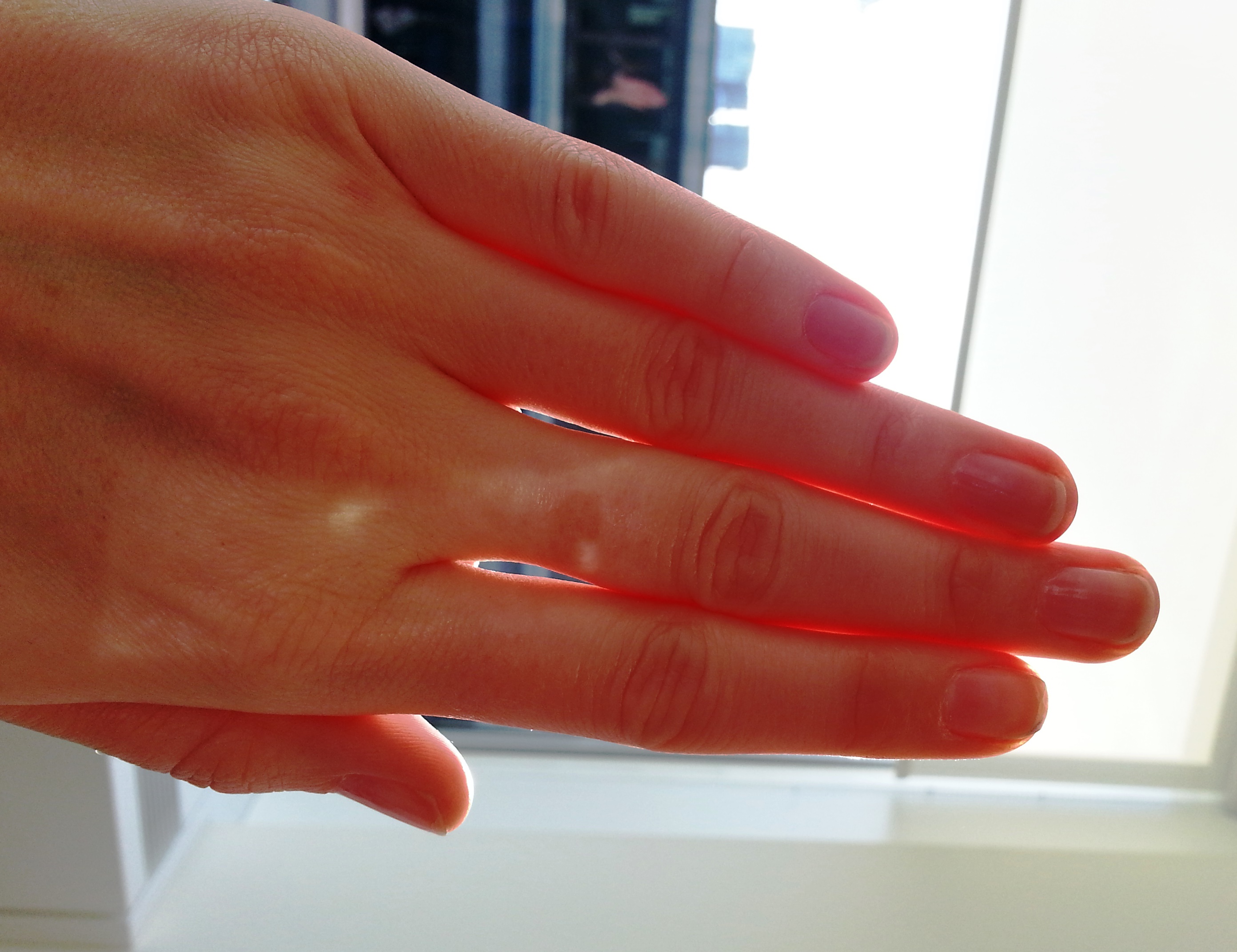
I said I’d make February a month for mindfulness, and this topic seems a good place to start. This morning I listened to the Inner Fire guided meditation from the Chopra Centre, which focused on accepting change. At the end was a one minute poem, and it was highlighted that one minute is all it takes for the blood in our circulatory system to pump around the entirety of our bodies. Isn’t that amazing? In a single minute we essentially change completely on a cellular level. Last night my boyfriend held my hand up to the light to draw attention to the red hue fingers have in such a situation. He pointed out that redness was the iron in our bodies – iron that was created in the Big Bang, and which was but one of many incredible ingredients that make up what we are. This blew my mind, to some extent, but also fascinated me. We are such complex beings and this universe is huge beyond our comprehension. Isn’t it important, therefore, that no matter what lies ‘beyond’, we make the most of every second that we exist, in this context and in this realm of consciousness?

I will finish this somewhat existential blog post with a fascinating story one of my friends re-posted (somewhat coincidentally) on Facebook today:

In a mother’s womb were two babies. One asked the other: “Do you believe in life after delivery?” The other replied, “Why, of course. There has to be something after delivery. Maybe we are here to prepare ourselves for what we will be later.”

“Nonsense” said the first. “There is no life after delivery. What kind of life would that be?”

The second said, “I don’t know, but there will be more light than here. Maybe we will walk with our legs and eat from our mouths. Maybe we will have other senses that we can’t understand now.”

The first replied, “That is absurd. Walking is impossible. And eating with our mouths? Ridiculous! The umbilical cord supplies nutrition and everything we need. But the umbilical cord is so short. Life after delivery is to be logically excluded.”

The second insisted, “Well I think there is something and maybe it’s different than it is here. Maybe we won’t need this physical cord anymore.”

The first replied, “Nonsense. And moreover if there is life, then why has no one has ever come back from there? Delivery is the end of life, and in the after-delivery there is nothing but darkness and silence and oblivion. It takes us nowhere.”

“Well, I don’t know,” said the second, “but certainly we will meet Mother and she will take care of us.”

The first replied “Mother? You actually believe in Mother? That’s laughable. If Mother exists then where is She now?”

The second said, “She is all around us. We are surrounded by her. We are of Her. It is in Her that we live. Without Her this world would not and could not exist.”

Said the first: “Well I don’t see Her, so it is only logical that She doesn’t exist.”

To which the second replied, “Sometimes, when you’re in silence and you focus and you really listen, you can perceive Her presence, and you can hear Her loving voice, calling down from above.” – Útmutató a Léleknek

Food for thought.

20150202_095101

Rejecting Stasis and Embracing Change

sta·sis

  1. motionless state: a state in which there is neither motion nor development, often resulting from opposing forces balancing each other
  2. state of no change: a state in which there is little or no apparent change in a species of organism over a long period of time.

“He who rejects change is the architect of decay. The only human institution which rejects progress is the cemetery.” – Harold Wilson

“To exist is to change, to change is to mature, to mature is to go on creating oneself endlessly.” – Henri Bergson

As you might have guessed from the above definition and quotes, in recent days I’ve been ruminating on the nature of change. This is, I suppose, unsurprising given that my immediate friendship groups are currently undergoing a lot of it. Some people have had babies, others are moving abroad, and it’s all a bit, well, unsettling if I’m honest. Which is only natural. If we weren’t scared of change we’d be robots. Anything that alters the comfortable stasis of our lives is inevitably going to wobble our foundations a little. But surely being wobbled is a good thing?

I’ve always said my greatest fear in life (besides being attacked by a shark or waking up with a tarantula on my face – those two remain the greatest fears of all) is waking up one day and realising I’ve been doing the same thing for the past twenty years. Why? Because there is SO much to DO in this world; so many places to live, so many jobs to try, so many hobbies to take up. Why wouldn’t we take every opportunity that’s offered to us? Why not make the most of every moment? It’s so easy to get stuck in a rut, to fall into a career that doesn’t grab you and to follow that trajectory to the grave. Making fundamental changes IS terrifying, but sometimes it’s the only way to pull ourselves out of the slough of despond so many of us reside in for our entire adult lives. As Mark Twain said, “twenty years from now you will be more disappointed by the things that you didn’t do than by the ones you did.” I don’t want to look back on my life with regrets about the things I didn’t do. And whilst change does scare me, I’m determined not to let it hold me back.

I’m also determined to stop worrying about the effect of change on my relationships. Just because a person moves away doesn’t mean your friendship will die. If they’re a good enough friend in the first place, that relationship will thrive no matter where you are. Sure, you might see or talk to that person less, but that just means it’s all the more important to make the times you do see and speak to them count.

Life is too short to spend worrying about change and what other people think. Life is for living. And, one way or another, that’s exactly what I intend to do.

words113

Compare This

Last week I read about a one-woman play that was both written and performed by a girl in her early twenties*. Instead of thinking ‘wow, that’s an impressive amount of talent at such a young age’ I’m ashamed to admit my first default reaction was ‘urgh, some people have all the luck.’ And that’s not an isolated incident. Friends’ promotions, publications, engagements and luxury holidays (to name but a few life events) have often left me cold – not because I’m so hard-hearted I can’t be happy for them, but because I can’t help but compare myself to them, and always end up feeling inadequate.

Comparison is the enemy of success. When you spend all your time comparing yourself to others you get paralysed by the fear of failure. I’ve only just found the courage to openly admit to myself I’ve been doing this for years, and begin to acknowledge that it’s not only unhealthy but also downright silly. If we obsess enough over others’ successes we may well be able to emulate them, but the pursuit of that goal can destroy all the good things in our own lives. Is it really worth that?

When we reach the pearly gates at the end of our lives wouldn’t it be better to stand up and say with pride we took our own path in life, rather than following others’? Each one of us was made unique, with different strengths and weaknesses. Why try to fit a square peg in a round hole? I can only be me. And what I’m finally coming to realise is that being me is just fine. No, not fine. Being me is great 🙂

image

*In light of the above I’m going to see this play tonight. It’s time to buck the comparison trend and support a fellow female writer 🙂

What Grown-ups don’t tell you about Growing Up…

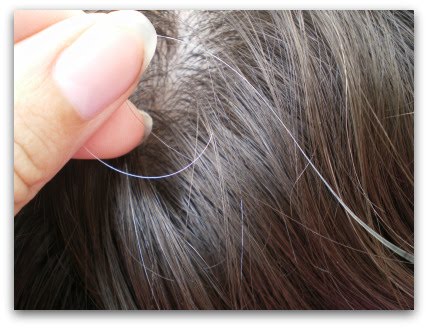
Earlier today I was washing my hands in front of the bathroom mirror when I noticed something horrifying – what looked suspiciously like a grey hair. Now I know we all go grey eventually, and I’m also aware as a result of my peers’ experiences that it’s not uncommon for the odd grey to sprout in your early thirties. But, naively it now seems, I thought that just applied to people with dark hair (the recent media furore surrounding Kate Middleton’s apparently greying locks not having escaped my attention), not blondes. And I certainly never thought it would apply to me.

I’ll never forget the day my mum came into my bedroom when I was at home one weekend several years ago. She looked into the mirror and announced in a pained voice: “You know darling, when I look at myself now I can’t believe it’s really me – inside I still feel the same as I did when I was in my twenties. It’s horrible getting old.”

That moment was a turning point for my twenty-something self, as hitherto I’d always laboured under the misapprehension that one day – most likely when I hit my thirties, which at that time still felt like aeons away – I would magically feel grown up and more than able to assume the responsibilities befitting such a status. Realising this would not, in fact, be the case, was like receiving an unwanted and aggressive slap in the face.

No matter how much you sugar coat it, the truth is that there is no magic age when you become a grown-up – indeed many people (and I fear I may fall into this category) go through their whole lives never quite feeling like one (conversely, some people – who are in the minority, I might add – seem to have come out of the womb responsible adults, though for the purpose of this post I shan’t get into talking about them). When our bodies begin to show signs of ageing, therefore, it feels like a betrayal. How can we have grey hairs – surely a sign of our imminent demise? – when we still feel (and often act) like teenagers? It’s not fair! (I am stamping my feet as I type this – very mature).

Having re-examined the rogue hair in the mirror this afternoon I think I may, in fact, have been mistaken about it being grey. But, whether it was a trick of the light or not, something tells me that moment might have been quite pivotal in the next stages of my development. Each decade brings with it new learnings, and today I’ve discovered that grey doesn’t equal grave. A cheery thought to leave you with on a Friday!

The fading of the light

Tap tap tap.
The sound of security, purpose and direction. Vibrations of a life being lived, if not well then at least with intent and without surrender.
Tap tap tap.
The sound of derision, laughter and pity, a spectrum of emotions-all but one of which cut deeper than a knife.
Tap tap tap.
Decisions made, promises broken, friendships lost. Even the kettle is a mountain.
Tap tap tap.
A tangled web of lies, not driven by malice but by fear. It’s for the best, they say. But who are they? Who are they really?
Tap tap tap.
Loneliness creeps like a thief in the night. It wears a cloak of shame, its swag bag groans with regret.
Tap tap tap.
Feeling your way, everything is new, everything distorted. Complacency is dead.
On. Off. On. Off. Blinking like a defective strip light. Soon you too will be stripped of light, and terror will seep into your bones like tea diffusing from a bag.
Tap tap tap. You’ll learn to cope, the doctors say. Other senses will prevail, like knights in shining armour they will rescue you from the dark-from yourself.
Tap tap tap.
Not long now. Nothing to do but wait.
Tap tap tap.
Darkness falls.

The Boss

I’ve decided to enter a short story competition, and this is my first attempt at the beginning of the story. What do you think? Honest opinions welcomed…

The Boss

The first time Matt slammed Annie’s head into the wall he said it was an accident. He was going to punch the wall, he said, but her head had got in the way. It was her fault, naturally. It always was. The second time was harder for him to deny. They’d been having breakfast in the conservatory on what she remembered to be a hot and sticky summer’s day. He’d asked about her male colleague, Sam, who he’d met at a work function the previous evening. Had they ever been alone together, he’d wanted to know.

She should have said no but she told him the truth; that of course they had on the odd occasion, travelling to meetings and so forth. It was the wrong answer. She spent that night in A&E with a split lip, black eye and bruised collarbone. He’d been treated for scratches where his hand had made contact with the glass of the conservatory. They knew, the hospital staff, it was obvious. But though they pleaded with their eyes for her to tell the truth she knew the consequences of doing so were far more dangerous than even they realised. And so she stayed silent.

It hadn’t always been like this, of course. When they met at Matt’s university’s graduation ball five years ago he’d bewitched her. Six foot two with gladiatorial stature and eyes the colour of swimming pools he’d not only been her type, he’d been her Adonis. Annie hadn’t thought it possible such a man could exist; as it turned out, he didn’t. When she looked at him now she saw not infinite possibility in his azure eyes, but infinite cruelty – how had she not seen it before?

He was an excellent liar – that much became apparent early on in their relationship, when she started to find the receipts in his jacket pockets, the clichéd lipstick on his collar. She should have left him then, of course, but she was pregnant with Jack. How could she have left? Her parents were dead, she had no savings to her name – he’d made sure everything was in his name. So instead she stayed, played the role of the oblivious wife perfectly. He never suspected a thing.

If there was any solace it was that he didn’t lay a finger on their son. The beatings lessened in severity during the pregnancy, and he was careful not to punch her near her stomach. He may have been a soulless man, but even he knew harming his unborn child was going too far. Instead he slapped her face, burned her legs with cigarettes, just enough to keep her in line, to show her who was boss – oblivious to the fact she would soon show him that it was her.

The fading of the light

She wasn’t ready when the darkness came, but the darkness didn’t care. It rode rough-shod right through her dreams, obliterating all that lay in its path. From that day forth there would be no violin concertos, no marathons, no travelling alone. For how could these things possibly be done in the absence of sight?

Nobody could believe how suddenly her vision ceased to be. At family gatherings the more superstitious members of her clan would posit in hushed tones over the buffet table that the gods had accidentally gifted her with vision before realising their mistake and taking it back.

Whatever the reason for her misfortune she had little choice but to bear it, though to her life without vision seemed devoid of hope and joy. She wouldn’t take her life, though in the early days she had certainly considered it. Her parents wouldn’t bear the strain, nor did they deserve it. Instead she merely existed from day to day, counting the seconds of the clock as they ticked by, wishing things were different.

Then one day a stranger came upon the house. He claimed to be in need of water and a bite to eat. Her parents tried to turn him away but she said no, what harm would it do to take him in, feed and water him and send him on his way?

But the stranger didn’t leave, not that night or the night that followed. He sat and read to her long after her parents were asleep, and told her stories of his travels and the world. When, a whole month after he arrived he asked her to go with him when he left, she didn’t hesitate. What else did she have?

And so they left, with her parents’ guarded blessing leaving a hundred gossiping mouths in their wake. And he kept his promise of showing her the world through his vivid descriptions. On her birthday he bought her a violin and encouraged her to play. A year later they ran a marathon together, him acting as her eyes.

Through him she realised sight was not everything, but rather love. For the first time in her life she realised she was not alone. And she felt blessed.