Small Kindnesses in a Hate-Filled World

Few could fail to have been moved by the recent news (and news reporting – but that’s an inflammatory issue for another post) of American journalist James Foley’s death at the hands of Islamist militants in Iraq, or haunted by the images below of two of the many Yazidi girls who have been caught up in a war that’s not of their own making – one who looks little older than a child but is forced to carry a rifle to protect her family. Such stories and images are heart breaking, but, for westerners, it is still somehow so hard to grasp that atrocities like these are taking place on such a large scale when the comparatively ‘civilised’ society in which we live is at the opposite end of the spectrum of humanity.

So many terrible, evil things are happening all around the world, and though we fortunate folk may feel sickened, we also feel powerless to help. And, granted, when it comes to the poor souls being persecuted in Iraq, Syria, Gaza and all the other places where oppression, violence, corruption and hatred are as widespread as the oceans between us, we ARE powerless. But there is one thing we can do: Reach out to the people in our immediate vicinity, undertaking acts of kindness that will bolster the collective morale and prove not only the strength and beauty of the human spirit, but also that goodness still exists in the world. Just like this man, hairstylist Mark Bustos in New York, who gives up every Sunday to roam the streets in search of homeless people who need a haircut, whilst his girlfriend takes the trouble to ask them what they want to eat (rather than giving them scraps and leftovers). You might think a haircut is a shallow thing, but he said this of one of his most memorable beneficiaries:

“After offering him a haircut and whatever food he wanted to eat, he didn’t have much to say throughout the whole process, until after I showed him what he looked like when I was done … The first thing he said to me was, ‘Do you know anyone that’s hiring?'”

It’s small acts of kindness just like this that have the power to restore people’s faith – in themselves, in the world around them, and in humanity itself. I’m not saying we should all go out with a pair of scissors every weekend, but I am saying this: We may not have the power to heal the world, but the power to heal those closest to us is absolutely in our hands – if only we choose to acknowledge and act on it.

article-2724658-2084D29B00000578-826_964x641girl

Making Peace

Yesterday, after two days of proofreading a document created by a colleague, I sent my comments back in an email. I was tired and feeling overworked, and didn’t stop to think how the email would make that person feel – I was just glad to have ticked another task off my long to do list. Today when they responded saying my comments had upset them my initial (tired and overworked) response was to roll my eyes and feel anger bubbling up inside me. But then I stopped, went for a walk outside, took several deep breaths and thought hard about the situation. My email wasn’t rude, per se, but with hindsight it was tactless. The document I’d been critiquing was this person’s baby, so inevitably my seemingly brusque comments were misconstrued as me thinking the entire document was rubbish, which is far from the case.

The incident made me appreciate just how easy it is for small issues in the workplace to turn into much larger ones, simply by virtue of people’s lack of empathy towards one another due to their own personal issues. And, on a much bigger scale than that, how it’s exactly this lack of empathy towards others that leads to hatred – and wars. This issue is particularly pertinent today as the US launches air strikes against IS militants in Iraq, who are currently attempting to murder the Yazidis and Christian minorities whom they have displaced from their homes, in what seems to be verging ever more closely on an act of genocide. What makes these militants – and, for that matter, the Israeli and Hamas fighters in Gaza – think they are better than those they seek to wipe out? Don’t they realise at our core we are all the same: Human beings who are trying to make our way in a conflict-ridden world?

I will never forget the stories I read as a child about the soldiers in the front line during the First World War, who downed their weapons on Christmas Day and came out of the trenches to play games with the opposition; English and German soldiers united in one moment of peace, when just twenty four hours later they would be tearing one another apart.

It makes me sad to think of all the hate in the world, and days like today remind me that I’m not immune to creating animosity myself, even when I don’t mean to. Our moods are not always easy to control, but if we all put a bit more effort into thinking how they affect other people, and appreciating that those people are working through issues of their own, I really think there would be more peace in the world.

Happy Friday everyone – be nice to each other.

Nice-Pigeon-Wallpapers

Detox Diet: Day Three (aka The Final Frontier)

I’m not going to lie to you, today has NOT been easy. When my alarm went off at 6.55am I could barely find the strength to lift my head off the pillow, let alone do my pilates DVD as planned. So it was back to sleep for another 45 minutes, and even then I felt like someone had dropped a breeze block on my head from a great height.

At work I was grumpy and impatient – though having to proofread a 310 page document would probably have that effect on me with or without a detox.

At lunchtime, to cheer myself up, I had an extra-large bowl of garden salad with lemon and oil dressing, rationalising that the ingredients would otherwise have gone to waste (because I’m sure as hell having something different for lunch tomorrow – most probably something that’s been deep fried in a foot of animal fat then coated in three consecutive layers of chocolate and cheese) and anyway, how can it possibly be bad to have an extra half of a tomato and a handful of spinach? Give me a break.

After lunch I took a stroll outside, then sat in the sunshine and read for a while. At one point, having watched countless happy people strolling past with iced coffees and frozen yoghurt, I almost succumbed to the sugar craving and had a tic tac to keep me going. But I resisted.

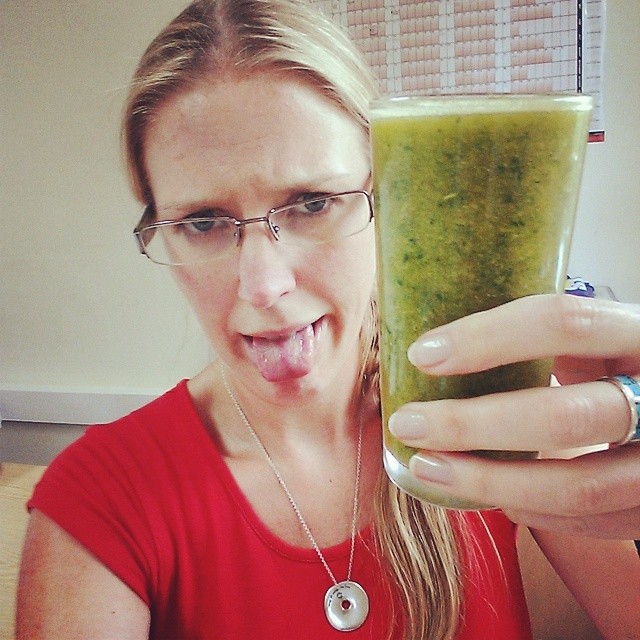
In truth I nearly gave up altogether when my colleagues asked me for a post-work glass of wine, but I hadn’t come this far to fall at the final hurdle. So I made my final revolting (and I really mean that. So many tasty ingredients went into it but the only two I could taste were celery and parsley. Gross.) mean green juice and threw it down the hatch in one, grimacing all the way.

When I got home I forced myself to do the pilates DVD I’d sacked off this morning, and I feel a whole lot better for it (if slightly light-headed given I’ve consumed the sum total of about five calories in the past 72 hours).

Tomorrow I’ve invited a friend for dinner and have promised her a nice big, cheesy lasagne with lashings of garlic break – in your face detox!

As for now, only one portion of ‘fat flushing soup’ and a chamomile tea stand between me and FREEDOM!!! It’s pathetic, I know, but I’m actually quite proud of this achievement….

10533086_10154443988935057_7674059502315839826_n

Detox Diary: Day Two

It’s day two of my three day detox and I’m happy to report I haven’t keeled over through starvation. Yet. Though that’s not to say it hasn’t been a mighty (and frankly superhuman) effort staying away from those bloody Crunchie ice creams in the freezer, not to mention resisting dipping into the ‘drawer of goodies’ at work. By dinner time last night I was more excited about consuming soup than I ever previously fathomed it possible for a human to be. And remembering I was allowed to have a chamomile tea before lights out elicited an actual squeal of delight.

What is happening to me? I’m not at all sure I like this version of myself, who spends her days wafting dolefully past trays of cakes in the office, and was so pathetically grateful for this morning’s coconut and spinach smoothie it nearly reduced her to tears? This afternoon I was even overjoyed to remember I had left the eight raw almonds out of my lunchtime salad, and subsequently ate them hunched over my desk like a starving savage.

But worst of all is the guilt. Yesterday I had eaten my salad before it dawned on me I’d made enough for two portions (according to the person who came up with this plan-who must, in my opinion, actually be a stick insect), then at dinner I crumbled after eating my allowance of ONE CUP of soup (ridiculous) and ended up having at least twice that (what? It’s only got vegetables in it for God’s sake, and I’m not even allowed any bread!) Today, too, I over-catered, albeit accidentally because my colleagues expressed a mild interest in trying my Mean Green Smoothie but, when it came to it, decided it smelt too much like pond scum to imbibe it. Nice.

It’s now 7pm and I’m attempting to wait until 8pm for my poxy ‘cup’ (read: at least two bowls. I no longer believe in conformity) of soup, as I don’t think I could bear watching the Great British Bake Off without some food (though even with the soup there’s a strong chance I’ll have gnawed off my own leg by the time the programme is over, or at the very least launched myself at the freezer and done away with every Crunchie ice cream in it).

I’d be rubbish at proper dieting. When you’re not allowed to eat things  those things are all you can think about. It’s pure torture. Thank God there’s only one more day standing between me and all the ice cream, chocolate, cheese and pizza I can eat. Not to mention the red wine. Yes, I know I’m missing the point of the detox if I’m not prepared to change my ways for good at the end of it, but one thing I’m learning with this experience is this: Life’s too short to detox.

image

Detox Diary: Day One

One tedious and short-lived powdered Spirulina phase aside, I’ve never been one for a detox diet, though in truth that says more about my lazy nature than an aversion to the concept. I’m all for a period of healthy living, in fact, and never more so than now, after three consecutive heavy weekends have brought me to my knees, physically and mentally. And so yesterday, after a hearty last supper of cheese-based Spanish tapas dishes washed down with red wine (what?), I went to the shop and bought all the ingredients needed to do this three day detox plan.

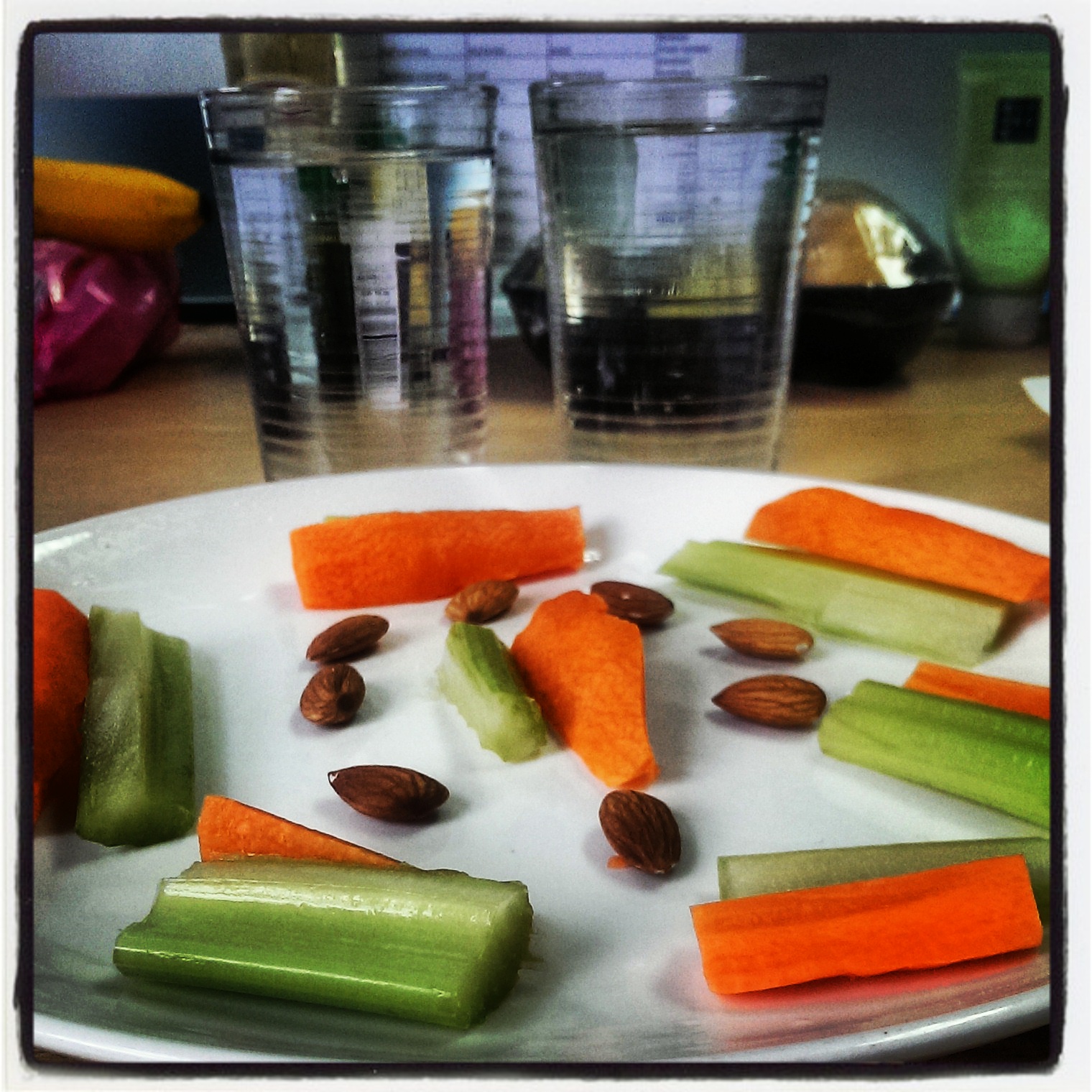
This morning, upon rising, I dutifully prepared my lemon and ginger detox drink and put the ingredients for the fat flushing soup into the slow cooker. When I arrived at work I prepared the coconut milk smoothie, then for a mid-morning snack chopped up some carrot, celery and cucumber for a snack, which I supplemented with eight raw almonds. Lunch time involved a second trip to the shop to buy additional detox plan items for the garden salad with lemon and oil dressing that would constitute lunch.

So far, so good right? Yes, I suppose so. Except for the following:

  1. Celery is Evil
    As in, actually the devil incarnate. Which is particularly upsetting given that it is one of the primary ingredients of this particular detox plan *gags*
  2. Detoxing when you have ice cream in the freezer is the worst kind of torture there is
    Especially when that ice cream just so happens to be Crunchie Blast ice cream, your current favourite ice cream in the whole freaking world *weeps*
  3. Gym? You must be Joking
    I came into work with my gym kit feeling hopeful I would go on my way home from work. The reality of this situation is that living on raw fruit and veg alone provides insufficient energy to walk to the toilet and back, let alone do a workout. Which means physical activity (beyond trips to the loo – give me some credit for decency) is on the back burner until this detox is done.
  4. Read the Recipes
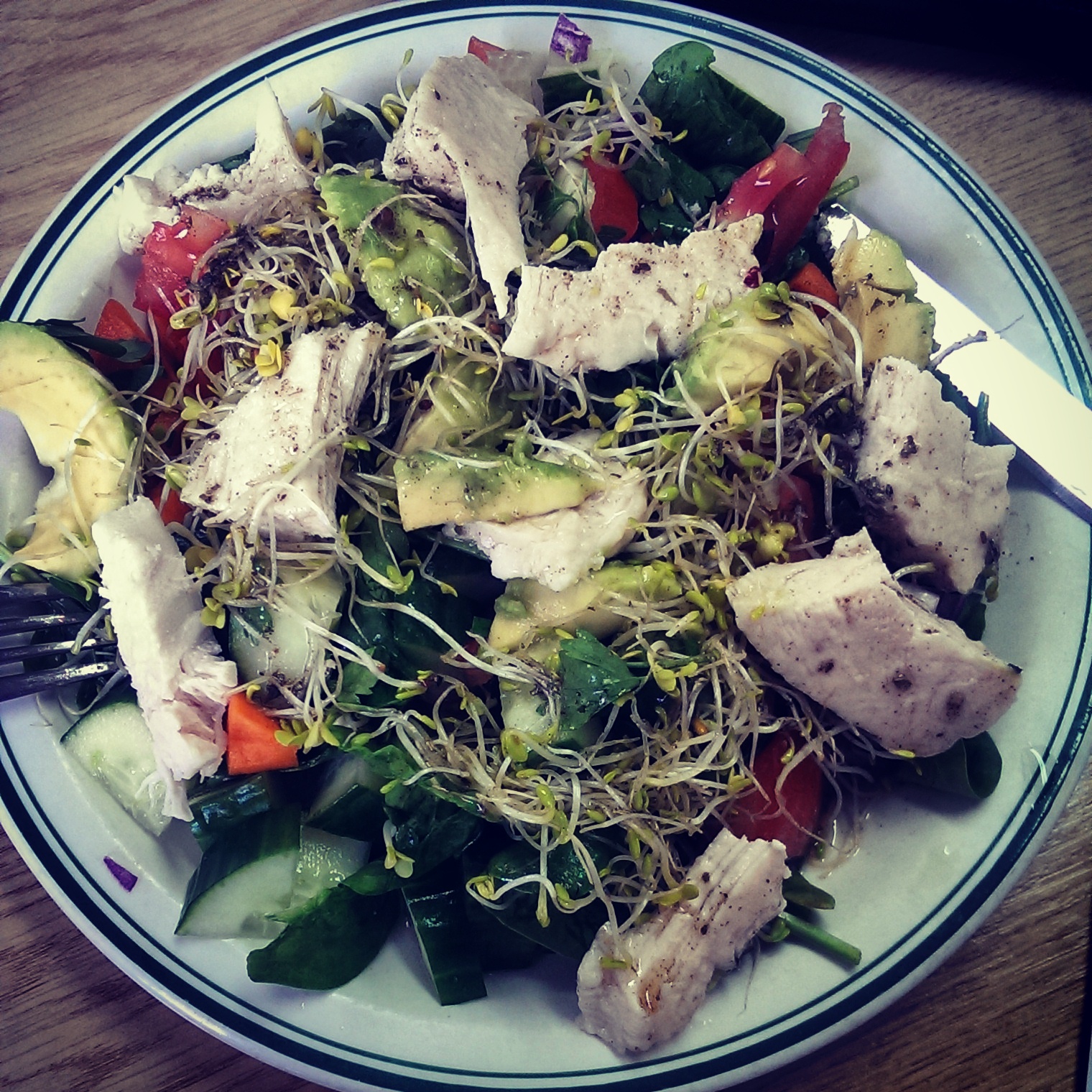
    It helps, because having chowed my way through an admittedly-large looking plate of garden salad (see below) I realised I had actually made enough for two servings, which means no ‘exciting’ afternoon mean green juice for me (despite having spent enough for a deposit on a house on the ingredients for it at lunch time – drat).
  5. Where does the time go?
    Healthy living is time-consuming, there’s no getting around it. All that chopping, grating, peeling and mixing is bloody hard work, in fact. But at least it makes the working day go faster…

Still to look forward to today is one cup (yeah right) of fat flushing soup and a chamomile tea before bed, washed down with lashings of filtered water. And, despite the almost unbearable craving for it, no ice cream whatsoever (because I’m saving that particular luxury for next week in Italy, where I shall be consuming all the ice cream, pasta, pizza and red wine I can shove down my throat. Who says people only do detoxes in preparation for a purge…?)

IMG_20140805_152025

Celebrating Life – and Good Friends

Today I went to Birmingham for the funeral of my good friend’s dad. It was sad and uplifting in equal measures, sad because Brian no longer walks amongst us and he will be sorely missed by those who loved him, and uplifting because so many people turned out to pay their respects. Brian was a larger than life character, and it’s always those people who leave the biggest hole when they pass away. I didn’t know him well, but I knew him well enough to know he would have thoroughly appreciated every moment of today, from the sympathetic vicar who delivered the ceremony in exactly the way he had specified before he died, to the inordinately large volume of champagne that was drunk in his beautifully sunny garden afterwards. I know he would have loved the fact that everyone had come together to raise a glass in his honour, and above all else I know he would have been hugely proud of his son, my friend, who has borne his father’s untimely passing with such strength and courage, helped in no small part by his gorgeous fiancé and wonderful family.

It’s on occasions like today I realise how important it is to count blessings. When I looked around me in the crematorium, which was lined wall to wall with people, I really felt the value of the life that had been lost. I like to think I live my own life well enough to ensure a decent turn out to my own send-off, whenever that might be, but that’s not to say I can’t do more in whatever time I have left on this mortal coil to positively contribute to others’ lives, to make them feel valued, supported and loved as they have me. I felt particularly grateful today at the wake, when I recognised the fantastic and extensive support network of friends I still have from university – not something everyone can claim to have sustained a decade after graduation. This friendship group is special and, despite not getting together nearly as often as we’d like, it is also lasting. I know I’m being a soppy cow but sometimes it’s just nice to take a moment to reflect on all the good things. And I’m sure that somewhere up there in the ether, glass of champagne in hand, Brian Simonite is doing just that too. Cheers, Brian.

10418223_10154347690900057_7830900485526170382_n

On Writing Autobiographically

During last night’s crime writing class at the City Lit we discussed characterisation. I told the group I was intent on making the protagonist of my latest story as unlike me as possible. Why? Because I’ve realised that, all too often, I write characters as if they were, in fact, me, and whilst Polly Courtney said at last week’s Writers’ & Artists’ conference that most people write their first novel autobiographically (“because they have something to get off their chest”), in my case I fear it might be more to do with laziness than self-expression. I worry that in writing characters who are based, no matter how loosely, on me, I’m closing myself off to a host of far more interesting and complex characters. Not only that, I’m failing to examine their personalities thoroughly enough to be able to fully inhabit them, as I’m assuming they would have the same thoughts and feelings as I would, when this isn’t necessarily (and indeed shouldn’t) be the case.

After a written exercise, wherein we were encouraged to introduce our characters by name (“My name is X…”) and elaborate on how they felt about that name, whether it had any connotations/associations etc., we had a group discussion. One of my fellow students said she didn’t like the character she had written about in the exercise – in fact, more than that, she actively disliked her. The teacher was concerned about this, and said that if a writer is unable to empathise with their protagonist they must at least be able to foster a sense of curiosity about them. For example, what experiences have shaped them into the person they are today (or at the time your novel is set)? Why do they hold certain viewpoints and like or dislike certain things?  

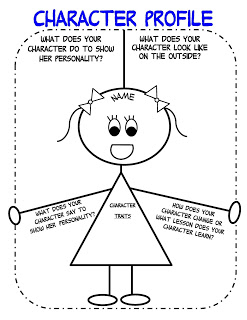
A useful exercise in characterisation, we learned, is to take your main character and write about them both ‘from the inside out’ and ‘from the outside in.’ In other words, write one paragraph ‘as’ them (a letter to a loved one, for example) and then answer a series of questions ‘about’ them (e.g. what is their favourite colour/food, what do they like/dislike etc.). One particularly pertinent and often revealing question is ‘What does he/she dislike most about him/herself,’ as it often gives rise to useful insights into their inner psyche.

The lesson, I suppose, is that if you don’t completely identify with your main character that’s fine, so long as you like them sufficiently to be curious about who they are and what makes them tick. What is certain is that during the creative process you’ll be spending a huge amount of time with this person, so it has to be someone you’re happy to hang out with – or you’ll likely have a pretty miserable time writing it!

character_profile_girl

For Fellow Aspiring Writers: Advice from the Writers’ & Artists’ Conference

On Saturday I went along to the Writers’ & Artists’ ‘How to Get Published’ conference in Euston. Given my aversion to early rising it was quite a commitment for me to show up at 9.45am on a weekend, but by the end of the day I was so glad I had. I live-tweeted throughout the event but it has since dawned on me that advice drip-fed through Twitter isn’t that easy to come back to afterwards. So for all my fellow aspiring writers I thought I would encapsulate the key learnings in this blog post for reference purposes.

Tom Tivnan from the Bookseller, on self-publishing:

  • 86% of those who have self-published would do so again
  • The print self-publishing market is comprised almost entirely of non-fiction
  • Most self-published e-books retail at around £1
  • 69% of e-books are bought by women and only 11% by men
  • 58% are published by women
  • Crime makes up 50% of the e-book market
  • Amazon controls 75% of the e-book market in the UK
  • The royalty rate of self-published books decreases considerably when the retail price is below £2.49
  • When self-publishing, tweak the price of your book often
  • Remember that people buy e-books for price not content
  • Design matters – it’s all about your brand
  • It’s difficult to get into the print market through self-publishing (Amazon has 20% share)

Stefan Tobler, CEO of And Other Stories, an “unashamedly literary” publishing house:

  • “Think of the publisher as the donkey who will get your riches to the reader”
  • The literary fiction market is in decline

John Mitchinson, founder of Unbound, a ‘new way of bringing authors and readers together’: 

  • The concept of Unbound is “about sharing an idea, sharing the potential of the story and, if there is enough critical mass, it will take off”
  • “Publishing is like agriculture. Retailers want the crops with the highest yield and won’t look at anything else”
  • Authors have a 1 in 5,000 chance of getting in with a big publishing house – but there are other ways to get published
  • It’s been in the news recently that the average author’s salary is as little as £11k per year but, f you take the top 10% of authors out of that, the average author makes less than £3k per year.
  • “We’re fighting to keep people reading”
  • Unbound chooses the projects with the best chance of funding
  • People can then make pledges against a particular project. The average pledge value is £35
  • 92 projects have been launched to date. Of those, only 16 failed to achieve funding
  • Unbound has 48k registered users

Polly Courtney, Author, on self-publishing to a traditional deal – and back again:

  • “Everyone’s got a book inside them, but not everyone should publish it”
  • “Whatever way you’re publishing, be sure to build up your own direct fan base.” e.g. by capturing email addresses through cards slipped into the back of your book at a launch event
  • Re-write extensively
  • Never scrimp on cover design
  • Self-publishing CAN work – but it’s all about collaboration
  • For a lot of people the first book is semi-autobiographical. Once you’ve got that off your chest you’re free to write about something else e.g. a theme you particularly care about
  • “If you do get into a conversation with an agent or publisher, ask what their long-term vision is for you and your book. Make sure you understand one another – it’s not arrogant, it’s sensible. Take control of your destiny”

Alysoun Owen, Editor of the Writers’ & Artists’ Yearbook, on traditional publishing:

  • “Finding an agent or publisher is like buying a car – you wouldn’t buy one without finding out about it first”
  • “Be yourself and write the book you want to write”
  • Good things CAN happen to first time writers
  • Identify the market and identify your niche
  • If you can’t encapsulate your story in a 200 word pitch, why should anyone else look at it
  • Self-publishing has gone up by 25% but the lion’s share of the (admittedly plateaued) market are traditionally published books
  • Rejection is not an uncommon thing – all the best authors have been rejected (William Golding 21 times!)
  • Things to do to improve your chances:- Read, Read, Read
    – Research / know your competition
    – Join a writer’s group / attend events
    – Practice e.g. by entering competitions
    – Promote yourself e.g. on Twitter, a blog etc.
    – Be patient
    – Be ambitious

Charlie Campbell, Agent:

  • Agents can tell if they’re the first or two hundredth you’ve submitted to, so research carefully before submitting
  • The bar has been raised, so these days agents need to put more editorial work in
  • Having to do too much editorial work limits how much work you can take on
  • When working in a big publishing house out of thousands of submissions each year, only one or two would be taken on
  • “Sending a partial manuscript is almost never the right thing to do”
  • Writers get rejected by agents, agents by publishers, publishers by supermarkets. If Amazon rejects a book, the reader rejects it
  • Successful stories are imitated until they dwindle into nothing. Do what you want but don’t be too out there. It’s the role of the publisher/agent to talk to you about how you can progress

Jo Unwin, Agent:

  • Take care to read submission guidelines and be targeted
  • “You can only be a debut novelist once in your life, so your manuscript needs to be as good as it can be”
  • “I would strongly recommend getting the whole book as perfect as you can before submitting your opening chapters. It’s a different trajectory if you submit a partial manuscript and don’t complete it for another 18 months. The market will be different and the mood of the agent will be different”
  • Whether an agent likes your book or not is a chemical thing. Writing is a craft you have to work on
  • What an agent does in building a writer’s career outside of the UK market is not to be underestimated
  • “In a synopsis I’m looking for storytelling ability, so tell me everything – including the ending”
  • Don’t use the agent as a sounding board – think of them as sales people

Cressida Downing, Editor:

  • Just because you can hit submit doesn’t mean you should, and just because you should doesn’t mean you should now
  • Whether sending to agents or self-publishing make your work the best it can be. People should find your writing frustrating
  • You can’t be a good writer if you’re not a good reader
  • “I read non-stop, all day, every day – and so should you”
  • Self-publishing is ideally suited to people with an entrepreneurial spirit
  • Novels go through 17 edits, on average, before they are successful in being published
  • Good presentation is crucial – get advice but don’t get someone else to re-write it or it will be their work and not yours
  • If you’re interested in money don’t be an author or work in publishing!
  • If you’re self-publishing and can only afford to invest in one thing, make it the cover design
  • When choosing an editor consider their track record, whether you would prefer to be edited by a well-known author or not, whether their style will fit your work, whether they offer a clear explanation of the service they provide, their costs and timings
  • Tips for going it alone: Never publish your first draft, always get someone to have a look, read it out loud and find a peer group
  • Self-publishing is about far more than writing a book and hitting ‘publish’
  • As long as you know what you’re asking and they tell you exactly what they’re providing, paying an editor can be useful
  • If everything in your story is doing it’s job, great. If not, cut it
  • There are four types of edit:

1. Read and Review

“If you pay one industry expert once in your life make it for this.”

Not a line by line edit, help with grammar/spelling or re-write (though they will say if it needs work in those areas).

Does give advice on how to avoid common pitfalls, how well your book is working and what to do to improve it.

2. Deep Structural

Most similar to advice from an agent or editor in a publishing house.

Doesn’t give line by line re-write and won’t correct spelling/grammar.

Does break down and re-build novel – sometimes to extent of changing genre or structure.

3. Copy

Line by line edit looking for continuity and what works to best show off your prose.

Doesn’t look at structural/major changes.

4. Proof

Picks up errors, typos etc. in spelling/grammar.

Doesn’t give advice on writing.

Preena Gadher, Publicist:

  • A publicist’s job is to make your book stand out from the crowd
  • Once you’re published by a house they’re invested in you and can afford a dedicated PR person. That’s the big difference between traditional publishing and self-publishing
  • Promote yourself with a website, on Twitter etc. Always keep sites up to date
  • Read the paper and magazines you want to appear in
  • Work out who your audience is, and what you have to say that would be interesting/relevant to them
  • The relationship with the publicist works both ways
  • It helps to be shortlisted for / win prizes

Laurie Penny, Blogger:

  • Being time-rich and cash-poor is how a lot of creativity comes about
  • Keeping a blog is good training for editing your work

Hope you will find this as useful as I did.

image

Generation Y: We’re not apathetic, we’re just overwhelmed

Last night, after watching the news, an overwhelming surge of sadness washed over me. There are so many dreadful things happening in the world – bombings in Gaza, terrorism in Syria, war and famine in Sudan, Ebola disease in West Africa, irreversible climate change…the list goes on and on – that sometimes it’s hard to feel positive about the future of the human race. On top of these issues, in the UK we also have untrustworthy politicians who are currently (on top of many other questionable decisions) rushing Big Brother style privacy laws through parliament. The result? We, ‘the People,’ feel powerless and trapped. And none, perhaps, more so than my generation.

Today at work a colleague, herself a generation older than me, was talking about last night’s Newsnight programme, which had a feature on ‘Generation Y,’ as today’s 18-30s are collectively known. The feature discussed the differences between my generation (Y) and hers (Generation X), one being the fact we don’t fight for causes by campaigning in the streets in the same way that many of those who grew up in the ‘welfare state era’ did. One Generation X spokesperson said she didn’t believe this was because Generation Y are apathetic about causes and only interested in being a ‘selfie generation,’ as many older people might posit, but rather that the political and economic issues being faced today seem so big they are impossible to solve. Generation Y have seen uprising fail time and again (Iraq War anyone?), and we’ve lost all faith in the political system to do what’s right. Even if we do stand up to be counted, we don’t believe our voices will be heard, so the collective feeling is ‘why bother?’

We are the first generation to be brought up with the internet, the consequences of which have been far reaching, and both positive and negative. As a Generation Y spokesperson said on Newsnight, we have a thirst for individualism that derives from constant online comparisons, and a drive to be self-reliant rather than state-reliant. We are flooded with information in a way that previous generations were not, and whilst this is liberating it is also, sometimes, quite debilitating. The internet has both connected and isolated us, and whilst social media has led to a level of inter-connectedness never previously imagined, many people feel lonelier than ever.

The rise of face to face gatherings like ‘swishing’ (clothes-swapping) parties (to name but one) shows that, despite embracing the digital age, Generation Y are trying to stay connected with their peers and local communities. Perhaps it’s through these types of initiatives, rather than by waving placards in the street, that we will make some small difference in the wider world we feel so powerless to change.

A final thought (and my own attempt at micro-activism) on Sudan. I have a personal connection, having visited Juba in South Sudan some years ago, and have been deeply saddened to read of the war and impending famine in the region. At the time of my visit in 2006 it was a fairly barren place. I stayed in one of the aid camps and saw little of the locals’ lives outside of the compound. But I do remember an overriding feeling of hope – that things would, and could, get better. Which is why it is so tragic to hear just how much worse they have got since my brief time there. Recent news reports have said there is a serious danger of extreme famine in the coming weeks, but there is no money to run a big advertising campaign to ask for funds. And so I close by asking anyone with a few pounds to spare to consider donating to this cause via World Vision.

image

On Being Overwhelmed – and Finding Perspective

For the past couple of weeks I’ve been doing my typical headless chicken act, heaping unnecessary pressure onto myself with an extra -large spoon and wondering why I’ve been feeling totally overwhelmed and unable to write a damn thing in what little free time I’ve managed to carve out for myself. The culmination of this stress was evident when I got around to submitting the one piece of recent writing I was really proud of to a competition on Monday – only to realise that the deadline was midnight the night before. Fortunately my super-pragmatic boyfriend was on hand to prevent me falling too far into a slough of despond over the incident, but nevertheless it made a further dent in my already damaged armour.

The truth is, whilst I established long ago I want to be ‘a writer,’ I grapple every day with what sort of writer I want to be. One day I’ll write a magazine feature pitch, the next I’ll plan a novel or start editing a previous story. Then I’ll turn my attention to short story competitions and try to churn something out for them.  On top of that I’ve recently completed an eight week sitcom writing course at the City Academy, and have this week embarked on a seven week crime writing course at the City Lit and signed up for a conference next weekend on how to get published – all this as well as holding down a job four days a week. Oh, and did I mention I’m also working on a screenplay idea with my writing mentor?

Just reading that last paragraph back makes me feel anxious, it’s no wonder I’ve been feeling overwhelmed. But what I’ve realised today, after having given myself a couple of days’ downtime (by which I mean no pressure to write anything, having impromptu catch ups with friends, sitting in the sun at lunch time instead of being hunched over my computer fretting about what to write and yet still not writing), is that when it starts to feel too much that’s generally because it is too much. It won’t help to try and force yourself to do more, the only thing that will work is to allow yourself to do less. Only then can you regain perspective and control over your situation. And, in my case, only then can I remove the creative block that undue amounts of pressure create. This realisation has made me feel instantly calmer, and you know what? I can feel the ideas start trickling back into my brain just like a tap that was turned off has been turned on again. Perspective isn’t always easy to find when you’re mired in the mud, but when you do find it again it’s both a joy and a relief. Phew.