Friends Like These

Last Friday, UK-based social media news feeds were awash with post-election bitterness. Profanities, accusations and rudeness abounded between those who were – according to their profile descriptions if not evidenced elsewhere that day – ‘friends’ with one another. Characterised by a desire to shove opinions down each other’s throats whilst savagely and wantonly disregarding the pesky facts of emotional sensitivity and human decency, this was a war of attrition using words as weapons. And by God was it unpleasant.

To quote a friend who has herself been subject to recent politically-charged vitriol:

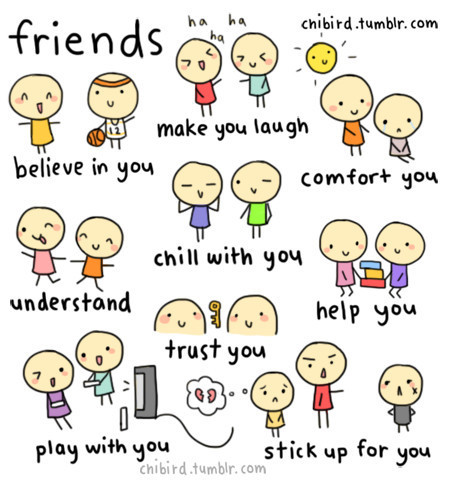
“Friendship does not spout vile names. It involves two parties making equal effort. It involves honesty delivered with tact and kindness. It involves laughing, a lot. It involves knowing when to step in and when to step back. It involves communication, balanced and regular. Anything that feels one-sided and wrong, probably is.”

Friendship isn’t always easy. As individuals (the clue is in the name), we will rarely find people with whom we always agree. But that’s okay, because being challenged in our views is the best way we can grow – so long as those who are challenging us do so in a way that is considered, measured and, above all else, respectful. Without mutual respect, friendship cannot exist. In its place is a barren wasteland of forced opinions, deaf ears and closed hearts. This world is full enough of hatred as it is. If we turn on those closest to us, what hope is there for a better future?

Another feature of friendship that is paramount to its survival is honesty. So many people let the behaviour of so-called ‘friends’ go unchecked, despite it impacting negatively upon them, because it’s easier to put up and shut up than it is to rock the boat by being honest. But if you can’t be honest with the person in question, can you truly call your relationship a friendship?

Finally, and most importantly of all, friendship cannot flourish without kindness. When we are going through our own struggles, it is easy to forget that others have theirs too. We cannot change the way others behave towards us during challenging times, but we can try to understand and forgive negative words and behaviour, and stop ourselves from getting drawn into a vortex of negativity.

We are, all of us, only human, and our time on earth is short. Friendship is one of the greatest gifts we have, so instead of squandering it we would do well to work on nurturing it.

23

Why Fashion Just Isn’t My Forte

I’ve never been a dedicated follower of fashion. Sure, I know what colours and styles go together (just about), but I’m buggered if I have the time, energy or money to make sure my labels are in vogue and I’m adhering to the latest trends. In fact, embarrassing as it is to admit this, I’m still wearing some of the same work clothes now that I wore to work a decade ago. But if they still fit and are in good nick, why not? They’ll probably come back into fashion again soon anyway, just like my mum’s suede boots from the sixties that she wishes she’d held onto. Then who’ll be laughing?

But the thing is, as fashion-averse as I seem to be, I’m not entirely comfortable being this way. Why? Because I care too much what other people think, that’s why. Take wearing trainers to work as an example. In London it’s virtually de rigueur to throw a pair of Nikes on with your work suit as you pound the streets to the office. In Brussels, I have learned, it is far less acceptable. In fact, it seems, hardly anyone wears trainers to work here, let alone neon pink Adidas ones like me (I refer you to my previous points re: being unfashionable). Because of this, on the days when I do dare to leave the house in them, I can feel the heat of peoples’ collective disapproval burning a hole in my feet as I walk. I tell myself I don’t care what they think, and fundamentally I don’t, but what I do care about is feeling a bit of a tool, standing out and drawing attention to myself. That I don’t like one bit.

But here’s my dilemma: The morning walk to my office takes twenty minutes, and much of the route is lined with cobblestones, so even if I could be bothered to wear high heels (which I most definitely can’t) they would be a totally impractical choice. Now the weather is becoming warmer the knee high leather boots (flat, naturally) are also inappropriate. This leaves either my lone pair of flat pumps (a throwback to last summer’s meagre fashion injection – or was it the summer before..?) or my running trainers – the former being prettier, but the latter offering more support and cushioning for my feet. And much as I hate to admit it, now I’m in my thirties I’ll take comfort over fashion any day (within reason, I’m not quite ready to purchase my first pair of Clarks granny shoes yet).

Yesterday, on my walk home (wearing the fashionable pumps, I might add), I found the answer to my dilemma: two pairs of simple, unbranded (not particularly fashionable but who cares?), canvas lace-up shoes – one pair in wonderfully neutral blend-in beige, the other a slightly more upbeat pink – that might just see me through this summer of urban living without having to hang my head in shame and avoid the reproachful glares of my fellow city dwellers.

Fashion – 0

Comfort – 1

Fin.

IMG_20150415_121758

On Being Judgemental

I don’t remember much about my religious education at school, but one passage from the Bible I remember very clearly was this one, from Matthew 7:1-5:

“Why do you see the speck that is in your brother’s eye, but do not notice the log that is in your own eye? Or how can you say to your brother, ‘Let me take the speck out of your eye,’ when there is the log in your own eye? You hypocrite, first take the log out of your own eye, and then you will see clearly to take the speck out of your brother’s eye.”

Recently I’ve been thinking a lot about the human inclination towards judging others. I like to think I’ve been brought up to be accepting, but the reality is that as a result of my experiences, education and interactions with others, a million layers of conditioning have permeated and fused with the synapses in my brain, and they are influencing me every day without me being consciously aware.

I know this because I occasionally catch myself having a fleeting judgmental thought that doesn’t fit at all with how I view myself as an accepting individual. I am so shocked, in these moments, as I cannot reconcile such thoughts with how I see myself or how I want to be. But, whether I like it or not, those thoughts are a part of me, perhaps not a part I am proud of or happy about, but a part of me nonetheless.

Why do we, as a species, so often seek to ridicule – and, in some cases even hate – that which we don’t understand or identify with? What is it that compels us to develop prejudices that serve only to blind us of the very things in our own character that are flawed and need attention? I do not, nor ever could, pertain to know the answer to these questions. But I can’t help feeling that the world would be a better place if someone could.

large

Perfect Moments

In this recent post by Shakeclouds it was posited that the very notion of perfection can be damaging, especially when relating to the achievement of goals, because perfection itself it is such an elusive creature. And whilst I agree with that sentiment entirely, today I discovered that, every now and then in life, there ARE moments of pure and unadulterated perfection, it’s just that often we are so caught up in the whirlwind of our own existence and myriad pressures to perform at the optimum level that we fail to spot them.

What was this moment of pure joy and perfection? In actual fact it was the simplest moment of all. After taking the afternoon off work to pick up my Belgian ID card from the town hall, I came home early, set myself up at the breakfast bar with my laptop and selected the coffee house playlist on Spotify. Then, all of a sudden, the clouds outside parted and the whole apartment was flooded with sunlight.

It was, in that moment, so arrestingly beautiful that I just sat, focusing only on the lovely music and the beams of light coming into my living room, and I felt overwhelmingly grateful-not only for the music, the apartment or the sunshine, but for everyone and everything in my life. Having recently got engaged it isn’t hard for me to appreciate the positives at this point in time, but this was such a wonderful instance of stillness and appreciation that I felt moved to share in this blog; a rare moment of genuine mindfulness, a true oasis of calm. Such moments are not only perfect, they are as precious as the diamond I am lucky enough to now have on my finger. And I have a sneaking suspicion they don’t just hold the key to this crazy thing called life; they are its very essence.

image

Blocking Time

Do you ever feel there isn’t enough time to do the things you want to do outside of your day job? Are you often just so tired at the end of the working day that all you want to do is lie on the sofa and watch crap TV just to relax your mind? But then the guilt sets in, because such activity feels like it actively diminishes your intelligence rather than bolstering it, and if you don’t use your time wisely how will you ever finish that novel/Open University course/improving tome etc.?

If you do feel that way, you’re not alone. I for one experience this cycle of worry and guilt on a daily basis. Even though I know that being a published writer is my goal, somehow it seems that writing at the end of a full day’s work (and, when I can be bothered, a post-work gym session) is always the last thing I want to do.

But then, yesterday, I struck on the most blindingly obvious and simple concept: Instead of telling myself that I had to spend the whole evening writing, with no time to do anything else (the usual mantra due to guilt at not having written enough in the preceding days/weeks), I told myself to spend just one hour working on my screenplay, at the end of which I could spend an hour watching any TV programme I liked. And at the end of that, I would go to bed and spend an hour reading my book (because, in my experience – and somewhat ironically given the benefits – when you’re feeling overtired and too busy the first thing to go is the luxury of reading before bed).

And you know what? It worked. I didn’t do a huge amount of my screenplay, but I did more than I had done in the past few days. And, more than anything, it felt like I had removed a big obstacle that had been standing in my way. I no longer felt scared of the enormity of the task I was facing, because I had broken it down into a manageable task. Moreover, I didn’t feel (as I so often do) that writing meant having to sacrifice all other enjoyment, or that I had to choose between writing and reading (a horrendous choice for a writer because without reading how can you improve your writing? Catch 22).

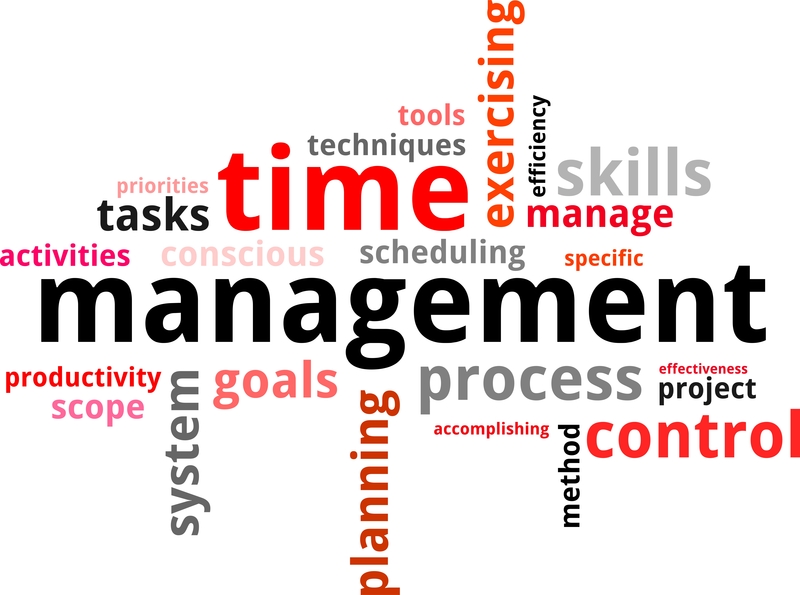
So often we tell ourselves that we are useless, that it’s impossible to realise our dreams. But what if we’re just framing things incorrectly? What if the problem is not our lack of talent, or even commitment, but rather the very simple and easily corrected issue of time management?

We all know that if we want to do something we must make time for it. But what makes so many people stumble at the first hurdle is the misguided view they must devote every spare moment to the pursuit of that goal. Wrong. Start small, with ten, twenty, thirty minutes a day – whatever feels achievable to you. And make sure that you stick to doing it – simple. It takes time to form a habit, and it isn’t always easy. But if you don’t start, the only person you’ll have to blame for not achieving your potential is yourself.

????????????????????????????????????????????????????????????????????????????????????????????

Gratitude, Acceptance and Umbrellas

It’s been a while since I last updated my blog. This is, in part, because I’m currently focusing on addressing some of the issues in my life that are blocking my path to fulfilment and success. At the moment I’m reading two neuropsychology books, one on Hardwiring Happiness by Dr Rick Hanson (whose TED talk on the issue can be viewed here), and the other on conditions arising from neuropsychological damage, The Man who Mistook his Wife for a Hat, by the brilliant (and, sadly, now also suffering from terminal cancer) Oliver Sachs. Alongside the Chopra Centre guided meditations that I am trying to do on a regular basis (which I think I mentioned in a previous post), these books have been helping me to understand some key facets* of the human condition that need cultivating in order to experience true fulfilment. These are:

Part One: Gratitude

It sounds obvious, but how many of us really take the time each day to count our blessings? I think I’ve touched on this before, but now more than ever I am realising how important it is to consciously feel gratitude in order to overcome negative emotions like anxiety, jealousy and fear. It is only by recognising the value of what we have – primarily the people in our lives who bring us joy and make us feel secure and loved – that we can create a sense of calm and acceptance. Which brings me onto…

Part Two: Acceptance

This morning I walked past the elderly homeless man who sleeps in a doorway along my route to work. For a time, during January, he disappeared, and I hoped he had found somewhere warm to spend the rest of the winter. But no such luck. Recently he has been back, huddled with his worldly belongings on the grey concrete step. I have wanted to do something for him ever since I first saw him, but was unsure whether he would welcome being approached and offered charity. Today I had my chance, as I had slipped into my bag a slice of the delicious tarte au sucre that was left over from the dinner party I hosted on Sunday night. As I passed him I had the urge to offer it to him. He declined. And you know what? I stifled the selfish compulsion to feel rebuffed, and in that moment realised that acceptance is an important part of coming to terms with life. We can’t change other people; we can only change our own thoughts, deeds and actions. I’m glad I offered him something, even if he didn’t want it, because generosity is part of being human – it connects us to one another, and it makes us feel less alone.

Part Three: Umbrellas

Also on my walk to work today, the air was damp with the drizzle I’m coming to learn is characteristic of life here in Brussels. But rather than putting up my umbrella the second I felt a droplet of water on my forehead, I deliberately waited until the rain was sufficiently heavy to warrant me being protected from it. And in that moment it occurred to me the umbrella could be used as an analogy for life:

Life is about learning when you need an umbrella to protect yourself – and when you are strong enough to walk in the rain.

The path I’m currently treading makes me feel ever more keenly that it isn’t possible to protect ourselves from the negative things in life – they are an intrinsic part of it. What matters is working on our ability to face them head on; to be humble, selfless and brave.

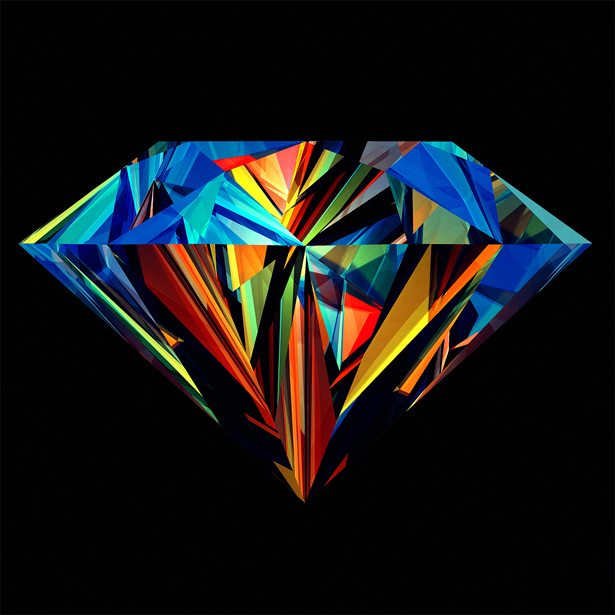
*Interestingly, one meaning for the word ‘facet’ in the dictionary is ‘one of the small, polished plane surfaces of a cut gem’ – it struck me this was also a good analogy for life, which has so very many different aspects, hence the image I have chosen to accompany this post.

Justin-Maller-Facets-90

I never knew facets could be so beautiful.

Existential Musings to kick of Mindfulness Month

Last night, before bed, I found myself engaged in a discussion about the nature of the universe, how humans (and the world as we know it) came to be, and what, if anything, happens after we die. This wasn’t light subject matter for a Sunday evening, and I must confess that, as fascinated as I am by the incredible phenomenon of our existence, I am, in equal parts, utterly terrified by it. My partner and I are at opposite ends of the spectrum where explanation of our existence is concerned – he takes an entirely scientific view and has no belief in a greater being or purpose. As far as he is concerned, therefore, when humans die, we cease to exist. There is no Heaven, no Hell, no reincarnation, not even, as Buddhist philosophy posits, a higher, purer form of consciousness that our ego-less selves return to. There is just nothing, until sometime in the far distant future (or perhaps not even future, since quantum physicists believe that time itself is a construct of our tiny minds because they are not capable of perceiving more than three dimensions – I won’t even begin to go there) another Big Bang-type event occurs and gives rise to another civilisation like ours – as has, statistically speaking, most likely happened before, and will continue to happen, ad infinitum. Whilst this argument fascinates me, it also makes me feel so entirely insignificant that it makes me want to cry. In fact, I’m embarrassed to admit that last night whilst having the conversation I actually did cry, quite suddenly and without warning, and purely as a result of the stabbing terror that accompanied the mere suggestion there is nothing more to this life, that we are but a happy (some might not use that word) ‘accident’ of the universe.

I was brought up in a family with religious beliefs, and if pressed I would say that I still sit more on the side of there being ‘something out there’ than not, though that’s not to say I would currently classify myself as a practising Christian – far from it. Whilst I completely appreciate the argument that religion is merely a construct of the narrow human mind in an attempt to comfort itself about the impending nothingness after death and the relative obscurity and pointlessness of its existence, I don’t entirely buy it. Maybe that’s precisely because my own narrow mind is so terrified that it has adopted that default position. But somehow I just feel so deeply and intrinsically certain there is more to this puzzle than we are capable of understanding – more than even science can explain. I don’t believe in the notion of a white-bearded God who sits atop a cloud, nor do I believe in a red horned Devil stoking the fires of Hell. If anything I’m more inclined to align myself with the Buddhist idea of losing our egos and returning to one consciousness – as frightening as it is to think of losing that part of myself that makes me unique, I think I can buy into the concept of enlightenment and acceptance of what is, what has always been and what will always be. I might even be convinced to some extent in reincarnation, and living other lives as a pathway to higher states of enlightenment. I certainly believe in the existence of ghosts – whether they are really the spirits of dead people or rather the imprints of those people due to some kind of space/time lapse or interference I’ve (obviously) no idea. But now I’m really going off piste.

If you’ve read this far the chances are you think I’ve gone quite crazy. And maybe I have. But isn’t it important for us to think about the nature of our own existence? As tempting as it is to put it in a box labelled ‘too scary’, isn’t it a good thing to question why we are here and what happens once we are no longer? It’s certainly a topic that is playing more on my mind with advancing years (as well it might, for obvious reasons).

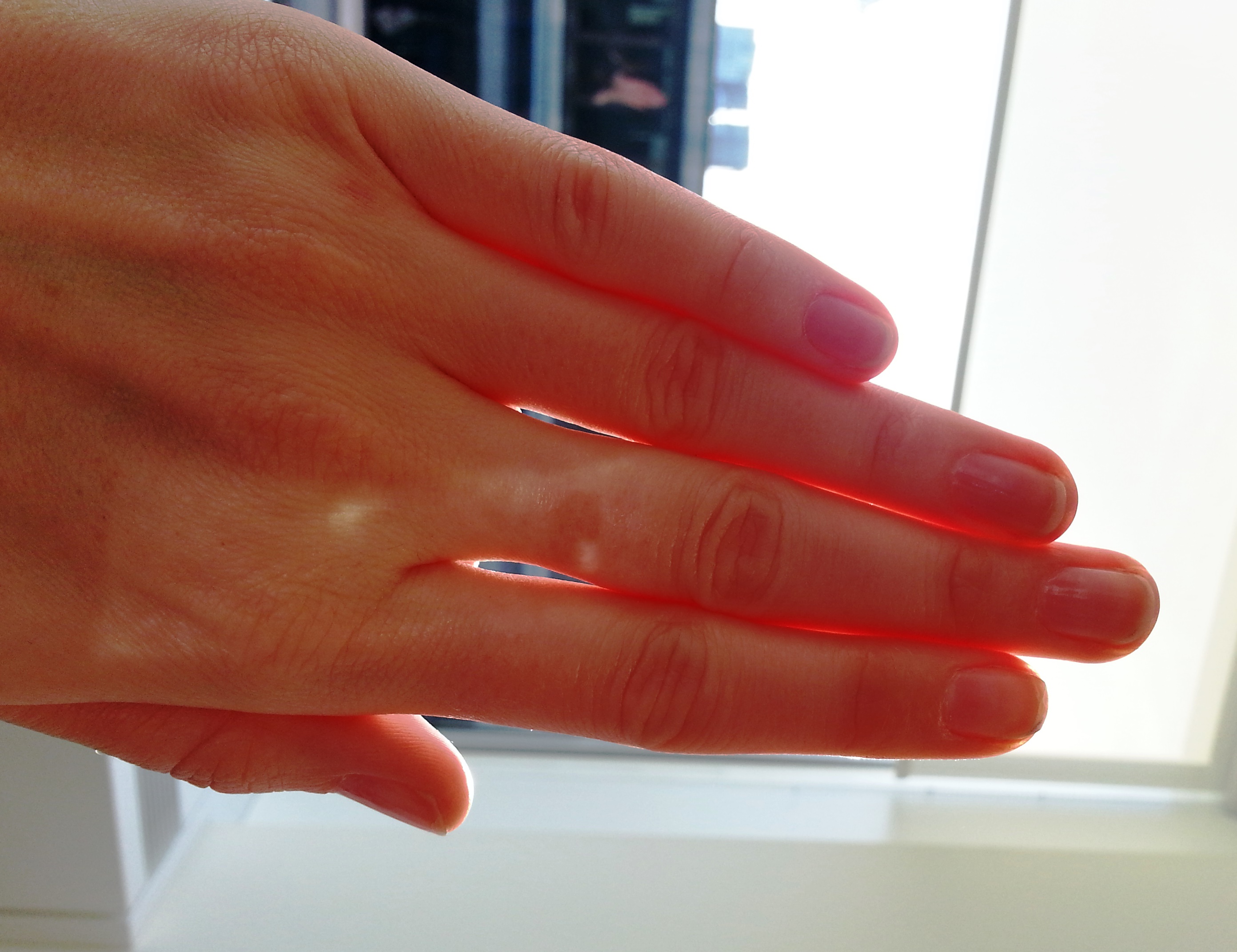
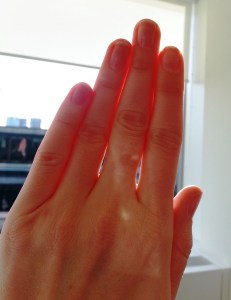
I said I’d make February a month for mindfulness, and this topic seems a good place to start. This morning I listened to the Inner Fire guided meditation from the Chopra Centre, which focused on accepting change. At the end was a one minute poem, and it was highlighted that one minute is all it takes for the blood in our circulatory system to pump around the entirety of our bodies. Isn’t that amazing? In a single minute we essentially change completely on a cellular level. Last night my boyfriend held my hand up to the light to draw attention to the red hue fingers have in such a situation. He pointed out that redness was the iron in our bodies – iron that was created in the Big Bang, and which was but one of many incredible ingredients that make up what we are. This blew my mind, to some extent, but also fascinated me. We are such complex beings and this universe is huge beyond our comprehension. Isn’t it important, therefore, that no matter what lies ‘beyond’, we make the most of every second that we exist, in this context and in this realm of consciousness?

I will finish this somewhat existential blog post with a fascinating story one of my friends re-posted (somewhat coincidentally) on Facebook today:

In a mother’s womb were two babies. One asked the other: “Do you believe in life after delivery?” The other replied, “Why, of course. There has to be something after delivery. Maybe we are here to prepare ourselves for what we will be later.”

“Nonsense” said the first. “There is no life after delivery. What kind of life would that be?”

The second said, “I don’t know, but there will be more light than here. Maybe we will walk with our legs and eat from our mouths. Maybe we will have other senses that we can’t understand now.”

The first replied, “That is absurd. Walking is impossible. And eating with our mouths? Ridiculous! The umbilical cord supplies nutrition and everything we need. But the umbilical cord is so short. Life after delivery is to be logically excluded.”

The second insisted, “Well I think there is something and maybe it’s different than it is here. Maybe we won’t need this physical cord anymore.”

The first replied, “Nonsense. And moreover if there is life, then why has no one has ever come back from there? Delivery is the end of life, and in the after-delivery there is nothing but darkness and silence and oblivion. It takes us nowhere.”

“Well, I don’t know,” said the second, “but certainly we will meet Mother and she will take care of us.”

The first replied “Mother? You actually believe in Mother? That’s laughable. If Mother exists then where is She now?”

The second said, “She is all around us. We are surrounded by her. We are of Her. It is in Her that we live. Without Her this world would not and could not exist.”

Said the first: “Well I don’t see Her, so it is only logical that She doesn’t exist.”

To which the second replied, “Sometimes, when you’re in silence and you focus and you really listen, you can perceive Her presence, and you can hear Her loving voice, calling down from above.” – Útmutató a Léleknek

Food for thought.
20150202_095101

5 Ways to Beat the Winter Blues

Anyone who tells you they don’t feel a bit more crap than usual in January is either lying, or is an alien from the planet Zog (you want to watch them). Trust me. The post-Christmas slump (when your body finally holds you accountable for going entirely off-piste where its wellbeing was concerned for the entire month of December), coupled with plummeting temperatures and a severe lack of sunlight leads to a collective form of exhaustion tinged with malaise – a nagging but non-specific feeling of ‘what now?’ We try to shake it off and kick start the year with enthusiastic resolutions like: “I must eat less!” “I must exercise more!” “I must work harder!” “I must take up that hobby!” Ad Nauseam. But by the end of the month those who started dry January are tearing out their eyeballs and those who didn’t are checking into rehab.

Those of us who live in places that experience prolonged spells of cold and dark each year employ various coping strategies to get through them with our sanity intact. Some choose to avoid it altogether by booking a one way ticket to Australia (and who can blame them?) But for the majority this isn’t a feasible option, so we stock up on Vitamin D tablets and sun lamps (well, those of us that can be arsed do – can’t say I’m one of those people), book holidays to warmer climes to titillate our ailing imaginations (guilty) and let every nanosecond that the sun succeeds in elbowing its way through the thick nimbostratus clouds be reason for unbridled celebration (after all, it is nearly spring, sort of). And for the rest of the time we pull our woolly hats down over our ears, slip our chilly fingers into gloves and leave the house each morning, in the dark, with grim determination etched across our faces.

But there is hope. In the wealth of personal experience I’ve gleaned through the endurance of numerous winters, I am now in a position to share with you a handful of things that really can alleviate the symptoms of this gloomy time of year:

  1. Read a good book – by which I mean a book you enjoy so much it’s like having a love affair; you want to be with it every moment of the day, and can’t stop thinking about it even when you are apart.
  2. Have a lot of baths – soaking in hot water with scented bubbles really does melt your worries away. The deeper the bath and the longer you spend in it the better.
  3. Do guided meditations every day when you wake up – I’ve recently discovered these ones from the Chopra Centre in California, and I find it helps a lot to take a few minutes after waking to focus on breathing in the context of which ever topic you have chosen.
  4. Keep a daily morning journal – as advised by Julia Cameron in The Artist’s Way. I’ve struggled with this a lot over the past couple of years because I often tell myself I’m too exhausted to write as soon as I wake up. But after a hiatus of a few months I have today started again, because I’ve noticed the difference in my stress and creativity levels since it last tailed off.
  5. Live life more mindfully – this is one I struggle with on a daily basis. There are always so many distractions that it’s often hard to create space to observe and appreciate the minutiae of life. Last year I did the #100HappyDays challenge which involved taking pictures each day for 100 days of something that made me happy. And you know what? I found I was being a lot more mindful – always looking around for something beautiful, striking or inspirational. That’s why I’ve decided to start my own #MindfulnessMonth – every day in February I will document, by way of image, blog or both, something that I have taken the time to stop and appreciate.

Those are my ways of coping with the winter blues. Good luck finding yours.

winter-blues

Q: What do Gyms and Puppies Have in Common?

A: Like puppies, gyms should be for life – not just for Christmas (or, for the purposes of this blog post, January).

Over the Christmas holidays, as I was midway through my second helping of bubble and squeak (whilst simultaneously eyeing up the chocolate log and mince pies) my mother unsubtly dropped into conversation – with a meaningful stare – that her diary for that same day the previous year documented that I had completed an 11 mile run. I lowered my fork momentarily and glared at her over the mound of food between us, feeling thoroughly hard done by – I had, after all, had to pull out of the marathon I’d been training for with nine days to go, after suffering a prolapsed disc, so it was hardly appropriate to make me feel bad about it, especially at Christmas. Honestly.

But, much as I hate to admit it, Mum was right to bring my lack of exercise up. True, I did have a nasty injury that required several months of physiotherapy (although if I’m honest I can only blame myself, seeing as it was the result of overtraining – a concept that right now seems entirely alien), but the physio ended with the summer, and even my physiotherapist told me I was ready to get back to exercising – so why didn’t I? Because I was afraid – of how much I had lost my fitness, and of how much work I would have to do to get even a fraction of it back again.

Fortunately the new year has, for me as well as thousands of others, brought with it fresh resolve. No more the upward creeping of the scales, whilst my blind eye is turned the other way. It’s time to face my fears and get my thigh gap back. It is also, I have decided, the year I manage to prove my abdominal muscles really do exist – no small goal. There shall be no excuses, just regular exercise and a predominantly healthy eating regime. If I can train up to 17 miles for a marathon I can surely claw back some of that enthusiasm now?

So, I’ve joined a gym, which is conveniently located about a minute’s walk from my front door (greatly helping with the ‘no excuses’ side of things). And so far this year (today being the 12th of January) I’ve been a whopping SEVEN times (never mind that two of those times involved the sum total of about 30 minutes of cardiovascular exercise – everyone has to start somewhere, right?) But this post is not intended as a gloat-fest, I actually wanted to discuss something that has been amusing me no end since I joined, and that is ll the New Year Resolution gym goers (I realise I could well be placed into that category given my recent hiatus, but trust me, I know I’m in this for the long haul).

I’d genuinely forgotten how hilarious these people are. The other day, for example, I saw a man on the step machine who, instead of using the machine correctly and stepping as if stepping on air, was just standing on the floor and lifting each step up in turn beneath his feet. Not far away another man was using a weight machine on the lowest possible weight setting (which would barely develop muscles in an ant), and another still (this one VERY overweight after the festive season’s over-indulgence) was cycling at the most leisurely pace possible on the sit-down bike – whilst reading his book.

My favourite new-year-resolutioner of all was the girl who came to the gym in full make up and an outfit that would have been more appropriate in a bar, and proceeded to spend ten minutes pulling the bar of the rowing machine with as much gusto as a weak fart, before getting up and leaving. It really is no wonder these transitional folk don’t last beyond the first couple of months of the year – with such minimal exertion they can’t possibly see any results. Maybe they’d have more luck with a puppy…

dogs

Stop Fighting Hate with Hate – Try Love Instead

As tempting as it is to wallow in depression at the future of humanity after today’s horrific massacre of satirical cartoonists in Paris, to do so would achieve one thing and one thing only: It would mean the terrorists have won.

Whilst it’s heartening to see the numerous messages of support for the victims (and indeed for freedom of speech itself) on social media, as well as the hastily organised rallies across Europe and the newly created cartoons in response to the tragedy, less heartening is the hashtag #killallmuslims, currently trending on Twitter.

It is sadly inevitable that the events of today will lead to reprisals against innocent Muslims, as well as the usual torrent of ignorant comments about religion being the root cause of all evil. But as British journalist Emily Davis succinctly put on Twitter in the aftermath of the incident: “Islamic extremists. Not Islam. They are different entities and shouldn’t be casually associated. Terror has no religion.”

Terrorism in the name of religion is NOT religion, but rather extremism based on a warped perception of it. As someone who has grown up in a household with religious leanings, I have witnessed the positive side of having faith, such as the sense of community and charity that it fosters. Blaming religion in all its forms for this kind of evil, extremist activity is almost as ignorant as the terrorists themselves. Not only that, it instigates a misguided campaign of hate against innocent people who are merely trying to follow their religion in the name of peace.

If only we could all learn to practice tolerance and acceptance, we might yet be able to pull ourselves back from the brink of what could well be the end of civilisation as we know it. Hate is not the way to fight hate. The only thing that will defeat it is love.

je-suis-charlie